

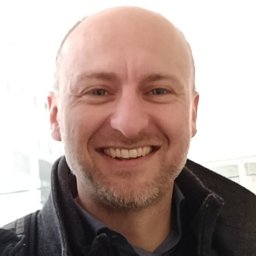
 Mark James Carman
· 6 previous affiliations
- Politecnico di MilanoSince 2018
- Associate Professor · Since 2018
- Monash University2010–2018
- Senior Lecturer in the Caulfield School of Information Technology · 2015–2018
- Lecturer · 2010–2014
- Università della Svizzera italiana2007–2010
- Post-Doctoral Researcher · 2007–2010
- University of Southern California2005–2006
- Visiting PhD Student / Research Scholar at the Information Sciences Institute (ISI) · 2005–2006
- University of Trento2001–2006
- PhD (Dottorato di Ricerca), Information and Communication Technologies · 2002–2006
- PhD Student · 2001–2004
- Adelaide University1996–1999
- BE (Electrical and Electronic) and BA, with First Class Honours in Engineering · 1996–1999
Research Overview
Mark James Carman focuses on unsupervised machine learning, natural language processing, and the computational analysis of social media platforms. His trajectory spans foundational improvements to density-based clustering algorithms alongside applied research into online behavior, crowdsourcing, and text processing. Recent work investigates methods for handling inhomogeneous data distributions in clustering and anomaly detection tasks.
Research Trajectory
Before his focus shifted toward neural architectures and social media analysis in the 2010s, Carman's early research interests included the area of Open World Reasoning for Knowledge Intensive Systems and the research direction of Privacy Preserving Record Linkage for Noisy Data.
By the mid-2010s, Carman’s research trajectory demonstrated a dual focus on applied natural language processing and foundational improvements to unsupervised machine learning algorithms. As a senior author, he led research into behavioral signals in short-form text, demonstrated by A Computational Approach to Automatic Prediction of Drunk-Texting. This 2015 study utilized distant supervision via hashtags and a combination of N-gram and stylistic features to identify alcohol-influenced communication on Twitter, providing quantitative evidence that such states can be computationally detected. During this period, his work intersected with the broader area of High Order Feature Interactions in Deep Learning and the research direction of The Information Cost of Discretizing Continuous Data. He continued to lead applied NLP projects, serving as principal investigator on Error Detection and Corrections in Indic OCR Using LSTMs (2017). This work tackled the severe corpus resource scarcity and complex word-conjoining rules inherent in highly inflectional Indian languages, utilizing Long Short-Term Memory networks to improve the ranking of corrective suggestions where off-the-shelf vocabularies fail.
Parallel to his NLP research, Carman established a strong track record as a principal investigator in clustering and density estimation. A recurring challenge in his work is the failure of standard algorithms to handle datasets with varying or inhomogeneous densities. He addressed this directly in Density-ratio based clustering for discovering clusters with varying densities (2016), introducing methods to convert existing density estimators into density-ratio estimators. This adaptive scaling transformed datasets to improve the performance of traditional density-based clustering algorithms. He expanded on unsupervised learning frameworks in Grouping points by shared subspaces for effective subspace clustering (2018). As senior author, he proposed a framework that decoupled the candidate subspace selection process from the clustering process itself, providing new subspace generation and scoring methods that allowed for more flexible cluster definitions. This algorithmic work aligns with his broader contributions to the area of Generative Pre-conditioning for Discriminative Optimization.
In 2018, Carman’s focus on social platforms evolved from passive observation to the analysis of active manipulation. As first author, he published Manipulating Visibility of Political and Apolitical Threads on Reddit via Score Boosting, which measured the empirical effects of vote manipulation on article visibility and user engagement. Motivated by the pervasive issue of fake reviews and artificially promoted content, this research quantified how artificial score boosting could suppress or promote content in reader-voted environments. This research connects to themes such as Modeling Spreading Processes with Population Saturation Constraints.
In his most recent observed active years, Carman participated as a middle author in collaborative efforts to further refine density and distance metrics. This is exemplified by his contribution to CDF Transform-and-Shift: An effective way to deal with datasets of inhomogeneous cluster densities (2021). Rather than proposing entirely new clustering algorithms, this work introduced a data transformation technique designed to homogenize cluster densities globally while preserving local cluster structures. This approach allows existing distance-based and density-based algorithms to function without their traditional bias toward dense regions.
Current Directions
The most recent papers in the evidence, extending through 2021, indicate a continued focus on the mathematical and structural assumptions underlying unsupervised machine learning. Recent work investigates the limitations of traditional distance metrics—such as Euclidean or Manhattan distances—in nearest-neighbor algorithms, exploring mass-based dissimilarity as a more effective alternative that relaxes strict metric constraints. Additionally, ongoing collaborative research addresses the persistent challenge of inhomogeneous densities in anomaly detection and clustering, focusing on preprocessing transformations that allow standard algorithms to operate on sparse and dense clusters simultaneously without structural bias.
Profile updated
Loading new papers…
Other researchers whose papers cluster into the same research directions — a proxy for overlapping technical interests and shared intellectual neighborhoods.
See something wrong? Report a mistake