

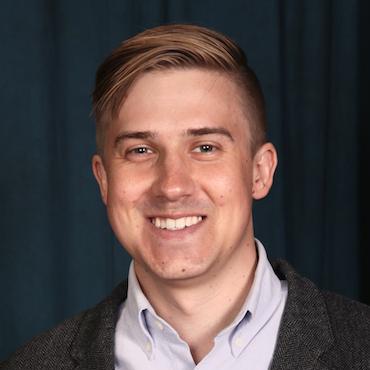
 Mark Derdzinski
· 5 previous affiliations
- Dexcom (United States)Since 2018
- Director, AI/ML Engineering · Since 2026
- Sr. Manager, Data Products & AI · 2023–2026
- Senior Manager, Data Science · 2022–2023
- Senior Manager · 2018–2023
- University of California San Diego2013–2018
- President · 2017–2018
- Graduate Research Assistant · 2013–2018
- Vice President of External Affairs · 2016–2017
- Legislative Liaison for National Affairs · 2015–2016
- Study Smarter2011–2013
- Academic Tutor · 2011–2013
- Research Assistant · 2012–2013
- University of California, Berkeley2007–2011
- Bachelor of Arts, Physics & Pure Mathematics · 2007–2011
Research Overview
Mark Derdzinski focuses on the development and evaluation of artificial intelligence systems for complex time-series data and personalized decision-making in health contexts. His work spans the application of deep learning to experimental particle physics and the creation of generative models and benchmarks for metabolic health. Currently leading AI feature development at Dexcom, his research emphasizes autonomous AI agents, large language model (LLM) alignment, and the preservation of privacy in clinical data synthesis.
Research Trajectory
Derdzinski’s early research was rooted in experimental particle physics, specifically focusing on the analysis of high-energy collisions at the Large Hadron Collider (LHC). During his doctoral studies at the University of California, San Diego, he applied machine learning techniques to address challenges in signal detection within high-dimensional, noisy datasets. This period was characterized by a focus on optimizing physics searches through deep learning, moving away from traditional cut-based selection methods toward more sophisticated neural architectures.
In A deep neural network to search for new long-lived particles decaying to jets, Derdzinski served as the lead author in developing a deep neural network (DNN) designed to identify displaced jets. These jets are characteristic of long-lived particles, which are predicted by several extensions of the Standard Model but are difficult to distinguish from background noise using standard reconstruction algorithms. This work demonstrated the utility of DNNs in capturing the complex spatial and temporal signatures of particles that decay at a distance from the primary interaction point, establishing a foundation for his subsequent transition into complex time-series analysis in other domains.
Following his work in physics, Derdzinski shifted his focus toward the intersection of AI and metabolic health. This transition involved applying the rigorous statistical and modeling approaches of experimental physics to the challenges of continuous glucose monitoring (CGM) and personalized health interventions. His recent work focuses on three primary pillars: the generation of privacy-preserving synthetic data, the discovery of causal relationships in physiological time-series, and the benchmarking of generative AI for patient-facing applications.
Generative Modeling and Privacy
A significant portion of Derdzinski’s recent research addresses the scarcity of high-quality, shareable clinical data. Because physiological data is highly sensitive, the development of robust AI models often faces hurdles related to data privacy and patient confidentiality. Derdzinski has contributed to the development of generative frameworks that produce synthetic data capable of maintaining clinical utility while providing formal privacy guarantees.
As a primary contributor to GlucoSynth: Generating Differentially-Private Synthetic Glucose Traces, Derdzinski worked on a specialized Generative Adversarial Network (GAN) framework designed for glucose time-series. The research introduced the concept of "motif causality," which prioritizes the relationships between physiological events—such as the causal link between a meal-induced glucose spike and the subsequent recovery trough. By focusing on these motifs, the GlucoSynth model produces synthetic traces that are more realistic than those generated by general-purpose time-series models. Crucially, the work integrates differential privacy, ensuring that the synthetic output does not leak sensitive information about the individuals in the training set, thereby facilitating safer data sharing for research and development.
Causal Discovery in Time-Series
Building on the concept of motifs, Derdzinski’s work has evolved toward understanding the underlying drivers of physiological patterns. Rather than treating glucose traces as simple sequences of numbers, his research treats them as a series of interconnected phenomena or "motifs" representing human behaviors like exercise, eating, or sleep.
In MotifDisco: Motif Causal Discovery For Time Series Motifs, Derdzinski explored methods for identifying and quantifying causal relationships between these segments. This research is particularly relevant for health data streams where understanding the why behind a data trend is as important as predicting the trend itself. By identifying causal links between specific behaviors and glucose responses, this work aims to improve the representational power of deep learning models and provide a more interpretable basis for autonomous AI agents designed to assist in health management.
Evaluation and Benchmarking of Generative AI
As generative AI and LLMs have become more prevalent in consumer health technology, Derdzinski’s focus has expanded to include the evaluation and alignment of these systems. His work in this area addresses the gap between general-purpose AI capabilities and the specific, high-stakes requirements of personalized medical decision-making.
Derdzinski participated in the development of DexBench: Benchmarking LLMs for Personalized Decision Making in Diabetes Management, a framework designed to test LLMs on real-world tasks faced by individuals with diabetes. Unlike previous benchmarks that focused on clinician-facing tasks or general medical knowledge, DexBench evaluates models on their ability to provide actionable, personalized insights across seven distinct categories, including glucose management and metabolic health. This work highlights the challenges of deploying LLMs in patient-facing roles, where accuracy, safety, and personalization are paramount.
Current Directions
Derdzinski’s current research and professional focus center on the deployment of autonomous AI agents. This involves integrating LLMs with real-time physiological data to create systems capable of helping users meet specific health goals. His work continues to emphasize AI alignment—ensuring that generative systems act in accordance with user intent and clinical safety standards—and the ongoing refinement of evaluation frameworks for generative AI in the health domain. While his earlier work was defined by the search for new particles in physics, his current trajectory is defined by the search for reliable, private, and causally-aware AI solutions for human health.
Profile updated
Loading new papers…
Other researchers whose papers cluster into the same research directions — a proxy for overlapping technical interests and shared intellectual neighborhoods.
See something wrong? Report a mistake