

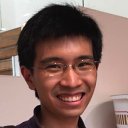
 Mark Bun
· 4 previous affiliations
- Boston UniversitySince 2019
- Associate Professor · Since 2026
- Current
- Assistant Professor · 2019–2026
- Research Fellow · 2018–2019
- Princeton University2016–2018
- Postdoc · 2016–2018
- Harvard University2012–2016
- PhD student · 2012–2016
Research Overview
Mark Bun focuses on theoretical computer science, algorithmic data privacy, and computational complexity. His trajectory spans foundational lower bounds in quantum query complexity to the sample complexity of differentially private machine learning. His current work investigates the computational barriers in private learning and the rigorous quantification of privacy in statistical estimation and synthetic data release.
Research Trajectory
In 2013, Bun explored polynomial approximations in Dual Lower Bounds for Approximate Degree and Markov-Bernstein Inequalities. Transitioning to the foundations of privacy, he established sample complexity limits for differentially private algorithms answering counting queries in Fingerprinting codes and the price of approximate differential privacy (2014). Continuing this focus, Differentially Private Release and Learning of Threshold Functions (2015) proved that releasing thresholds with differential privacy over an infinite domain is impossible, requiring sample complexity that grows with the domain size. In 2016, he formalized and extended a variant of privacy in Concentrated Differential Privacy: Simplifications, Extensions, and Lower Bounds.
Returning to Boolean function complexity, he developed generic methods to increase approximate degree while preserving constant-depth circuit computability in A Nearly Optimal Lower Bound on the Approximate Degree of AC0 (2017). In 2018, he resolved the approximate degree and quantum query complexities of several basic functions, such as k-distinctness, in The polynomial method strikes back: tight quantum query bounds via dual polynomials. Bridging learning theory and privacy, he proved in 2020 that any concept class with finite Littlestone dimension can be learned by an approximate differentially private algorithm in An Equivalence Between Private Classification and Online Prediction, introducing the essential notion of global stability. He further advanced complexity theory in 2021 with The Large-Error Approximate Degree of AC0. This work contributed significantly to the broader areas of Amplifying Complexity Gaps via Function Composition, Lifting Theorems for Communication Complexity, and The Polynomial Method for Quantum Query Complexity.
In 2023, his research expanded across both privacy mechanisms and complexity bounds. He developed rigorous methodologies for quantifying statistical uncertainty under privacy constraints in Differentially Private Confidence Intervals for Proportions under Stratified Random Sampling. Simultaneously, he introduced a framework for proving lower bounds on decision versions of oracle identification problems in Approximate Degree Lower Bounds for Oracle Identification Problems. He also explored the theoretical intersections of replicability, privacy, and adaptive generalization in Stability Is Stable: Connections between Replicability, Privacy, and Adaptive Generalization.
In 2024, he investigated the computational limits of private learning. In Private PAC Learning May be Harder than Online Learning, he demonstrated under cryptographic assumptions that generic, computationally efficient conversions from online learners to private PAC learners are unlikely to exist. He also refuted a conjecture regarding distribution learning by showing that not all classes learnable in total variation distance are privately learnable in Not All Learnable Distribution Classes are Privately Learnable, contributing to the research direction of Sample Complexity of High-Dimensional Private Learning. Addressing practical data release, he designed algorithms for incrementally updating synthetic datasets over time in Continual Release of Differentially Private Synthetic Data from Longitudinal Data Collections.
Recent work continues to probe the boundaries of privacy and distribution testing. In 2025, he and his collaborators proposed a harms-aware framework to bridge formal differential privacy with concrete inference attacks in Enforcing Demographic Coherence: A Harms Aware Framework for Reasoning about Private Data Release. In 2026, he explored property testing with powerful pairwise conditional queries in Interactive Proofs for Distribution Testing with Conditional Oracles. Finally, he developed novel algorithms for learning decision lists and large-margin halfspaces in Privately Learning Decision Lists and a Differentially Private Winnow, demonstrating that state-of-the-art performance can be achieved alongside strong privacy guarantees.
Current Directions
Recent work investigates the theoretical boundaries and practical implementations of both distribution testing and private machine learning. The most recent papers in the evidence address the efficiency of property testing by augmenting verifiers with pairwise conditional queries, achieving exponential savings in query complexity for label-invariant properties. Concurrently, ongoing research explores the intersection of formal privacy guarantees and concrete inference attacks, proposing harms-aware frameworks like demographic coherence to better audit data release mechanisms. Finally, current efforts focus on bridging the gap between efficient learning and strong privacy, developing novel differentially private algorithms for learning complex models such as decision lists and large-margin halfspaces in both PAC and online learning settings.
Profile updated
Loading new papers…
Other researchers whose papers cluster into the same research directions — a proxy for overlapping technical interests and shared intellectual neighborhoods.
See something wrong? Report a mistake