

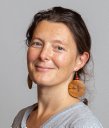
 Marine Denolle
· 6 previous affiliations
- University of WashingtonSince 2021
- Associate Professor · Since 2024
- Associate Professor · Since 2021
- Assistant Professor · 2021–2024
- Associate Professor · 2024
- Applied Environmental IntelligenceSince 2024
- Co-Founder · Since 2024
- Harvard University2016–2021
- Assistant Professor · 2016–2021
- Scripps Institution of Oceanography2014–2015
- Postdoctoral Fellow · 2014–2015
- Stanford University2008–2013
- PhD · 2008–2013
- École Normale Supérieure - PSL2005–2008
- Master's degree, geophysics · 2005–2008
Research Overview
Marine Denolle focuses on the development of advanced seismological tools and big data analysis to characterize geohazards and environmental processes. Her research integrates physics-based modeling with machine learning and cloud computing to investigate earthquake source dynamics, soil hydromechanics, and the impact of climate change on the Earth’s subsurface. By leveraging large-scale seismic datasets and emerging sensing technologies, she aims to transform the scalability and reproducibility of geophysical observations.
Research Trajectory
The early stages of Denolle’s work were characterized by a focus on the fundamental physics of the seismic wavefield and earthquake source dynamics. Between 2014 and 2018, her research emphasized the use of ambient seismic noise to extract Earth’s impulse response, or Green’s functions, which are critical for imaging subsurface structures and understanding wave propagation. This period included significant efforts in processing massive datasets from dense seismic networks, such as the Hi-net and MeSO-net arrays in Japan, to generate high-quality cross-correlation functions. Simultaneously, she developed methodologies to analyze the temporal evolution of earthquake ruptures using source spectrograms, providing a more nuanced view of radiated energy rates than traditional whole-event representations.
As seismic data volumes began to grow exponentially, Denolle’s focus shifted toward the computational challenges of the "petabyte era." Starting around 2019, her work increasingly addressed the limitations of traditional data-downloading workflows and local high-performance computing (HPC) environments. This transition led to a sustained emphasis on cloud-native seismology, where research workflows are moved to the data rather than vice versa. She became a proponent of using commercial cloud infrastructure and object storage to enable massive scalability, demonstrating that complex tasks like year-long earthquake detection could be performed cost-effectively and rapidly.
In recent years, Denolle has expanded her research into two primary emerging domains: environmental seismology and Distributed Acoustic Sensing (DAS). Her environmental work utilizes the ambient seismic field to monitor soil hydromechanics, specifically tracking how changes in moisture content affect seismic wave velocity. This has direct implications for water resource management and the mitigation of climate-driven geohazards like landslides. Her work with DAS—a technology that turns fiber-optic cables into dense seismic arrays—focuses on the unique signal processing challenges of offshore and extreme environments. This includes developing self-supervised deep learning models to denoise DAS data, thereby improving the detection of small earthquakes in high-noise settings.
Current Directions
Denolle’s current research is centered on the "Petascale Data-Driven Seismology" paradigm. This involves the creation of fully reproducible, open-source workflows that can mine petabyte-scale archives within a single day of cloud computation. A key component of this effort is the development of "AI-ready" datasets and standardized benchmarking frameworks. By providing curated data and rigorous evaluation metrics, she seeks to bring the discipline of modern computer vision to seismology, allowing for objective comparisons of machine learning models for earthquake forecasting and wavefield reconstruction.
Furthermore, her lab is actively investigating the intersection of climate science and seismology. By monitoring subsurface hydrological properties in response to precipitation events, the research aims to provide predictive insights into compounding hazards. This work is supported by a commitment to software education, ensuring that the next generation of geophysicists is equipped with the skills necessary for cloud-native research and large-scale numerical simulations.
Representative Work
The following papers illustrate the evolution of Denolle’s research from fundamental wavefield analysis to the development of scalable, AI-driven computational frameworks.
In the area of ambient noise seismology, Ambient seismic field cross-correlation functions in Japan represents a significant effort in large-scale data processing. This work involved the generation of 9-component Green's functions between hundreds of seismic stations using a three-year stack of ambient noise. This dataset provided a foundation for high-resolution imaging of the Japanese archipelago and established a baseline for using noise cross-correlations in complex tectonic environments.
Denolle’s contributions to earthquake source physics are exemplified by Probing earthquake dynamics through seismic radiated energy rate: illustration with the M7.8 2015 Nepal earthquake. This study refined the methodology of source spectrograms to analyze the radiation of seismic waves during the rupture process itself. By providing a clear interpretation of high-frequency falloff rates and radiated energy through time, the work offered a more detailed view of rupture complexity than traditional static models.
As the field moved toward cloud computing, Denolle provided critical leadership in establishing best practices. In Seismology in the cloud: guidance for the individual researcher, she served as the senior author on a practical guide for migrating heavy workloads to commercial cloud platforms. The paper demonstrated a reproducible earthquake detection workflow on Microsoft Azure, proving that processing vast archives could be both affordable and simpler than managing local GPU clusters. This was followed by a comprehensive first-author review, A Review of Cloud Computing in Seismology, which argued that cloud-native architectures are essential for the petabyte era, allowing researchers to "bring the code to the data."
Her recent work in deep learning and fiber-optic sensing is highlighted in Denoising Offshore Distributed Acoustic Sensing Using Masked Auto‐Encoders to Enhance Earthquake Detection. This research addresses the high noise levels inherent in offshore DAS data by developing a self-supervised masked auto-encoder (MAE). The model effectively doubles the signal-to-noise ratio of earthquake signals, enabling more precise machine-learning-aided phase picking and improving the characterization of small offshore tectonic events.
Finally, PetaScale Data-Driven Seismology: Geohazard Discovery via Large Array Data Mining at the Edge, on Premise, and on the Cloud outlines the future trajectory of her research. As the first author, Denolle reviews the methodologies and cyberinfrastructure required to process petabytes of data from new sensing technologies like DAS and large-scale nodal arrays. The paper emphasizes the shift toward rapid, cloud-based discovery workflows that can identify seismic events across global archives in a fraction of the time required by traditional methods.
In addition to these primary contributions, Denolle has participated in collaborative efforts to standardize the field's approach to machine learning. This includes the development of the Curated Pacific Northwest AI-ready Seismic Dataset, which provides a 21-year benchmark for detecting both standard earthquakes and exotic signals, and the Seismic Wavefield Common Task Framework, which introduces standardized metrics for evaluating earthquake forecasting models.
Profile updated
| Paper | Venue | Year |
|---|---|---|
| An Object Storage for Distributed Acoustic SensingGitHubniyiyu/ | Seismological | 2023 |
Loading new papers…
Other researchers whose papers cluster into the same research directions — a proxy for overlapping technical interests and shared intellectual neighborhoods.
See something wrong? Report a mistake