

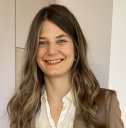
 Maria Brbic
· 1 previous affiliation
- École Polytechnique Fédérale de LausanneSince 2023
- Assistant Professor · Since 2023
Research Overview
Maria Brbic develops artificial intelligence methods for complex, high-dimensional biomedical datasets, with a focus on enabling novel discoveries in single-cell biology and spatial transcriptomics. Her trajectory spans foundational work in open-world semi-supervised learning to the creation of universal cell embeddings across species. Recently, her research addresses generative modeling for tissue reassembly, causal discovery, and the alignment of large language models.
Research Trajectory
Brbic’s early research established foundational techniques for analyzing complex datasets, beginning with Multi-view low-rank sparse subspace clustering (2018). She quickly applied these computational principles to biological domains, participating in the development of MARS: discovering novel cell types across heterogeneous single-cell experiments (2020) to identify previously uncharacterized cell populations.
A major theme in her subsequent work is enabling machine learning models to handle unseen data distributions. In Open-World Semi-Supervised Learning (2022), she formalized a setting where novel classes appear in unlabeled test data. This work contributed to the broader research direction of Generalized Category Discovery for Open World Learning and the area of Uncertainty Adaptive Margins for Robust Representation Learning. Concurrently, she expanded her focus on spatial transcriptomics with Annotation of spatially resolved single-cell data with STELLAR (2022), providing tools to better interpret spatially mapped cellular data.
Her investigation into unsupervised learning highlighted the gap between algorithmic clustering and human categorization. With The Pursuit of Human Labeling: A New Perspective on Unsupervised Learning (2023), she advanced the research direction of Aligning Unsupervised Models with Human Semantic Categories. In parallel, she contributed to large-scale biological mapping efforts, such as the Aging Fly Cell Atlas identifies exhaustive aging features at cellular resolution (2023), which provided a comprehensive single-nucleus transcriptomic map of the aging Drosophila to predict cell-type-specific aging patterns.
By 2024, Brbic introduced methods to bridge disparate biological datasets and uncover hidden hierarchical structures. Towards Universal Cell Embeddings: Integrating Single-cell RNA-seq Datasets across Species with SATURN utilized protein language models to encode gene properties, allowing the integration of cross-species datasets regardless of genomic similarity. She also developed frameworks for hierarchical discovery, such as Fine-grained Classes and How to Find Them, which extracts specific sub-categories using only coarse-grained supervision.
In 2025, her research expanded into the capabilities and alignment of foundation models. She explored joint inference frameworks in Large (Vision) Language Models are Unsupervised In-Context Learners, demonstrating significant performance gains without human-labeled examples. Addressing data efficiency, With Limited Data for Multimodal Alignment, Let the STRUCTURE Guide You introduced a method to align pretrained unimodal models into a shared space by preserving neighborhood geometry. She also investigated model robustness under shifting environments in Weak-to-Strong Generalization under Distribution Shifts. Returning to biological applications, she introduced LUNA in Tissue Reassembly with Generative AI, a generative model that reconstructs 3D tissue structures from single-cell gene expression data, advancing the research direction of Overcoming Spatial Context Loss in Tissue Architecture.
Current Directions
The most recent papers in the evidence address the alignment, representation, and causal reasoning capabilities of large-scale AI models, alongside continued innovations in generative biology. Recent work investigates preference alignment using confidence-weighted optimization, demonstrating that smaller, "weak" language models can effectively supervise larger models (When Weak LLMs Speak with Confidence, Preference Alignment Gets Stronger). She is also exploring reinforcement learning for language agents (Meta-RL Induces Exploration in Language Agents) and the fundamental nature of AI representations, proposing an "Aristotelian" view based on local neighborhood relationships rather than global convergence (Revisiting the Platonic Representation Hypothesis: An Aristotelian View).
In parallel, her methodological work extends to scalable causal discovery frameworks (PACER: Acyclic Causal Discovery from Large-scale Interventional Data), while her biological research leverages generative modeling to link cellular morphology with gene expression (Generative modeling reveals the connection between cellular morphology and gene expression).
Profile updated
Loading new papers…
Other researchers whose papers cluster into the same research directions — a proxy for overlapping technical interests and shared intellectual neighborhoods.
See something wrong? Report a mistake