

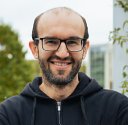
 Marek Śmieja
· 1 previous affiliation
- Jagiellonian UniversitySince 2015
- Associate Professor · Since 2022
- Current
- Assistant Professor · 2015–2022
1 other author named Marek Śmieja: Marek Smieja (1 paper)
Research Overview
Marek Śmieja focuses on unsupervised learning, generative models, and the robust handling of tabular and missing data. His trajectory spans foundational methods for processing incomplete information to advanced techniques in explainable artificial intelligence and cheminformatics. Recently, his research emphasizes zero-shot tabular embeddings, differentiable feature selection, and controllable counterfactual explanations.
Research Trajectory
The early portion of the provided corpus highlights a focus on adapting deep learning architectures to handle incomplete information. In 2022, he introduced MisConv: Convolutional Neural Networks for Missing Data. Standard convolutional networks typically struggle with missing pixels, relying on hard imputations that discard uncertainty. By modeling missing data as a probability distribution and analytically calculating the expected value of the convolution operation, this work allowed networks to process incomplete images directly, advancing the broader area of Mitigating Deterministic Imputation Bias.
By 2024, a significant portion of his research shifted toward generative models and representation learning, particularly in the domain of image manipulation. His work developed techniques for precise attribute editing, contributing to the research area of Training Free Guidance for Controllable Generative Models. Face Identity-Aware Disentanglement in StyleGAN introduced PluGeN4Faces, a plugin that uses a contrastive identity loss trained on movie frames to separate facial attributes from a subject's core identity. Continuing this trajectory, StyleAutoEncoder for Manipulating Image Attributes Using Pre-trained StyleGAN provided a lightweight module to efficiently disentangle latent spaces, offering a faster alternative for high-quality image editing.
In parallel, he explored self-supervised and federated learning paradigms. Augmentation-aware self-supervised learning with conditioned projector presented CASSLE, a method that conditions projector networks on augmentation information to improve downstream performance on sensitive tasks without requiring major architectural changes. Addressing distributed environments, A Deep Cut Into Split Federated Self-Supervised Learning analyzed the privacy and communication trade-offs of network division depth. The study demonstrated that existing methods like MocoSFL suffer from quality deterioration when optimized solely for minimal communication, and proposed a momentum-aligned contrastive approach as a remedy.
His methodological work also extends into cheminformatics. RetroGFN: Diverse and Feasible Retrosynthesis using GFlowNets tackled single-step retrosynthesis, a crucial task in molecular discovery. The paper introduced a Feasibility Thresholded Count metric and leveraged GFlowNets to better explore the vast space of viable chemical reactions, ensuring that the predicted synthesis routes are actually feasible.
In 2025, his focus expanded to scalable architectures and explainable AI. He developed GFSNetwork: Differentiable Feature Selection via Gumbel-Sigmoid Relaxation, an end-to-end architecture that automatically selects optimal feature subsets. By utilizing a continuous relaxation, the network avoids the linear scaling costs of traditional methods and eliminates the need to pre-define the number of features. To improve model transparency, he drew upon methods from the research direction of The Computational Bottlenecks of Normalizing Flows. Specifically, DiCoFlex: Model-Agnostic Diverse Counterfactuals with Flexible Control introduced a generative framework using conditional normalizing flows. This allows users to generate diverse, real-time "what-if" explanations in a single forward pass, providing flexible control over feature constraints without slow optimization.
Addressing the complexities of tabular data, ZEUS: Zero-shot Embeddings for Unsupervised Separation of Tabular Data proposed a transformer-based model pre-trained on millions of synthetic datasets. This approach generates high-quality embeddings for unseen data, matching deep clustering methods without requiring per-dataset tuning. Finally, extending his analytical methods to broader systemic modeling, the 2026 paper Optimising network efficiency in an epidemic scenario investigates structural optimizations in the context of disease spread.
Current Directions
The most recent papers in the evidence address the scalability and interpretability of machine learning models, particularly for complex or heterogeneous data formats. Recent work investigates zero-shot learning paradigms for tabular data, aiming to produce high-quality embeddings without the need for dataset-specific hyperparameter tuning or retraining. Concurrently, there is a strong focus on explainable AI, specifically through the development of generative frameworks that provide real-time, controllable counterfactual explanations for predictive models. Additionally, ongoing research explores differentiable approaches to high-dimensional feature selection, utilizing continuous relaxations to maintain computational efficiency while automatically identifying optimal feature subsets.
Profile updated
Loading new papers…
Other researchers whose papers cluster into the same research directions — a proxy for overlapping technical interests and shared intellectual neighborhoods.
See something wrong? Report a mistake