

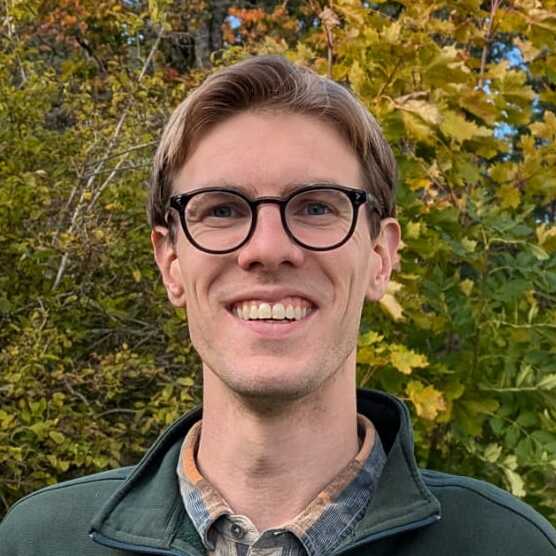
 Marcus Klasson
· 3 previous affiliations
- Ericsson (Sweden)Since 2025
- Researcher · Since 2025
- Current
- Aalto University2023–2025
- Postdoc · 2023–2025
- KTH Royal Institute of Technology2017–2022
- PhD student · 2017–2022
Research Overview
Marcus Klasson focuses on computer vision, uncertainty estimation, and continual learning, with an emphasis on adapting models under limited supervision. His trajectory spans from early work on structured image classification to recent advancements in Bayesian deep learning and 3D scene reconstruction. Currently, he investigates post-hoc probabilistic methods for vision-language models and distractor-free rendering techniques.
Research Trajectory
Klasson’s early research addressed applied computer vision and structured data representation. He introduced a benchmark for assistive technology in A Hierarchical Grocery Store Image Dataset With Visual and Semantic Labels, providing natural images paired with semantic labels to improve classification systems for visually impaired users. This foundational work aligns with the broader research direction of Modeling Label Dependencies in Multi-Label Learning.
He subsequently explored how models can adapt over time without catastrophic forgetting. In Learn the Time to Learn: Replay Scheduling in Continual Learning, he proposed scheduling mechanisms for experience replay, demonstrating that dynamically selecting when to replay historical data outperforms fixed heuristic policies. Expanding on model adaptation, he investigated the intersection of continual learning and differential privacy in Differentially Private Continual Learning using Pre-Trained Models. This work utilized parameter-efficient adapters to balance privacy constraints with knowledge retention, contributing to the area of Sub-linear Parameter Growth for Lifelong Model Adaptation.
A major theme in his recent trajectory is improving the efficiency of uncertainty estimation. He addressed the computational bottlenecks of Monte Carlo integration in Posterior Inferred, Now What? Streamlining Prediction in Bayesian Deep Learning. Alongside collaborators, he further formalized these techniques in Streamlining Prediction in Bayesian Deep Learning, enabling fast, analytical uncertainty quantification for complex architectures like Vision Transformers and GPT-2. This research advances several areas, including Linearized Bayesian Neural Networks, Deterministic Moment Propagation for Sampling-Free Uncertainty, and Bayesian Deep Learning in Low Dimensional Subspaces.
Concurrently, Klasson has applied uncertainty quantification to spatial computing. In Sources of Uncertainty in 3D Scene Reconstruction, he developed a taxonomy for uncertainties in Neural Radiance Fields (NeRFs) and 3D Gaussian Splatting, evaluating how noise and occlusions impact rendering fidelity. Building on this domain, he introduced DeSplat: Decomposed Gaussian Splatting for Distractor-Free Rendering, a framework that separates static scenes from transient elements to produce clean renders without relying on heavy pre-trained masking models.
His work also extends to few-shot generalization and vision-language models (VLMs). He participated in research demonstrating that loss landscape flatness during training significantly improves multi-domain performance, detailed in Flatness Improves Backbone Generalisation in Few-Shot Classification. To equip pre-trained VLMs with reliable uncertainty metrics, he explored targeted support set selection in Probabilistic Active Few-Shot Learning in Vision-Language Models. This culminated in Post-hoc Probabilistic Vision-Language Models, where he and his co-authors introduced a Bayesian framework using Laplace approximations to derive analytical distributions for cosine similarities. This contribution aligns with the broader area of Post-hoc Uncertainty Quantification via Laplace Approximation.
Current Directions
The most recent papers in the evidence indicate a strong focus on post-hoc probabilistic modeling and robust 3D scene representation. Klasson is actively investigating methods to extract reliable uncertainty estimates from large, pre-trained vision-language models without requiring computationally expensive retraining. By leveraging techniques like the Laplace approximation, this work aims to improve calibration and active learning in zero- and few-shot settings. Additionally, his research in spatial computing continues to address real-world complexities in 3D Gaussian Splatting, specifically focusing on decomposing scenes to isolate static environments from dynamic distractors efficiently.
Profile updated
Loading new papers…
Other researchers whose papers cluster into the same research directions — a proxy for overlapping technical interests and shared intellectual neighborhoods.
See something wrong? Report a mistake