

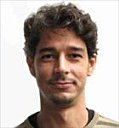
 Marco Vilela
· 9 previous affiliations
- Analog Devices (United States)Since 2024
- Researcher · Since 2024
- Takeda (Japan)2020–2024
- Associate Director · 2022–2024
- Researcher · 2020–2022
- Syllable Life Sciences(adquired by Neumora)2018–2020
- Senior Scientist · 2018–2020
- Brown University2015–2018
- Senior Research Associate · 2015–2018
- Instructor · 2014–2015
- Universidade Nova de Lisboa2007–2009
- PhD student · 2007–2009
- Laboratório Nacional de Computação Científica2005–2007
- Master of Science (MSc), Computational and Applied Mathematics · 2005–2007
- National Laboratory for Scientific Computing2005–2006
- MS student · 2005–2006
- Universidade Federal de Itajubá1999–2005
- Undergrad student · 1999–2005
Research Overview
Marco Vilela focuses on the application of computational modeling, machine learning, and signal processing to biological systems and clinical diagnostics. His work spans the development of mathematical frameworks for biochemical networks, the optimization of high-performance brain-computer interfaces (BCIs), and the implementation of deep learning architectures for digital biomarkers in neurodegenerative diseases. Currently affiliated with Takeda, Vilela’s research trajectory reflects a transition from fundamental systems biology toward translational neural engineering and clinical data science.
Research Trajectory
Vilela’s early research, spanning approximately 2007 to 2010, was primarily concerned with the mathematical foundations of systems biology. During this period, he developed computational methods to address the challenges of modeling complex biochemical dynamics from experimental data. A central theme of this work was the "inverse problem"—identifying the structure and parameters of biological networks from time-series observations. In Automated smoother for the numerical decoupling of dynamics models, he introduced algorithmic approaches to simplify the decoupling of differential equation models, a necessary step for making large-scale biological simulations computationally tractable. This methodological focus continued with Parameter optimization in S-system models, where he explored optimization strategies for S-systems, a power-law formalism used to describe metabolic and genetic networks. By 2010, Vilela applied these quantitative techniques to specific biological phenomena, such as in Mathematical Model of a Cell Size Checkpoint, which provided a formal framework for understanding how cells regulate growth and division.
Following this foundational work in systems biology, Vilela’s focus shifted toward neural engineering and the development of intracortical brain-computer interfaces (iBCIs). This transition involved moving from the modeling of intracellular networks to the decoding of population-level neural activity for motor control. His work in this domain addressed the limitations of traditional linear decoders, such as the Kalman filter, which often struggle to capture the non-linear dynamics of motor cortical signals. In BCI decoder performance comparison of an LSTM recurrent neural network and a Kalman filter in retrospective simulation, he evaluated the efficacy of Long Short-Term Memory (LSTM) networks in predicting intended cursor velocity. This research contributed to a broader effort in the field to achieve Closing the Loop in Bidirectional Neural Interfaces, aiming for more fluid and naturalistic control of external devices.
Vilela’s involvement in neural engineering also extended to the practical and clinical challenges of deploying BCIs outside of controlled laboratory settings. He participated in research regarding Fully Implantable Wireless Brain-Machine Interfaces, which sought to replace percutaneous leads with wireless transmitters to reduce infection risks and increase user mobility. This work is closely linked to the problem of Longitudinal Tracking of Single Neuron Stability and Drift, as the long-term utility of a BCI depends on the ability of decoders to remain accurate despite changes in the neural signal over months or years. Furthermore, his contributions in this area touched upon the necessity of Energy Efficient Computing for Implantable Neural Prosthetics, ensuring that implanted hardware does not exceed thermal safety limits for biological tissue.
In recent years, Vilela’s work has increasingly focused on digital biomarkers and the use of advanced machine learning to monitor disease progression. At Takeda, he has collaborated on projects that leverage speech and language as non-invasive indicators of neurological health. This includes the development of the Automatic Prediction of Amyotrophic Lateral Sclerosis Progression using Longitudinal Speech Transformer, which utilizes deep learning to model temporal changes in patient speech. Similarly, his work has explored Exploring Emotion and Emotional Variability as DigitalBiomarkers in Frontotemporal Dementia Speech, suggesting that affective components of vocalization can serve as sensitive metrics for cognitive decline. Most recently, his research interests have expanded into the theoretical aspects of generative modeling, specifically investigating how Can Diffusion Models Disentangle? A Theoretical Perspective to separate independent latent factors in complex datasets.
Current Directions
Vilela’s current research is characterized by the integration of high-dimensional data analysis with clinical applications. A primary focus is the refinement of digital biomarkers for neurodegenerative conditions like Amyotrophic Lateral Sclerosis (ALS) and Frontotemporal Dementia (FTD). By employing transformer-based architectures and pretrained speech representations, this work aims to provide more objective and frequent assessments of patient status than traditional clinical scales.
Additionally, Vilela continues to engage with the theoretical frontiers of machine learning. His recent work on diffusion models suggests an interest in the "disentanglement" problem—the ability of a model to isolate distinct features of data (such as style versus content) without explicit supervision. This theoretical direction has potential implications for improving the interpretability and robustness of models used in both neural decoding and clinical diagnostics.
Representative Work
Parameter optimization in S-system models As first author, Vilela addressed the computational difficulty of identifying parameters in S-system models, which are non-linear differential equations used in systems biology. The paper explored optimization landscapes and proposed strategies to improve the reliability of parameter estimation from experimental time-series data.
Mathematical Model of a Cell Size Checkpoint In this first-author study, Vilela developed a quantitative model to describe the regulatory mechanisms governing cell size. The work integrated experimental observations into a mathematical framework to explain how cells maintain size homeostasis across generations, highlighting the role of specific molecular checkpoints.
BCI decoder performance comparison of an LSTM recurrent neural network and a Kalman filter in retrospective simulation Serving as second author, Vilela contributed to a comparative analysis of neural decoding algorithms. The study demonstrated that LSTM recurrent neural networks, which can capture long-term temporal dependencies, outperformed the standard linear Kalman filter in predicting cursor movement from human motor cortical signals.
Home Use of a Percutaneous Wireless Intracortical Brain-Computer Interface by Individuals With Tetraplegia Vilela participated in this multi-author study evaluating the feasibility of wireless iBCI systems for home use. The research demonstrated that individuals with tetraplegia could achieve high-performance cursor control using a wireless transmitter, representing a significant step toward making neural prosthetics practical for daily life.
Automatic Prediction of Amyotrophic Lateral Sclerosis Progression using Longitudinal Speech Transformer In this collaborative work, Vilela contributed to the development of the ALST (ALS Longitudinal Speech Transformer) model. The system uses pretrained speech representations to predict disease progression from voice recordings, achieving high accuracy in identifying changes in patient status over time.
Can Diffusion Models Disentangle? A Theoretical Perspective Vilela was part of the research team that provided a theoretical framework for understanding disentanglement in diffusion models. The paper proved that these models could learn to separate independent factors of variation under weak supervision, offering a rigorous basis for the use of generative models in complex data analysis.
Profile updated
| Title | Venue | Year |
|---|---|---|
| Can Diffusion Models Disentangle? A Theoretical Perspective | Openreview | 2025 |
| Can Diffusion Models Disentangle? A Theoretical Perspective | NeurIPS | 2025 |
| Exploring Emotion and Emotional Variability as DigitalBiomarkers in Frontotemporal Dementia Speech | IEEE Access | 2024 |
| Automatic Prediction of Amyotrophic Lateral Sclerosis Progression using Longitudinal Speech Transformer | Interspeech | 2024 |
| Home Use of a Percutaneous Wireless Intracortical Brain-Computer Interface by Individuals With Tetraplegia | IEEE Trans. Biomedical Engineering | 2021 |
| BCI decoder performance comparison of an LSTM recurrent neural network and a Kalman filter in retrospective simulation | Ner | 2019 |
| Mathematical Model of a Cell Size Checkpoint | PLOS Computational Biology | 2010 |
| Identification of neutral biochemical network models from time series data | Bmc Syst. Biol | 2009 |
| Parameter optimization in S-system models | Bmc Syst. Biol | 2008 |
| Automated smoother for the numerical decoupling of dynamics models | BMC Bioinformatics | 2007 |
Loading new papers…
Other researchers whose papers cluster into the same research directions — a proxy for overlapping technical interests and shared intellectual neighborhoods.
See something wrong? Report a mistake