

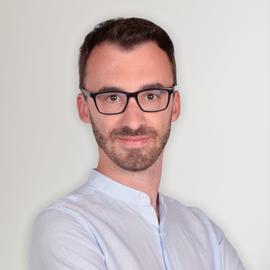
 Marco De Nadai
· 5 previous affiliations
- Spotify (Sweden)Since 2022
- Researcher · Since 2022
- Zalando SE2021–2022
- Researcher · 2021–2022
- Fondazione Bruno Kessler2019–2021
- Postdoc · 2019–2021
- University of Trento2012–2019
- PhD student · 2015–2019
- MS student · 2012–2015
- University of Udine2008–2012
- Undergrad student · 2008–2012
Research Overview
Marco De Nadai focuses on computational social science, human mobility analysis, and computer vision. His early work leveraged large-scale digital traces to model urban dynamics and socio-economic behaviors, while his parallel research in deep learning advanced image-to-image translation and Vision Transformers. His current focus centers on applying graph neural networks and spatial inductive biases to complex recommendation systems and behavioral modeling.
Research Trajectory
His research began by investigating urban dynamics through the lens of large-scale digital traces. In The Death and Life of Great Italian Cities: A Mobile Phone Data Perspective (2016), he utilized mobile phone data as an alternative to costly traditional surveys to empirically test Jane Jacobs's foundational conditions for city vitality. This interest in urban environments soon expanded to the study of public safety. He led an analysis of Socio-economic, built environment, and mobility conditions associated with crime: A study of multiple cities (2020), moving beyond single-city studies to examine how various ecological and socio-economic factors influence criminal activity across different metropolises.
Concurrently, his research expanded into deep learning and computer vision, particularly focusing on generative models and image manipulation. He contributed to the development of an unsupervised approach for altering image attributes via natural language commands in Describe What to Change: A Text-guided Unsupervised Image-to-image Translation Approach (2020). This work on controllable generation continued with Click to Move: Controlling Video Generation with Sparse Motion (2021), which introduced a framework using Graph Convolutional Networks to synthesize video sequences based on user-specified object trajectories.
He also investigated the architectural properties of emerging neural network paradigms. In Efficient Training of Visual Transformers with Small Datasets (2021), his team empirically analyzed the robustness of Vision Transformers (VTs) in data-constrained regimes, addressing the lack of convolutional inductive biases. This research intersects with the broader research directions of Scaling Structural Inductive Biases in Foundation Models and Hybrid Matching for Fast DETR Convergence.
Returning to human mobility during a period of global disruption, he directed research on Living in a pandemic: adaptation of individual mobility and social activity in the US (2021). By leveraging longitudinal GPS data, the study quantified how non-pharmaceutical interventions altered not just the frequency of venue visits, but the nature of how individuals experienced them. He later synthesized these dual interests in machine learning and complex urban systems in Understanding and Rewiring Cities (2022), outlining how digital traces and computational models can inform policy interventions for neighborhood vitality and safety.
In the domain of generative AI, his work sought to improve the fidelity and control of image-to-image translations. He oversaw research on Smooth image-to-image translations with latent space interpolations (2022), which addressed the challenge of maintaining realistic intermediate images during inter-domain transformations. This was followed by ISF-GAN: An Implicit Style Function for High-Resolution Image-to-Image Translation (2023), introducing a method to manipulate the latent codes of pre-trained models like StyleGAN for multi-modal translations while preserving image identity.
His most recent publications reflect a maturation of these diverse methodological tracks. In computer vision, he participated in developing a Spatial Attention-based Regularization method in Spatial entropy as an inductive bias for vision transformers (2024), which minimizes spatial entropy to boost VT performance on smaller datasets. In computational social science, he contributed to The long-term and disparate impact of job loss on individual mobility behaviour (2024), a study utilizing privacy-enhanced GPS and census data to infer employment status over time. This work advances several research areas, including Spatial Aggregation and the Privacy Utility Trade-off, Quantifying Behavioral and Urban Dynamics with Information Entropy, and High Frequency Socioeconomic Estimation from Digital Proxies. Finally, applying advanced graph-based techniques to industrial-scale recommendation problems, he developed a Heterogeneous Graph Neural Network combined with a Two-Tower model in Personalized Audiobook Recommendations at Spotify Through Graph Neural Networks (2024), addressing data sparsity and cold-start challenges for new media formats.
Current Directions
The most recent work in the evidence points toward three distinct but methodologically related areas: the refinement of inductive biases in deep learning architectures, the high-resolution modeling of socio-economic shocks, and the deployment of graph neural networks for large-scale personalization. In computer vision, current efforts focus on regularizing attention mechanisms to make Vision Transformers more data-efficient without requiring architectural overhauls. In the realm of computational social science, recent research investigates how high-frequency digital proxies, such as privacy-preserving mobility data, can be used to track the behavioral impacts of economic disruptions like job loss. Finally, in applied machine learning, ongoing work addresses cold-start problems and data sparsity in industrial recommender systems by leveraging heterogeneous graph structures to fuse diverse user interaction signals.
Profile updated
Loading new papers…
Other researchers whose papers cluster into the same research directions — a proxy for overlapping technical interests and shared intellectual neighborhoods.
See something wrong? Report a mistake