

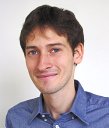
 Marco Chiesa
· 4 previous affiliations
- Current
- CHU Dinant Godinne UCL Namur2015–2017
- Postdoc · 2015–2017
- Hebrew University of Jerusalem2014–2015
- Postdoc · 2014–2015
- Roma Tre University2011–2013
- PhD student · 2011–2013
Research Overview
Marco Chiesa focuses on computer networking, internet architectures, and AI-driven software systems. His trajectory spans foundational work in routing protocol security and software-defined networking to recent innovations in high-speed packet processing and data-plane programmability. Currently, he investigates the intersection of artificial intelligence and systems infrastructure, emphasizing AI-based code verification, large language model inference scheduling, and intelligent network management.
Research Trajectory
Early in his career, Chiesa investigated the stability and security of fundamental internet routing protocols. This work included analyzing the complexities of Border Gateway Protocol (BGP) stability in Local transit policies and the complexity of BGP Stability Testing. He expanded on this by examining the computational difficulty of traffic hijacking in Computational Complexity of Traffic Hijacking under BGP and S-BGP. This research demonstrated that while hijacking is computationally tractable under standard BGP, it becomes NP-hard under the secure S-BGP variant, contributing to the broader area of Computational Complexity as a Barrier to Election Manipulation.
Moving into the mid-2010s, his focus shifted toward network resiliency and stateless forwarding. In Exploring the Limits of Static Failover Routing, Chiesa and collaborators investigated the fundamental limits of static fast-failover routing, showing that simple local routing choices can tolerate multiple edge failures with minimal header changes. This advanced the research direction of Stateless Forwarding through Packet Carried State and the area of Disjoint Path Routing for Resilient Network Architectures. Building on these concepts, On the Resiliency of Randomized Routing Against Multiple Edge Failures. introduced a randomized routing algorithm that guarantees packet delivery in k-connected networks facing up to k-1 edge failures.
As Software-Defined Networking (SDN) gained prominence, Chiesa explored decentralized control mechanisms. He helped develop ez-Segway, detailed in Decentralized Consistent Network Updates in SDN with ez-Segway, which shifted the coordination of network updates from a central controller directly to the switches. This approach significantly improved update times while preventing loops and congestion, advancing in-network intelligence for programmable data planes. He continued to refine fast reroute primitives with PURR: a primitive for reconfigurable fast reroute: hope for the best and program for the worst.
In subsequent years, Chiesa's research increasingly addressed high-speed packet processing and data plane programmability. He contributed to Cheetah: A High-Speed Programmable Load-Balancer Framework With Guaranteed Per-Connection-Consistency, further extending his prior work in stateless forwarding. He also explored application-level performance optimizations in Packet Order Matters! Improving Application Performance by Deliberately Delaying Packets and investigated stateful processing at terabit speeds in A High-Speed Stateful Packet Processing Approach for Tbps Programmable Switches. To overcome memory bottlenecks in high-performance computing, he co-authored Just-in-Time Packet State Prefetching, which introduced a strategy to load necessary state into CPU caches prior to packet arrival, achieving substantial throughput improvements for stateful network functions.
More recently, Chiesa has integrated artificial intelligence and data-plane analytics into network security and management. In Oscilloscope: Detecting BGP Hijacks in the Data Plane, he and his colleagues developed a system that identifies BGP hijacks by analyzing real-time traffic patterns and Round Trip Time (RTT) signals rather than relying on routing announcements. Addressing network configuration, Making Network Configuration Human Friendly introduced NETBUDDY, a framework utilizing Large Language Models (LLMs) to translate natural language intent into formal specifications and low-level protocols. Expanding on the use of agentic AI for autonomous network management, Can LLMs Forecast Internet Traffic from Social Media? demonstrated how LLMs can predict society-driven traffic surges by interpreting cultural context from social media platforms.
His most recent work focuses heavily on AI-driven software systems, particularly the optimization of LLM inference and automated formal verification. In Dissect-and-Restore: AI-based Code Verification with Transient Refactoring, his group introduced Prometheus, an AI-assisted system that improves formal verification success rates by transiently refactoring complex logic into modular components. He has also addressed the computational demands of deploying large models; Priority-Aware Preemptive Scheduling for Mixed-Priority Workloads in MoE Inference presented QLLM, a system that enables fine-grained, priority-aware scheduling for Mixture of Experts models. Furthermore, KVComm: Enabling Efficient LLM Communication through Selective KV Sharing proposed a communication framework allowing LLMs to collaborate by selectively sharing Key-Value pairs, drastically reducing computational overhead while maintaining performance.
Current Directions
Recent work investigates the intersection of artificial intelligence, formal methods, and high-performance systems infrastructure. The most recent papers in the evidence address the challenges of deploying and verifying complex AI models, focusing on the automated generation of formal specifications for code verification and overcoming memory walls in large-scale model inference. This includes developing preemptive scheduling techniques for Mixture of Experts architectures and designing efficient communication frameworks for multi-agent LLM coordination.
Profile updated
| Paper | Venue | Year |
|---|---|---|
| NetConfEval: Can LLMs Facilitate Network Configuration?🤗Hugging FaceNetConfEval/ | Proc. ACM Netw | 2024 |
Loading new papers…
Other researchers whose papers cluster into the same research directions — a proxy for overlapping technical interests and shared intellectual neighborhoods.
See something wrong? Report a mistake