

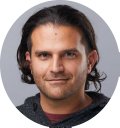
 Marcel Nassar
· 7 previous affiliations
- Altos LabsSince 2023
- Researcher · Since 2023
- Intel (United States)2017–2023
- Senior Staff AI Research Scientist · 2017–2023
- Intel (Israel)2017–2023
- Researcher · 2017–2023
- Samsung (South Korea)2006–2017
- Senior Research Engineer · 2013–2017
- Researcher · 2006–2017
- The University of Texas at Austin2006–2013
- Research Assistant · 2006–2013
- Smart Grid R&D Intern · 2012
- American University of Beirut2002–2006
- Bachelor of Engineering, Computer and Communications Engineering · 2002–2006
Research Overview
Marcel Nassar focuses on machine learning systems, graph representation learning, and computational biology. His trajectory spans from scalable graph algorithms and materials science frameworks to recent work in single-cell transcriptomics and perturbation response modeling. He currently investigates generative modeling and standardized benchmarking for complex biological datasets.
Research Trajectory
Nassar’s early work addressed the computational bottlenecks inherent in training large-scale models on graph-structured data. In 2021, he participated in the development of Implicit SVD for Graph Representation Learning. This research sought to make graph representation learning more tractable for environments with modest hardware constraints. By designing a framework that computes the Singular Value Decomposition of implicitly defined matrices, the project provided closed-form solutions to convex problems in a fraction of the epochs typically required by gradient-based backpropagation. This work contributed to the research direction of Scaling Graph Learning Beyond the Quadratic Memory Wall, while also intersecting with the area of Spectral Initialization for Nonconvex Optimization and the broader area of Learning Adaptive Activation Functions through Functional Initialization.
Following his work on graph learning efficiency, Nassar explored temporal dynamics in computer vision. He collaborated on Exploiting Long-Term Dependencies for Generating Dynamic Scene Graphs (2022), which tackled the challenge of temporal fluctuations in video-based scene graph generation. The proposed approach utilized transformers to capture object-level consistency and inter-object relationship dynamics over extended tracklets, improving the stability and accuracy of dynamic scene graph detection on benchmarks like Action Genome.
In 2023, Nassar’s focus shifted toward the intersection of machine learning and the physical sciences, specifically solid-state materials modeling. He co-developed The Open MatSci ML Toolkit: A Flexible Framework for Machine Learning in Materials Science, a scalable, Python-based infrastructure designed to apply deep learning to scientific data, with a particular emphasis on the OpenCatalyst Dataset. This toolkit provided seamless scaling across diverse hardware platforms and integrated Deep Graph Library support for rapid prototyping. This contribution advanced the research direction of Modular and Decoupled Architectures for Machine Learning Systems, while also touching upon the area of Automating Distributed Execution for Large Neural Networks and the domain of Geometric Equivariance in 3D Molecular Deep Learning. Building on this infrastructure, he subsequently contributed to MatSciML: A Broad, Multi-Task Benchmark for Solid-State Materials Modeling. This benchmark addressed the fragmentation in materials science machine learning by unifying disparate datasets—such as OQMD, NOMAD, and the Carolina Materials Database—into a standardized evaluation framework for periodic crystal structures, enabling better comparisons of model generalizability.
More recently, Nassar has applied his expertise in machine learning systems and benchmarking to computational biology, with a particular emphasis on cellular perturbation analysis. In 2025, he was part of the team that introduced PerturBench: Benchmarking Machine Learning Models for Cellular Perturbation Analysis, a standardized framework designed to evaluate models predicting cellular responses to genetic and chemical perturbations. This was closely followed by his work on scGeneScope: A Treatment-Matched Single Cell Imaging and Transcriptomics Dataset and Benchmark for Treatment Response Modeling. This project provided a novel multimodal dataset pairing single-cell RNA sequencing with Cell Painting microscopy images across numerous chemical treatments, revealing that classic methods can sometimes outperform newer foundation models in realistic biological contexts.
Continuing this trajectory into generative modeling for biology, Nassar collaborated on PRiMeFlow: capturing complex expression heterogeneity in perturbation response modelling (2026). This research introduced a flow matching framework that operates directly in high-dimensional gene expression space rather than relying on a compressed latent representation. By utilizing a U-Net architecture, the model more accurately captures the complex, heterogeneous spread of single-cell responses to various perturbations compared to previous approaches.
Current Directions
The most recent papers in the evidence indicate a strong focus on machine learning for single-cell biology and treatment response modeling. Nassar's current work investigates how generative frameworks, such as flow matching, can be adapted to high-dimensional biological data to predict complex cellular behaviors under genetic and chemical perturbations. A central theme in this recent research is the critical need for rigorous, standardized benchmarking in computational biology. By developing unified datasets and evaluation protocols that pair transcriptomics with imaging, his ongoing efforts aim to bridge the gap between algorithmic innovation and reliable, robust applications in drug discovery and biological research.
Profile updated
| Paper | Venue | Year |
|---|---|---|
| Implicit SVD for Graph Representation LearningGitHubsamihaija/ | NeurIPS | 2021 |
Loading new papers…
Other researchers whose papers cluster into the same research directions — a proxy for overlapping technical interests and shared intellectual neighborhoods.
See something wrong? Report a mistake