

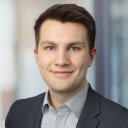
 Marc Uecker
· 3 previous affiliations
- Researcher · Since 2022
- Karlsruhe Institute of TechnologySince 2022
- PhD student · Since 2022
- Technische Universität Darmstadt2015–2021
- MS student · 2019–2021
- Undergrad student · 2015–2019
Research Overview
Marc Uecker focuses on perception systems and sensor evaluation for autonomous vehicles, with particular emphasis on real-time LiDAR processing and simulation-based coverage analysis. His trajectory spans deep learning representations for 3D point clouds to advanced methodologies for estimating sensor blind spots. Recently, his work addresses the development of modular, multi-purpose hardware platforms for connected autonomous driving research.
Research Trajectory
Marc Uecker’s research trajectory centers on the perception capabilities and sensor architectures of autonomous vehicles, evolving from the optimization of real-time data processing to the rigorous evaluation of sensor coverage.
In 2022, Uecker led research into the computational challenges of processing high-resolution 3D environmental data. As the first author of Analyzing Deep Learning Representations of Point Clouds for Real-Time In-Vehicle LiDAR Perception, he investigated how underlying data representations impact the run-time performance and accuracy of deep neural networks. This work addressed the critical bottleneck of extracting semantics from increasingly dense multi-sensor point clouds while maintaining the strict real-time constraints required for in-vehicle deployment.
By 2024, his focus expanded from data processing efficiency to the structural evaluation of sensor setups and vehicle safety. In Can You See Me Now? Blind Spot Estimation for Autonomous Vehicles using Scenario-Based Simulation with Random Reference Sensors, Uecker introduced a novel methodology for calculating blind spots in automated vehicles and robotics. Moving beyond traditional geometric approximations, this first-author work leveraged high-fidelity 3D simulation environments and Monte Carlo-based reference sensor simulations to provide highly accurate, actionable visibility estimates and detection probabilities.
During this same period, Uecker also contributed to broader systems-level engineering for autonomous testing. As a co-author of CoCar NextGen: a Multi-Purpose Platform for Connected Autonomous Driving Research, he participated in the design of a modular, highly flexible vehicle platform equipped with redundant sensor setups. This collaborative project aimed to facilitate cross-domain, data-driven approaches for real-world testing on public roads, supporting the broader transition toward SAE Level 5 automated driving.
Current Directions
The most recent papers in the evidence indicate a dual focus on virtual validation and physical testing infrastructure for autonomous systems. Uecker's current work investigates how high-fidelity 3D simulations can be utilized to rigorously quantify sensor coverage and safety metrics, such as blind spot size and detection probabilities. Concurrently, his participation in the CoCar NextGen project highlights an ongoing interest in the physical deployment of connected autonomous driving research, specifically through the development of modular platforms with redundant sensor architectures designed to support advanced, data-driven perception models in real-world environments.
Profile updated
Loading new papers…
Other researchers whose papers cluster into the same research directions — a proxy for overlapping technical interests and shared intellectual neighborhoods.
See something wrong? Report a mistake