

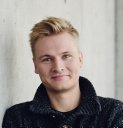
 Marc-Andre Schulz
· 3 previous affiliations
- University of TübingenSince 2024
- Group Leader · Since 2024
- Charité - Universitätsmedizin Berlin2020–2024
- Postdoc · 2020–2024
- RWTH Aachen University2017–2020
- PhD student · 2017–2020
Research Overview
Marc-Andre Schulz focuses on machine learning for neuroimaging, explainable artificial intelligence, and representation learning in data-scarce biomedical domains. His trajectory spans from fast, model-agnostic interpretability frameworks to the development of scalable transfer learning pipelines for brain image analysis. Most recently, his work investigates self-supervised foundation models for functional magnetic resonance imaging.
Research Trajectory
Early work investigated fast, model-agnostic methods for interpreting machine learning predictions. In EMAP: Explanation by Minimal Adversarial Perturbation, he and his collaborator introduced a framework that explains decisions by identifying the minimal adversarial perturbation required to flip a model's output. By training a neural network to point toward the nearest decision boundary, this approach bridges the gap between feature importance and counterfactual explanations. Operating up to five orders of magnitude faster than traditional sampling-based methods like LIME, this research contributed significantly to the area of Amortized Inference for Real-Time Model Explanations. The methodology also touched upon the broader research direction of Gradient Based Optimization for Mixed Tabular Features and the area of Overcoming Local Minima Entrapment in Nonconvex Optimization.
Shifting focus toward biomedical applications, subsequent research addressed the pervasive challenge of limited annotated data in clinical settings. Medical researchers frequently encounter a bottleneck where large volumes of data are available, but confirmed clinical diagnoses remain scarce. In Label scarcity in biomedicine: Data-rich latent factor discovery enhances phenotype prediction, he demonstrated that large, unlabeled datasets from healthy populations can be leveraged to learn hidden patterns that improve phenotype prediction in data-starved scenarios. This work advanced the research direction of Nonlinear Dimensionality Reduction for Complex Systems. Continuing this theme of overcoming data limitations in medical imaging, he developed novel techniques for structural brain analysis. The paper Data Augmentation via Partial Nonlinear Registration for Brain-Age Prediction explored how specialized data augmentation strategies can improve the robustness of predictive models estimating brain age from neuroimaging data.
As deep learning became more prevalent in clinical neuroscience, he also engaged in critical evaluations of the field's methodology. With collaborators, he published Promises and pitfalls of deep neural networks in neuroimaging-based psychiatric research, offering a perspective on the methodological challenges and potential of applying complex neural architectures to psychiatric neuroimaging. To address the practical engineering bottlenecks in this domain, he introduced TLIMB - A Transfer Learning Framework for IMage Analysis of the Brain. This Python-based tool simplifies and scales transfer learning for neuroimaging by abstracting complex pipelines into intuitive configuration files that compile into Nextflow workflows. This contribution aligns with the research direction of Configuration-Driven Machine Learning Frameworks, enabling researchers to transition seamlessly from local prototyping to large-scale compute clusters with high reproducibility.
In parallel, he guided research into model transparency and bias in clinical applications. He oversaw the development of DeepRepViz: Identifying Potential Confounders in Deep Learning Model Predictions, which provides visual analytics tools to identify confounding variables that might spuriously drive deep learning predictions in medical imaging, ensuring models learn genuine physiological signals rather than artifactual correlations.
Most recently, his research has advanced into self-supervised learning for functional neuroimaging. In Brain-Semantoks: Learning Semantic Tokens of Brain Dynamics with a Self-Distilled Foundation Model, he and his co-authors proposed a foundation model for functional magnetic resonance imaging (fMRI). Rather than reconstructing noisy raw signals, this architecture learns abstract semantic tokens of brain activity by grouping brain regions into functional networks via a self-distillation objective. This approach yields stable representations that perform highly on clinical and cognitive tasks, contributing to the broader area of Structured Masking for Time-Series Representation Learning.
Current Directions
Recent work investigates the application of self-supervised foundation models to functional neuroimaging. The most recent papers in the evidence address the challenge of extracting stable, meaningful representations from highly noisy functional magnetic resonance imaging (fMRI) data. Rather than relying on raw signal reconstruction, this research focuses on learning abstract semantic tokens of brain activity and utilizing self-distillation techniques. By grouping brain regions into functional networks, these current efforts aim to create robust, reusable representations that can be applied to a variety of downstream clinical and cognitive tasks, even when the core model weights remain frozen. Additionally, there is an ongoing focus on building scalable, configuration-driven software frameworks that bridge the gap between complex deep learning methodologies and practical, reproducible clinical research.
Profile updated
Loading new papers…
Other researchers whose papers cluster into the same research directions — a proxy for overlapping technical interests and shared intellectual neighborhoods.
See something wrong? Report a mistake