

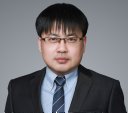
 Manning Wang
· 1 previous affiliation
- Fudan UniversitySince 2007
- Full Professor · Since 2018
- Associate Professor · 2012–2017
- PhD student · 2007–2011
Research Overview
Manning Wang focuses on 3D point cloud registration, medical image analysis, and multiple instance learning for digital pathology. His early work addressed geometric ambiguities and domain gaps in spatial data representations. More recently, his research investigates test-time adaptation for molecular interactions and biologically interpretable deep learning models for clinical diagnostics.
Research Trajectory
In 2023, Wang’s research heavily emphasized 3D computer vision, particularly the challenge of aligning unaligned scans. He introduced RGM (Registration by Graph Matching) in Robust Point Cloud Registration Framework Based on Deep Graph Matching, a model that transforms point clouds into graphs and dynamically generates edges using a transformer to handle challenging outliers and partial overlaps. This work significantly advanced the area of Resolving Geometric Ambiguity in Point Cloud Registration and the broader direction of Robust Non-Rigid Registration of Point Clouds. Expanding on this theme, he explored the research direction of Robust Point Cloud Registration Under Low Spatial Overlap. In PointMBF: A Multi-scale Bidirectional Fusion Network for Unsupervised RGB-D Point Cloud Registration, he proposed a bidirectional fusion network to better exploit complementary information in RGB-D data. Additionally, he improved registration accuracy by transferring multi-modality knowledge to descriptor neural networks in Boosting 3D Point Cloud Registration by Transferring Multi-modality Knowledge, a method requiring only point clouds during inference.
Parallel to his 3D vision work, Wang investigated cross-modality domain adaptation for medical image segmentation. In Reducing Domain Gap in Frequency and Spatial Domain for Cross-Modality Domain Adaptation on Medical Image Segmentation, he introduced a framework based on frequency and spatial domain transfer under a multi-teacher distillation setup, moving away from complex adversarial learning to bridge domain gaps more effectively.
In 2024, Wang’s focus expanded into digital pathology, specifically addressing the computational challenges of analyzing gigapixel-scale Whole Slide Images (WSIs) through Multiple Instance Learning (MIL). In Transformer-Based Video-Structure Multi-Instance Learning for Whole Slide Image Classification, he tackled the difficulty of balancing end-to-end training with the need to capture rich spatial context essential for diagnosis. He further refined these methodologies in Rethinking Multiple Instance Learning: Developing an Instance-Level Classifier via Weakly-Supervised Self-Training, reframing the task as a semi-supervised instance classification problem. By introducing a weakly-supervised self-training framework with global and local constraints, this approach enabled models to identify difficult positive instances often missed by traditional bag-level methods. To overcome the massive data and annotation costs associated with clinical AI deployment, Wang and collaborators developed FAST: A Dual-tier Few-Shot Learning Paradigm for Whole Slide Image Classification. This framework achieved near-supervised accuracy using a fraction of the typical annotation cost by combining a learnable image cache for mining unlabeled data with vision-language priors.
Moving into 2025 and 2026, Wang’s research trajectory increasingly emphasized test-time adaptation and biologically interpretable clinical models. In the domain of computational chemistry, he introduced an "on-the-fly" adaptation strategy in Drug-TTA: Test-Time Adaptation for Drug Virtual Screening via Multi-task Meta-Auxiliary Learning. This method performs self-supervised warm-up tasks for specific protein-molecule pairs at test time, adjusting internal parameters to better understand target geometry and boosting screening accuracy. His most recent work applies deep learning directly to clinical diagnostics using Magnetic Resonance Imaging (MRI). He contributed to the development of a Deep-learning-based 3D multi-view multi-parametric MRI fusion model for preoperative T-staging of rectal cancer. Furthermore, in Biologically interpretable deep learning–derived MRI phenotypes reveal lymph node involvement and neoadjuvant therapy response in intrahepatic cholangiocarcinoma, he explored models that serve as biologically interpretable tools for lymph node risk stratification, helping to identify high-risk surgical candidates who might benefit from neoadjuvant therapy.
In 2026, Wang advanced unsupervised domain adaptation for digital pathology in DARE: Dual-Level Adversarial Learning with Domain-Aware Regularization for Whole Slide Image Classification, introducing a framework that pairs adaptive pseudo-labeling with dual patch- and slide-level adversarial alignment alongside domain-aware attention masking to counter cross-hospital domain shifts. In computational biology, Wang also investigated protein-ligand interactions in IAP-CFDock: Iterative Anchor Prediction and Coarse-to-Fine Protein-Ligand Blind Docking and addressed experimental budget constraints in TALK: One-Shot Batch Design for Protein Variant Effect Prediction, developing a one-shot batch design method using posterior coupling between accessible and target variants to optimize variant effect prediction under assay-prediction mismatches.
Current Directions
The most recent papers in the evidence address the application of deep learning to specialized medical and molecular domains, with a strong emphasis on interpretability and test-time robustness. Current work investigates cross-domain generalization in computational pathology, molecular docking and batch experimental design for protein variant prediction, and test-time adaptation strategies for drug virtual screening. Concurrently, Wang is developing biologically interpretable 3D multi-view MRI fusion models designed to improve preoperative staging and risk stratification for cancer patients, bridging the gap between complex deep learning representations and actionable clinical insights.
Profile updated
Loading new papers…
Other researchers whose papers cluster into the same research directions — a proxy for overlapping technical interests and shared intellectual neighborhoods.
See something wrong? Report a mistake