

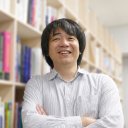
 Makoto Miwa
· 6 previous affiliations
- Invited Senior Researcher · Since 2015
- Toyota Technological InstituteSince 2014
- Full Professor · Since 2024
- Associate Professor · 2014–2023
- 豊田工業大学Since 2014
- Professor · Since 2024
- Associate Professor · 2014–2024
- University of Manchester2011–2014
- Research Associate · 2011–2014
- 東京大学2008–2011
- Researcher · 2008–2011
- The University of Tokyo1999–2011
- Postdoc · 2008–2011
- PhD student · 2005–2008
- Doctor of Philosophy (PhD), Science · 1999–2008
Research Overview
Makoto Miwa focuses on natural language processing, specifically relation extraction, biomedical text mining, and graph-based neural architectures. Early work addressed sentence-level simplification and event extraction across overlapping corpora, while subsequent research developed document-level graph models to capture complex entity interactions. Recent efforts investigate distant supervision techniques and the adaptation of large language models for multilingual biomedical applications.
Research Trajectory
Makoto Miwa’s research evolution reflects a sustained focus on extracting structured knowledge from unstructured text, progressively moving from sentence-level syntactic analysis to complex, document-level neural architectures.
In the early 2010s, Miwa’s work concentrated on foundational challenges in relation extraction (RE). A primary obstacle in this domain is the presence of complex, extraneous linguistic structures that obscure the semantic links between entities. In first-author work on Entity-Focused Sentence Simplification for Relation Extraction (2010), Miwa addressed this by developing methods to strip away non-essential words and clauses, thereby isolating the core relational facts. This approach aligned with the broader research direction of Distilling Relational Evidence from Linguistic Noise, emphasizing the need to refine input data before applying extraction algorithms.
As the decade progressed, Miwa expanded this extraction focus into the biomedical domain, where domain-specific terminology and complex event structures present unique challenges. A significant bottleneck in biomedical text mining is the reliance on manually annotated corpora, which are expensive to produce and narrow in scope. In the first-author paper Wide coverage biomedical event extraction using multiple partially overlapping corpora (2013), Miwa investigated methods for training extraction systems across disparate datasets. By leveraging partially overlapping annotations, this work aimed to achieve broader semantic coverage without requiring entirely new manual annotation efforts. During this period, the field of natural language processing began its transition toward deep learning, and Miwa’s trajectory reflects engagement with the area of Bidirectional Information Flow in Tree Structured Neural Networks, exploring how neural models could better capture syntactic dependencies.
By the late 2010s, Miwa’s methodology shifted decisively toward graph-based neural networks to handle multiple, interdependent relations simultaneously. Traditional RE often treated entity pairs in isolation, ignoring the broader context of the sentence. As a second author, Miwa contributed to A Walk-based Model on Entity Graphs for Relation Extraction (2018), which placed all entities in a sentence into a fully-connected graph. By constructing and merging walks between entity pairs, the model captured interactions among multiple relations. This work significantly advanced the research direction of Overcoming the Relational Independence Assumption.
In 2019, Miwa and collaborators scaled these graph-based approaches beyond single sentences to entire documents. Co-authored work on Connecting the Dots: Document-level Neural Relation Extraction with Edge-oriented Graphs (2019) tackled the reality that human knowledge is rarely confined to isolated, linear statements. By utilizing edge-oriented graphs, the model could infer relations between entities mentioned in entirely different parts of a text. This transition into inter-sentence extraction contributed heavily to themes such as Modeling Documents as Multi-Level Heterogeneous Graphs and Line Graph Transformations for Edge Centric Learning, where the structural connections between nodes become as important as the nodes themselves.
In the early 2020s, Miwa’s focus expanded to address the persistent data scarcity problem in relation extraction through distant supervision. Co-authored research, including Distantly Supervised Relation Extraction with Sentence Reconstruction and Knowledge Base Priors (2021), explored how to automatically generate training data by aligning text with external knowledge bases, while mitigating the noise inherent in such automated labeling. This work intersects with the broader area of Preserving Contextual Signals Beyond the Shortest Dependency Path. Miwa continued this trajectory with DISTANT: Distantly Supervised Entity Span Detection and Classification (2023), applying a positive and unlabeled (PU) learning framework to biomedical named entity recognition (NER), demonstrating a continued commitment to improving extraction pipelines in specialized domains without relying on exhaustive manual annotation.
Current Directions
Recent work investigates the adaptation of large language models (LLMs) for specialized, multilingual domains, alongside continued explorations into advanced representation learning. The most recent papers in the evidence address the development of lightweight, trilingual (English, Japanese, Chinese) models tailored specifically for biomedical text. This research focuses on balancing domain-specific supervised fine-tuning with the preservation of the base model's general capabilities, aiming to create accessible tools for cross-lingual medical informatics.
Additionally, recent collaborative efforts explore the disentanglement of complex linguistic phenomena in neural representations. This includes using variational autoencoders to separate the representations of negation and uncertainty from the core semantic content they modify, ensuring that models can accurately distinguish between factual assertions, negated statements, and speculative claims in downstream extraction tasks.
Profile updated
Loading new papers…
Other researchers whose papers cluster into the same research directions — a proxy for overlapping technical interests and shared intellectual neighborhoods.
See something wrong? Report a mistake