

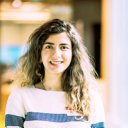
 Mahsa Massoud
· 7 previous affiliations
- Microsoft (United States)Since 2025
- Machine Learning Engineer · Since 2025
- Machine Learning Researcher · 2023–2025
- Coactive AI2025
- Machine Learning Researcher · 2025
- ServiceNow (United States)2024–2025
- ML Researcher · 2024–2025
- McGill University2023–2025
- MS student · 2023–2025
- Master of Science - MS, Computer Science
- Intact2024
- Data Scientist I · 2024
- University of Tehran2017–2022
- Undergrad student · 2017–2022
- Computer Engineering Minor program
Research Overview
Mahsa Massoud focuses on the development of multimodal machine learning systems for document understanding, web-based reasoning, and automated code generation. Her work centers on creating large-scale, open-access datasets and benchmarking suites that enable AI agents to interpret and interact with complex digital environments, including user interfaces and multilingual web content. By addressing the scarcity of high-quality, permissively licensed training data, her research contributes to closing the performance gap between open-source multimodal models and proprietary systems in specialized technical domains.
Research Trajectory
Massoud’s research trajectory is characterized by a focus on the intersection of computer vision and natural language processing, particularly as applied to structured digital documents and the functional web. Her early work in the corpus involves large-scale collaborative efforts to build foundational resources for multimodal AI. This phase was defined by the curation of massive datasets designed to improve model performance on tasks requiring the simultaneous processing of visual layouts and textual information, such as document reasoning and UI-to-code generation.
More recently, Massoud’s work has transitioned toward the evaluation and benchmarking of agentic AI. This shift reflects an evolution from general data curation to the development of sophisticated frameworks for assessing how AI agents perform in dynamic, real-world environments. Her recent contributions emphasize the challenges of multilingualism and multi-step reasoning, requiring models to not only "see" and "read" web content but also to understand the underlying code structures and functional logic of websites across different languages and technical implementations.
Current Directions
Massoud’s current research focuses on the robustness and versatility of web agents. This involves creating benchmarks that move beyond isolated tasks—such as simple visual question answering—toward integrated evaluations that include code editing and sketch-to-code generation. By focusing on multilingual website understanding, her work addresses the global applicability of AI agents, ensuring they can navigate and manipulate web environments that are not limited to English-centric data. This direction is critical for the development of autonomous agents capable of assisting with web development and information extraction in diverse linguistic contexts.
Representative Work
Massoud participated in the development of BigDocs: An Open and Permissively-Licensed Dataset for Training Multimodal Models on Document and Code Tasks, a large-scale project that introduced a dataset of 7.5 million image-text pairs across 30 distinct tasks. The project addressed the "data bottleneck" in the open-source community by providing high-quality, license-permissive data for training models on complex document types, such as receipts, reports, and workflows. As part of a large multi-institutional team, Massoud contributed to an effort that demonstrated how specialized, open-access data can enable models to outperform larger proprietary counterparts in niche domains like document reasoning and UI-to-code generation.
In a more central role, Massoud co-authored WebMMU: A Benchmark for Multimodal Multilingual Website Understanding and Code Generation. This work addresses the limitations of existing benchmarks by providing a unified evaluation suite for agentic AI interacting with web environments. WebMMU assesses AI agents on their ability to perform multilingual website Visual Question Answering (VQA), edit HTML/CSS/JavaScript code, and transform sketches into functional code. The benchmark utilizes real-world website data and emphasizes multi-step reasoning and functional UI understanding, providing a rigorous framework for evaluating the next generation of web-based AI agents.
The available evidence for Massoud's research is currently concentrated in these two major collaborative projects, reflecting a focused contribution to the fields of multimodal document processing and web-based agent evaluation.
Profile updated
Loading new papers…
Other researchers whose papers cluster into the same research directions — a proxy for overlapping technical interests and shared intellectual neighborhoods.
See something wrong? Report a mistake