

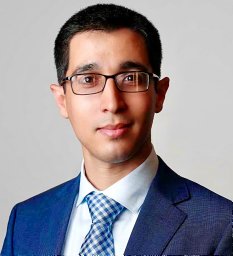
 Mahdi Imani
· 6 previous affiliations
- Associate Editor · Since 2021
- Associate Editor · Since 2022
- Northeastern UniversitySince 2021
- Associate Professor · Since 2026
- Assistant Professor · 2021–2026
- George Washington University2019–2021
- Assistant Professor · 2019–2021
- Texas A&M University2014–2019
- Doctor of Philosophy (Ph.D.), Electrical Engineering · 2014–2019
- University of Tehran2012–2014
- Master of Science (M.Sc.), Electrical Engineering · 2012–2014
Research Overview
Mahdi Imani focuses on state estimation for dynamical systems, Bayesian optimization, and multi-agent reinforcement learning. His trajectory spans from optimal inference in Boolean gene regulatory networks to scalable surrogate modeling for experimental design and inverse reinforcement learning. Recently, his work addresses human-AI collaboration, intent inference, and objective-driven reasoning in complex, uncertain environments.
Research Trajectory
Mahdi Imani’s early research focused on state estimation for complex biological systems, particularly gene regulatory networks. He introduced the Optimal state estimation for boolean dynamical systems using a boolean Kalman smoother to compute optimal minimum mean square error (MMSE) state estimators for networks observed through time-series sequencing data. He later expanded this foundational work to handle environments with incomplete knowledge, developing the Boolean Kalman filter and smoother under model uncertainty.
A major theme in his trajectory is the advancement of Bayesian optimization techniques for complex systems, contributing significantly to the broader area of Probabilistic Surrogate Modeling for Black Box Optimization. To address the computational intractability of Sequential Monte Carlo methods in large state-space models, he developed MFBO-SSM: Multi-Fidelity Bayesian Optimization for Fast Inference in State-Space Models. He continued to refine these methods for objective functions that violate standard uniform smoothness assumptions, proposing new modeling strategies in Bayesian Optimization for Expensive Smooth-Varying Functions.
He subsequently applied these probabilistic approaches to experimental design and reward learning. He developed Graph-Based Bayesian Optimization for Large-Scale Objective-Based Experimental Design to scale mean objective cost of uncertainty (MOCU) techniques for domains with partial knowledge. In parallel, he leveraged multifidelity Bayesian optimization to quantify expert policies from data, introducing Scalable Inverse Reinforcement Learning Through Multifidelity Bayesian Optimization. Returning to biological applications, he also proposed Optimal Bayesian Biomarker Selection for Gene Regulatory Networks under Regulatory Model Uncertainty, addressing the challenge of selecting highly informative gene subsets when direct observability is limited and the modeling process is uncertain.
As his research program matured, he increasingly focused on integrating expert knowledge and human behavior into system inference. His group developed Optimal Recursive Expert-Enabled Inference in Regulatory Networks to incorporate biological intervention data directly into network inference. This theme of leveraging human actions extended to general hidden Markov models in Optimal Inference of Hidden Markov Models Through Expert-Acquired Data, which modeled expert behavior as an imperfect reinforcement learning agent to improve inference accuracy. He also explored human perception in environments with limited communication, directing research on Implicit Human Perception Learning in Complex and Unknown Environments. Concurrently, he applied Bayesian methods to cybersecurity, leading work on Optimal Detection for Bayesian Attack Graphs Under Uncertainty in Monitoring and Reimaging to track attack progressions in interconnected networks, and collaborated on Bayesian Optimization through Gaussian Cox Process Models for Spatio-temporal Data.
Most recently, his work has expanded into multi-agent reinforcement learning and neuro-symbolic reasoning. He directed research on Reinforcement Learning for Human-AI Collaboration via Probabilistic Intent Inference, introducing a belief-space framework that allows AI agents to adapt to human intentions in real-time by modeling behavior across both low-level actions and high-level subtasks. He also participated in developing NonZero: Interaction-Guided Exploration for Multi-Agent Monte Carlo Tree Search, a framework that uses nonlinear surrogate models to manage the combinatorial explosion in multi-agent learning by focusing on coordinated interactions. Additionally, he collaborated on MINT: Minimal Information Neuro-Symbolic Tree for Objective-Driven Knowledge-Gap Reasoning and Active Elicitation, addressing how AI agents can safely navigate open-world knowledge gaps without over-relying on human intervention.
Current Directions
The most recent papers in the evidence point toward a sustained focus on human-AI collaboration and multi-agent decision-making in uncertain, open-world environments. This includes developing reinforcement learning frameworks that can probabilistically infer human intent, allowing autonomous agents to adapt dynamically to human behavior during complex tasks. Additionally, current research investigates scalable exploration strategies for multi-agent systems to overcome the curse of dimensionality, as well as neuro-symbolic reasoning methods designed to help AI safely navigate knowledge gaps, ambiguous intents, and environmental hazards while minimizing unnecessary queries to human operators.
Profile updated
Loading new papers…
Other researchers whose papers cluster into the same research directions — a proxy for overlapping technical interests and shared intellectual neighborhoods.
See something wrong? Report a mistake