

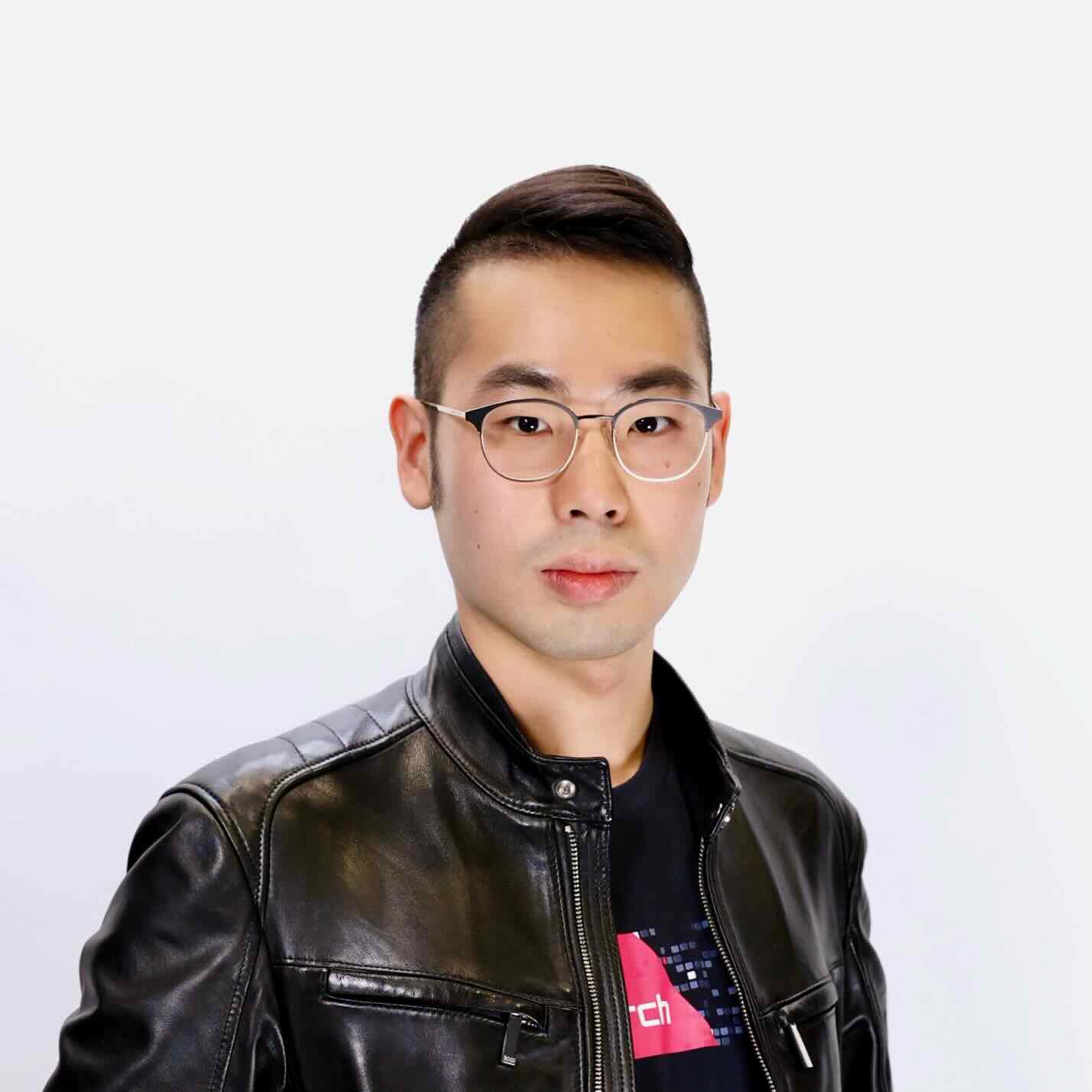
 Lunjun Zhang
· 3 previous affiliations
- University of TorontoCurrent
- Current
- PhD student · 2021–2026
- Undergrad student · 2017–2021
- Google (United States)2024–2025
- Student Researcher · 2025
- Student Researcher · 2024
- Waabi2021–2024
- Researcher · 2021–2024
Research Overview
Lunjun Zhang focuses on reinforcement learning, unsupervised representation learning, and the reasoning capabilities of large language models. His early work explored model-based planning and perception for autonomous systems, addressing compounding errors in long-horizon tasks. Currently, he investigates methods for recursive self-improvement in language agents, emphasizing scalable test-time interaction and generative reward modeling.
Research Trajectory
His early research investigated foundational challenges in reinforcement learning and planning. In Learning Intrinsic Rewards as a Bi-Level Optimization Problem, he formulated the discovery of intrinsic rewards as a bilevel optimization task, leveraging gradient approximations to improve policy alignment. Expanding into model-based reinforcement learning, he addressed the research direction of Compounding Error in Model Based Reinforcement Learning with World Model as a Graph: Learning Latent Landmarks for Planning. This work introduced a method for planning over high-level waypoints using reachability estimates derived from Q-functions, contributing to the broader areas of Latent Representations of Temporal Reachability and Temporal Distance Metrics for Navigation and Planning.
While affiliated with Waabi, his focus shifted toward unsupervised perception and world modeling for autonomous systems. He developed the OYSTER framework in Towards Unsupervised Object Detection from LiDAR Point Clouds, which extracts training signals directly from raw, single-traversal LiDAR streams to enable self-supervised 3D object discovery, while also introducing a safety-critical distance-to-collision metric. Returning to core reinforcement learning principles, he explored the theoretical underpinnings of multi-goal RL in Understanding Hindsight Goal Relabeling Requires Rethinking Divergence Minimization, proposing a unified objective that connects hindsight relabeling with imitation learning. He subsequently advanced the area of Parallel Token Prediction with Masked Discrete Diffusion through Copilot4D: Learning Unsupervised World Models for Autonomous Driving via Discrete Diffusion, which presented a foundation world model designed to reason explicitly across 3D space and time.
During his time as a student researcher at Google DeepMind, his trajectory moved toward generative policies and the reasoning capabilities of large language models. He introduced a model-free RL algorithm in D2 Actor Critic: Diffusion Actor Meets Distributional Critic, which stabilizes the online training of expressive diffusion policies using a robust distributional critic that fuses distributional RL with clipped double Q-learning. To improve how language models evaluate reasoning steps, he proposed shifting away from standard discriminative classifiers. This approach was detailed in Generative Verifiers: Reward Modeling as Next-Token Prediction, initially presented at a 2024 workshop, and further expanded in the 2025 main conference publication Generative Verifiers: Reward Modeling as Next-Token Prediction. By training verifiers with a next-token prediction objective, the models could utilize Chain-of-Thought reasoning and majority voting to assess solutions. Concurrently, he participated in research on the direction of Progressive Horizon Curricula for Long Horizon Agents. With collaborators, he contributed to Thinking vs. Doing: Improving Agent Reasoning by Scaling Test-Time Interaction, which demonstrated that scaling an agent's environment steps via a curriculum-based approach is critical for complex interactive tasks.
His most recent work focuses on refining reinforcement learning techniques specifically for language models. In Evolutionary System Prompt Learning for Reinforcement Learning in LLMs, he developed a framework that jointly evolves high-level system prompts while fine-tuning model weights, separating declarative strategy from procedural execution. He also addressed the instability of RL in language models with EMA Policy Gradient: Taming Reinforcement Learning for LLMs with EMA Anchor and Top-k KL, introducing an exponential moving average anchor and a Top-k KL estimator to stabilize training and improve performance on agentic search and mathematical reasoning tasks.
Current Directions
Recent work investigates the intersection of reinforcement learning, evolutionary algorithms, and language model self-improvement. The most recent papers in the evidence address the stabilization of policy gradients for LLMs, utilizing techniques like exponential moving average anchors and Top-k KL divergence to prevent training collapse when optimizing reasoning capabilities. Additionally, his research explores generative reward modeling—framing verification as a next-token prediction task to leverage the inherent reasoning capabilities of pretrained models rather than relying on simple binary classifiers. A major emerging theme is the optimization of agentic capabilities through both test-time interaction scaling and the joint evolution of declarative prompts and procedural weights, aiming to build more robust, general-purpose digital agents capable of complex, long-horizon execution.
Profile updated
Loading new papers…
Other researchers whose papers cluster into the same research directions — a proxy for overlapping technical interests and shared intellectual neighborhoods.
See something wrong? Report a mistake