

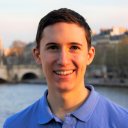
 Luke Melas-Kyriazi
· 2 previous affiliations
- University of OxfordCurrent
- Current
- PhD student · 2020–2023
- Harvard University2016–2020
- Undergrad student · 2016–2020
Research Overview
Luke Melas-Kyriazi focuses on machine learning, computer vision, and natural language processing, with a particular emphasis on unsupervised representation learning and the development of large-scale language models. His work explores the intersection of generative modeling and discriminative tasks, often seeking to extract structured information from high-dimensional data without human supervision. Recently, his research has transitioned toward the optimization and application of large language models for real-time interaction and specialized domains such as software engineering.
Research Trajectory
The evolution of Melas-Kyriazi’s research reflects a broadening of scope from specific natural language generation tasks to fundamental questions in computer vision architecture and unsupervised learning. His early work in 2018 addressed the limitations of image captioning systems, specifically the tendency of models to produce repetitive or generic descriptions. By 2020, his focus shifted toward the efficiency of natural language understanding, particularly in low-data regimes where massive pre-trained models are difficult to deploy.
During his doctoral studies at the University of Oxford’s Visual Geometry Group (VGG), Melas-Kyriazi’s research pivoted toward the structural foundations of computer vision. In 2021, he conducted an influential investigation into the necessity of the attention mechanism within Vision Transformers (ViTs). This work challenged the prevailing assumption that self-attention was the primary driver of ViT performance, demonstrating that simpler architectures could achieve comparable results through effective Patch Based Image Tokenization for Vision Transformers.
Between 2022 and 2023, his work concentrated on unsupervised semantic segmentation and localization. He developed methods to decompose images into semantically meaningful parts by leveraging the latent spaces of generative adversarial networks (GANs) and the internal features of self-supervised models. This period was characterized by a synthesis of traditional mathematical frameworks, such as Spectral Graph Theory for Unsupervised Image Segmentation, with modern deep learning representations.
In the final stages of his PhD and his subsequent transition to industry, Melas-Kyriazi returned to natural language processing, specifically focusing on the capabilities of large language models (LLMs). This recent phase involves creating benchmarks for low-resource language translation and developing methods for real-time, diarized conversational agents. His current work at Anysphere involves the application of LLMs to coding, representing a move from general-purpose representation learning to the development of specialized interactive AI systems.
Unsupervised Representation Learning and Computer Vision
A significant portion of Melas-Kyriazi’s research addresses the challenge of learning visual structures without manual labels. His work in this area often utilizes the inherent properties of pre-trained models to perform dense prediction tasks. This is exemplified by his research into the trade-offs between different self-supervised paradigms, where he identified that generative models (like Masked Autoencoders) and discriminative models (like DINO) capture fundamentally different aspects of visual information, such as "instance-ness" versus "semantic-ness."
His contributions to unsupervised segmentation also include the integration of classical graph-based methods with deep features. By treating image decomposition as a graph partitioning problem, he demonstrated that the eigenvectors of a Laplacian matrix derived from self-supervised features could provide a robust baseline for object localization and segmentation, outperforming more complex, purely end-to-end deep learning approaches.
Large-Scale Datasets and Language Modeling
Parallel to his work in computer vision, Melas-Kyriazi has contributed to the creation of large-scale resources for the study of innovation and language. He was a primary contributor to the Harvard USPTO Patent Dataset (HUPD), a multi-purpose corpus designed to facilitate machine learning research into patentability and technical novelty. This work provided the community with a structured dataset of over 4.5 million patent applications, including both accepted and rejected filings, enabling the study of the mechanics of innovation at scale.
His recent senior-authored work in NLP explores the limits of LLM generalization. This includes investigating whether models can learn to translate entirely new languages from minimal reference material, such as a single grammar book, and how to model the temporal dynamics of human conversation. These projects reflect a shift toward understanding how LLMs can be adapted for complex, real-world interactions that require both deep linguistic understanding and high-speed execution.
Representative Work
Training for Diversity in Image Paragraph Captioning In this early work, Melas-Kyriazi addressed the lack of linguistic variety in automated image descriptions. By combining Self-Critical Sequence Training with a trigram repetition penalty, the research significantly improved the CIDEr scores on the Visual Genome dataset, demonstrating that diversity in generation could be achieved through targeted optimization rather than increased architectural complexity.
Do You Even Need Attention? A Stack of Feed-Forward Layers Does Surprisingly Well on ImageNet As a solo author, Melas-Kyriazi challenged the necessity of the attention mechanism in Vision Transformers. He showed that replacing attention layers with simple feed-forward layers applied across image patches still yielded high accuracy on ImageNet. This finding suggested that the success of ViTs might be attributed more to patch-based representations and modern training recipes than to the attention mechanism itself.
Deep Spectral Methods: A Surprisingly Strong Baseline for Unsupervised Semantic Segmentation and Localization This paper introduced a method for unsupervised image decomposition by applying spectral clustering to features extracted from self-supervised networks. By framing the problem as graph partitioning, the work established a powerful baseline for semantic segmentation that does not require any labeled data, effectively bridging traditional computer vision theory with modern deep learning.
Understanding Self-Supervised Features for Learning Unsupervised Instance Segmentation Melas-Kyriazi investigated the differences between various self-supervised learning objectives. The research revealed that while some models are better at identifying object categories, others are superior at distinguishing between individual instances of the same category. This insight led to a new pipeline for unsupervised instance segmentation that surpassed previous state-of-the-art methods.
A Benchmark for Learning to Translate a New Language from One Grammar Book Serving as senior author, Melas-Kyriazi introduced the MTOB (Machine Translation from One Book) benchmark. This work evaluates the ability of LLMs to learn a language with no prior web presence—specifically Kalamang—using only a single linguistics reference. The study highlighted the gap between current model capabilities and human-level learning in extremely low-resource settings.
Modeling Real-Time Interactive Conversations as Timed Diarized Transcripts In this senior-authored paper, Melas-Kyriazi presented a method for simulating real-time, synchronous dialogue using text-only language models. By modeling timed transcripts and employing causal rejection sampling, the work demonstrated how standard LLMs could be adapted for instant messaging and spoken conversation, requiring high token-per-second generation rates to maintain interactivity.
Profile updated
Loading new papers…
Other researchers whose papers cluster into the same research directions — a proxy for overlapping technical interests and shared intellectual neighborhoods.
See something wrong? Report a mistake