

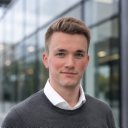
 Lukas Thede
· 8 previous affiliations
- Helmholtz MunichSince 2024
- PhD student · 2024–2027
- Guest Researcher · Since 2024
- Thomson Reuters (United States)Since 2025
- Research Scientist · Since 2026
- Intern · 2025–2026
- Tuebingen AI CenterSince 2023
- PhD student · 2023–2027
- University of TübingenSince 2022
- PhD student · 2023–2027
- PHD Student · Since 2023
- Research Scientist · 2022–2023
- Munich Center for Machine LearningSince 2024
- PhD student · 2024–2027
- EY2022
- Intern TFC-Valuation, Modeling & Economics · 2022
- Karlsruhe Institute of Technology2015–2022
- Master of Science - MS, Wirtschaftsingenieurwesen · 2020–2022
- MS student · 2019–2022
- Bachelor of Science - BS, Wirtschaftsingenieurwesen · 2015–2019
- Daimler (Germany)2018–2019
- Werkstudent · 2019
- Praktikant · 2018
Research Overview
Lukas Thede focuses on continual learning, parameter-efficient model adaptation, and knowledge editing in large-scale foundation models. His trajectory spans from early work on human-AI collaboration and semi-supervised learning to recent investigations into rehearsal-free continual learning and lifelong knowledge updates for language models. Currently, he investigates methods for dynamically fusing multi-layer representations to improve the adaptability of vision transformers.
Research Trajectory
Lukas Thede's early research investigated human-AI collaboration, specifically addressing the data bottleneck in training models to defer to human judgment. In Learning to Defer with Limited Expert Predictions, he introduced a semi-supervised learning framework designed to operate with minimal human input. By generating synthetic expert behaviors, this approach allowed AI-human teams to optimize performance without requiring massive datasets of human decisions. This work contributed to the broader research area of Learning to Defer to Multiple Specialized Experts and explored techniques within the domain of Learning from Intentional Hallucinations through Synthetic Error Injection.
Transitioning toward model optimization and knowledge retention, his focus expanded to the challenges of transferring capabilities between pretrained models. With collaborators, he developed a model-agnostic transfer method using data partitioning in Fantastic Gains and Where to Find Them: On the Existence and Prospect of General Knowledge Transfer between Any Pretrained Model. This technique enables pretrained models to learn from one another while mitigating the risk of catastrophic forgetting, advancing the research direction of Bridging the Capacity Gap with Progressive Distillation. Building on these themes of model adaptation, he subsequently led a critical evaluation of parameter-efficient fine-tuning techniques in Reflecting on the State of Rehearsal-free Continual Learning with Pretrained Models. This study examined the efficacy of prompt- and adapter-based mechanisms in rehearsal-free continual learning benchmarks, providing a rigorous assessment of how foundation models can be continually adapted without training from scratch.
In 2025, his research addressed the static nature of large language models and the practical hurdles of their "knowledge cutoff." He investigated lifelong knowledge updates in WikiBigEdit: Understanding the Limits of Lifelong Knowledge Editing in LLMs. This work evaluated the constraints of updating factual information in deployed models without incurring the prohibitive costs of full retraining, contributing to the growing area of External Memory Systems for Surgical Model Editing.
Most recently, his collaborative work has explored architectural adaptations for computer vision. In Attentive Multi-Layer Fusion for Vision Transformers, he participated in the development of Attentive Layer Fusion (ALF), a cross-attention mechanism that dynamically selects and combines features from across all layers of a network rather than relying solely on the final layer's output. This approach improves upon standard linear probing while maintaining computational efficiency, intersecting with the research directions of Parameter Efficient Adaptation of Large Scale Foundation Models and the Surgical Adaptation of Neural Network Layers.
Current Directions
The most recent work in the evidence addresses the efficient adaptation and lifelong maintenance of large-scale foundation models across both natural language and computer vision domains. A primary focus is overcoming the static nature of pretrained models through parameter-efficient techniques and surgical knowledge editing. This involves developing mechanisms to update factual knowledge in language models post-deployment, bypassing the need for extensive retraining. Concurrently, ongoing research investigates structural adaptations in vision architectures, exploring how multi-layer feature fusion can maximize the utility of existing representations. Together, these directions aim to make foundation models more dynamic, adaptable, and computationally efficient over their operational lifecycles.
Profile updated
Loading new papers…
Other researchers whose papers cluster into the same research directions — a proxy for overlapping technical interests and shared intellectual neighborhoods.
See something wrong? Report a mistake