

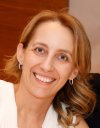
 Luisa Verdoliva
· 1 previous affiliation
- University of Naples Federico IISince 1999
- Full Professor · Since 2023
- Associate Professor · 2018–2022
- Assistant Professor · 2003–2018
- PhD student · 1999–2002
Research Overview
Luisa Verdoliva focuses on image and video processing, with a primary emphasis on multimedia forensics and the detection of synthetic media. Her trajectory spans early work in synthetic aperture radar image processing to foundational contributions in identifying manipulated images and deepfakes. Currently, she investigates generalizable, bias-free detection methods and explainable forensic agents to counter the rapid evolution of generative artificial intelligence.
Research Trajectory
Verdoliva's early research addressed the challenges of synthetic aperture radar (SAR) image processing. Her group developed techniques for the Compression of SAR raw data through range focusing and variable-rate trellis-coded quantization, mitigating the storage and transmission constraints of spaceborne sensors by performing low-complexity range focusing on-board. Later, she advanced SAR image quality with A Nonlocal SAR Image Denoising Algorithm Based on LLMMSE Wavelet Shrinkage, which adapted nonlocal filtering and wavelet-domain shrinkage to the specific signal-dependent noise characteristics of SAR data.
By the mid-2010s, her focus shifted toward multimedia forensics, specifically identifying traditional image manipulations. She introduced Efficient Dense-Field Copy-Move Forgery Detection, utilizing a fast approximate nearest-neighbor search to accurately localize cloned regions without the high computational cost of previous dense-field methods. In parallel, she developed Splicebuster: A new blind image splicing detector, an algorithm that extracts local features from image residuals to blindly segment genuine and spliced parts of an image. This work laid the foundation for her broader contributions to the research area of Detecting Localized Synthetic Manipulations in Authentic Media.
As generative adversarial networks (GANs) emerged, Verdoliva's research pivoted to address the threat of highly realistic synthetic media. She participated in early investigations demonstrating that generative models leave distinct traces, detailed in Do GANs leave artificial fingerprints?. This insight became a cornerstone of her subsequent work in the research direction of Noise Residuals as Fingerprints for Deepfake Detection. She also contributed to the creation of large-scale benchmarks, notably FaceForensics++: Learning to Detect Manipulated Facial Images, which provided a standardized dataset of 1.8 million images to train detectors against facial forgeries. Building on the concept of device-specific traces, she co-developed Noiseprint: A CNN-Based Camera Model Fingerprint, a Siamese network approach that extracts camera model fingerprints by suppressing scene content, advancing the broader area of Reference-Aware DeepFake Detection.
The proliferation of advanced generative models necessitated more robust and generalizable forensic tools. Her group introduced TruFor: Leveraging All-Round Clues for Trustworthy Image Forgery Detection and Localization, a framework designed to detect and localize forgeries even when images undergo real-world laundering like compression or resizing. Recognizing the impracticality of continuously retraining models for every new commercial generator, she explored zero-shot approaches in Zero-Shot Detection of AI-Generated Images, utilizing entropy-based detection without requiring AI-generated training data. Furthering this generalization, she demonstrated in Raising the Bar of AI-generated Image Detection with CLIP that pre-trained vision-language models could be adapted to detect synthetic images across numerous generative architectures, contributing to the research direction of Detecting Deepfakes through High Level Semantic Reasoning. She also provided a comprehensive overview of the field's progress and open challenges in Synthetic Image Verification in the Era of Generative Artificial Intelligence: What Works and What Isn't There yet.
A major recent theme in her work is addressing dataset biases that hinder the real-world applicability of forensic detectors. She introduced a novel methodology, initially detailed in a preprint and subsequently published as A Bias-Free Training Paradigm for More General AI-generated Image Detection (building on earlier formulations in A Bias-Free Training Paradigm for More General AI-generated Image Detection). By generating fake versions of real images that are semantically identical, this paradigm forces detectors to learn true architectural artifacts rather than spurious correlations, advancing the area of Semantically Aligned Training for AI Image Detection. Extending these principles to video, her team developed Seeing What Matters: Generalizable AI-generated Video Detection with Forensic-Oriented Augmentation, which trains models to focus on specific frequency artifacts, achieving high accuracy across unseen video generators and contributing to the discovery of Universal Forensic Signatures of Generative Neural Networks. Finally, she co-authored Don't Guess, Escalate: Towards Explainable Uncertainty-Calibrated AI Forensic Agents, a position paper advocating for a shift from isolated detectors to autonomous, explainable forensic systems.
Current Directions
The most recent papers in the evidence address the critical challenge of generalization in multimedia forensics. As generative models evolve rapidly, Verdoliva's current work investigates bias-free training paradigms that force detection models to learn intrinsic architectural artifacts rather than relying on spurious semantic or format-based correlations. This includes developing forensic-oriented augmentations for both image and video detection to ensure robustness against unseen generative architectures. Additionally, recent work explores the conceptual shift toward explainable, uncertainty-calibrated AI forensic agents, moving beyond isolated binary detectors to create autonomous systems capable of reasoning about synthetic media and escalating uncertain cases.
Profile updated
Loading new papers…
Other researchers whose papers cluster into the same research directions — a proxy for overlapping technical interests and shared intellectual neighborhoods.
See something wrong? Report a mistake