

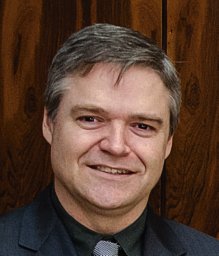
 Luís C. Lamb
· 11 previous affiliations
- Creative Destruction LabSince 2025
- Business Mentor - Manufacturing Stream at CDL-Seattle · Since 2025
- Centaur AI InstituteSince 2025
- Board Member · Since 2025
- Rice UniversitySince 2025
- Visiting Scholar · Since 2025
- Stealth AI CompanySince 2025
- Startup Advisor · Since 2025
- Stony Brook UniversitySince 2026
- Special Advisor for AI Engagement · Since 2026
- Full Professor · 2002–2026
- Catholic Institute of Technology2025–2026
- Full Professor · 2025–2026
- Boeing2024–2025
- Senior Manager of AI and Machine Learning · 2024–2025
- Master of Business Administration - MBA, Innovation and Technology Management, Sustainability · 2022–2023
- Director of Fellowships and Global Partnerships and Lecturer · 2023
- Cross-registration from MIT - Sloan Fellows MBA Program, Business Management: The Business-Government Relationship and Product Management and Society · 2023
- Imperial College London1995–2000
- PhD student · 1995–2000
Research Overview
Luís C. Lamb focuses on neurosymbolic artificial intelligence, the integration of connectionist machine learning with symbolic reasoning, and the interpretability of deep learning models. His trajectory traces the evolution of neurosymbolic computing from early theoretical frameworks to modern implementations using graph neural networks. Recent work addresses the third wave of AI, emphasizing trust, safety, and the use of graph-based modules to inspect attention-based architectures.
Research Trajectory
The available evidence reflects a highly focused corpus consisting largely of surveys, position papers, and seminar reports that map the conceptual boundaries of neurosymbolic AI, alongside targeted technical investigations into graph-based architectures. Throughout this trajectory, the central research problem has remained consistent: bridging the gap between robust connectionist machine learning and sound symbolic reasoning.
In the early to mid-2010s, Lamb participated in foundational community discussions aimed at formalizing these integrations. As a co-author on Neural-Symbolic Learning and Reasoning: Contributions and Challenges (2015), he contributed to identifying the key obstacles in making connectionist representations useful for formal reasoning. This community-building and synthesis work continued with leadership roles in defining "human-like" computing paradigms. As the senior author of the report Human-Like Neural-Symbolic Computing (Dagstuhl Seminar 17192) (2017), Lamb helped articulate the need to incorporate human-like learning and reasoning into computer science. The report highlighted the limitations of deep learning in achieving true language and vision understanding, advocating for statistical approaches combined with logic and connectionism.
By 2020, the trajectory demonstrates a clear shift toward Graph Neural Networks (GNNs) as a primary architectural vehicle for realizing neurosymbolic systems. Lamb led a major synthesis of this intersection as the first author of Graph Neural Networks Meet Neural-Symbolic Computing: A Survey and Perspective (2020). This work reviewed the state-of-the-art applications of GNNs in relational and symbolic domains, such as combinatorial optimization and constraint satisfaction, while emphasizing the critical need for improved explainability and trust in AI systems.
Following this conceptual mapping, the evidence shows a move toward specific technical implementations involving graph structures. As senior author on Discrete and Continuous Deep Residual Learning over Graphs (2021), Lamb oversaw investigations into advanced residual learning techniques applied to graph domains. This architectural focus was subsequently expanded to address the interpretability of complex deep learning models. In Graph-based Neural Modules to Inspect Attention-based Architectures: A Position Paper (2022), again as senior author, he proposed using graph-based modules to visualize and edit the implicit knowledge captured within the weights of encoder-decoder models, directly addressing the opacity of modern foundation models.
Current Directions
The most recent papers in the evidence situate neurosymbolic integration within the broader context of the "third wave" of artificial intelligence. As deep learning and foundation models achieve unprecedented industry impact, current work addresses the escalating concerns around trust, safety, interpretability, and accountability.
Recent research investigates how well-founded knowledge representation and reasoning can be systematically integrated with deep neural networks to provide sound explainability. Rather than treating neural and symbolic methods as parallel tracks, the current focus is on creating unified architectures where symbolic representations offer a transparent window into neural models. This involves developing better tools for human oversight—such as mechanisms to inspect and edit the inner workings of attention-based architectures—ensuring that the next generation of AI systems is both robust in its learning capabilities and verifiable in its reasoning.
Profile updated
| Title | Venue | Year |
|---|---|---|
| Graph-based Neural Modules to Inspect Attention-based Architectures: A Position Paper | arXiv | 2022 |
| Graph Neural Networks Meet Neural-Symbolic Computing: A Survey and Perspective | IJCAI | 2020 |
| Neurosymbolic AI: the 3rd wave | Artif. Intell. Rev | 2020 |
| Discrete and Continuous Deep Residual Learning over Graphs | Icaart | 2019 |
| Neural-Symbolic Learning and Reasoning: A Survey and Interpretation | Neuro-symbolic Artificial Intelligence | 2017 |
| Human-Like Neural-Symbolic Computing (Dagstuhl Seminar 17192) | Dagstuhl Reports | 2017 |
| Neural-Symbolic Learning and Reasoning: Contributions and Challenges | AAAI | 2015 |
| Reports of the AAAI 2012 Conference Workshops | Ai Mag | 2012 |
| Reports of the AAAI 2010 Conference Workshops | Ai Mag | 2010 |
Loading new papers…
Other researchers whose papers cluster into the same research directions — a proxy for overlapping technical interests and shared intellectual neighborhoods.
See something wrong? Report a mistake