

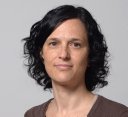
 Luciana Ferrer
· 5 previous affiliations
- Instituto de Ciencias de la ComputacionSince 2014
- Researcher · Since 2014
- UBA-CONICETSince 2014
- Researcher · Since 2014
- SRI International2001–2014
- Researcher · 2011–2014
- Postdoc · 2009–2010
- Intern · 2001–2004
- Stanford University2004–2008
- PhD student · 2004–2008
- Universidad de Buenos Aires1995–2001
- Undergrad student · 1995–2001
Research Overview
Luciana Ferrer focuses on speech processing, speaker and language recognition, and the calibration of machine learning models for robust decision-making. Her work spans the development of acoustic and prosodic features for speaker verification to the modern application of deep learning and large language models in high-stakes classification tasks. By integrating statistical rigor with signal processing, she addresses fundamental challenges in how systems represent uncertainty and how they can be made more reliable for real-world deployment.
Research Trajectory
The early stages of Ferrer’s research were primarily concerned with the extraction and normalization of speech features to improve the performance of automated systems. In the early 2000s, this involved leveraging prosodic information—such as pitch and energy contours—to solve tasks like end-of-utterance detection. This work was significant for its ability to operate independently of automatic speech recognition (ASR) systems, thereby reducing latency and computational overhead in dialogue systems. By the late 2000s, her focus shifted toward the robustness of speaker verification systems, particularly those utilizing Support Vector Machines (SVMs). During this period, she investigated nonparametric normalization techniques to handle the variability inherent in different speech features, establishing methods that remained competitive across diverse acoustic conditions.
As the field transitioned toward i-vector representations and probabilistic modeling in the 2010s, Ferrer’s work evolved to address the impact of noise and channel variability. She contributed to the development of frameworks that utilized Gaussian Representations for High Dimensional Uncertainty to model speaker characteristics. A central theme during this time was the refinement of Probabilistic Linear Discriminant Analysis (PLDA), which became a standard for speaker recognition. Her research identified and addressed limitations in how PLDA handled background noise and channel effects, leading to more generalized models that improved performance in "messy" real-world environments. This era also saw her exploring Shrinkage Regularization for High Dimensional Covariance Estimation, which provided a statistical basis for managing high-dimensional embedding spaces where data points are often sparse.
With the advent of deep learning, Ferrer’s research integrated neural network architectures into the speaker and language recognition pipeline. She examined the use of Deep Neural Networks (DNNs) for predicting senone posteriors and generating bottleneck features for spoken language recognition. This work transitioned into the study of speaker embeddings, where she analyzed the requirements for training robust extractors, including the role of voice activity detection and the impact of artificially degraded training data.
In recent years, Ferrer’s focus has increasingly centered on the interpretability and reliability of model outputs. This is reflected in her work on The Multiclass Frontier of Uncertainty Calibration, where she argues that accuracy alone is insufficient for high-stakes applications. Her research emphasizes that models must provide well-calibrated confidence scores that reflect the true probability of correctness. This trajectory has led to her current involvement in Utility-Aware Machine Learning and Cost-Sensitive Decision Making, moving beyond statistical accuracy to consider the real-world consequences of different types of errors.
Current Directions
Ferrer’s current research agenda is defined by the intersection of large-scale generative models and rigorous uncertainty quantification. A primary area of interest is Calibrating the Entire Predictive Distribution, particularly for Large Language Models (LLMs). While LLMs are versatile, their standard outputs often lack reliable confidence indicators. Ferrer is developing methods to adapt these models to produce accurate class posterior distributions, which are essential for decision-making in high-risk domains like medicine or law.
Additionally, she continues to explore the Disentangling Representation Knowledge from Probe Learning. This involves moving beyond simple probing classifiers to understand how information is structured within the internal layers of transformers and other deep architectures. Her recent work also touches upon universal audio representation learning, seeking models that can perform across speech, music, and environmental sounds by leveraging self-supervised techniques and neural codecs.
Finally, Ferrer remains active in the refinement of evaluation methodologies. She participates in broad expert-consensus efforts to standardize validation metrics in fields like biomedical image analysis, advocating for "problem fingerprinting" to ensure that the metrics used are appropriate for the specific task at hand. This commitment to methodological integrity ensures that her contributions to uncertainty calibration and robust modeling are grounded in sound experimental practice.
Representative Work
A prosody-based approach to end-of-utterance detection that does not require speech recognition This early work addresses the problem of detecting when a user has finished speaking in a dialogue system. While previous methods relied on word and alignment output from a speech recognizer, this paper demonstrates that prosodic features—such as pitch and duration—can be used effectively with only speech/non-speech detection. This approach reduces latency and allows for endpointing in applications where a full recognizer is impractical.
Nonparametric feature normalization for SVM-based speaker verification In this study, Ferrer investigates various feature normalization and scaling approaches for SVM-based speaker verification. The research focuses on "knowledge-free" methods that can be applied to diverse features like MLLR transforms and prosodic sequences. The paper highlights the effectiveness of rank-normalization, a simple nonparametric approach that was found to be uniformly competitive with more complex methods across different feature types.
Joint Probabilistic Linear Discriminant Analysis Addressing the limitations of standard PLDA in speaker recognition, Ferrer proposes Joint PLDA (JPLDA). This model serves as a generalization that more accurately accounts for the interaction between speaker characteristics and background noise or channel effects. By refining the underlying statistical assumptions of the "gold standard" model, this work provides a more robust framework for speaker verification in non-ideal acoustic conditions.
Detecting Distrust Towards the Skills of a Virtual Assistant Using Speech This research explores the feasibility of automatically detecting a user's level of trust in a virtual assistant based on their vocal characteristics. Using a specialized dataset of human-computer interactions, the study demonstrates that speech signals contain markers of distrust. This work points toward the development of more socially intelligent systems that can adjust their behavior—such as providing more detailed explanations—when they sense a user is skeptical of their performance.
Out of a Hundred Trials, How Many Errors Does Your Speaker Verifier Make? In this paper, Ferrer and her colleagues critique the standard use of ROC and DET curves in speaker verification, which provide conditional error rates that may not be intuitive for end-users. They propose the use of the Bayes error rate as a more practical metric. The work provides a tutorial on computing error rates using calibrated likelihood ratios and user-supplied hypothesis priors, bridging the gap between technical performance metrics and real-world utility.
Adapting Language Models to Produce Good Class Probabilities for Classification Tasks This recent work focuses on the challenge of extracting reliable confidence scores from generative language models used for text classification. Ferrer demonstrates that naive approaches to computing posteriors from LLMs are often poorly calibrated. The paper proposes methods for adapting these models to generate well-calibrated class posterior distributions, which are critical for using LLMs in high-risk applications where the cost of an incorrect, overconfident prediction is high.
Profile updated
| Paper | Venue | Year |
|---|---|---|
| EnCodecMAE: leveraging neural codecs for universal audio representation learningGitHubhabla-liaa/ | Interspeech | 2025 |
Loading new papers…
Other researchers whose papers cluster into the same research directions — a proxy for overlapping technical interests and shared intellectual neighborhoods.
See something wrong? Report a mistake