

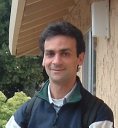
 Luca Iocchi
· 2 previous affiliations
- Sapienza University of RomeCurrent
- Full Professor · Current
- ItalyCurrent
- Current
Research Overview
Luca Iocchi focuses on the intersection of multi-robot systems, knowledge representation, and reinforcement learning. His work addresses the challenges of coordinating autonomous agents in dynamic environments, grounding high-level semantic information through human-robot interaction, and improving the efficiency of learning through hierarchical abstractions. By bridging the gap between low-level robotic perception and high-level symbolic reasoning, his research seeks to develop autonomous systems capable of operating effectively in complex, real-world scenarios such as disaster response and domestic assistance.
Research Trajectory
The early stages of Iocchi’s career were deeply rooted in the practical and competitive challenges of autonomous robotics, particularly within the RoboCup framework. Between 2001 and 2006, his work focused on the fundamental components of mobile robotics, including vision, localization, and motion planning for wheeled platforms. This period was characterized by an emphasis on Robust Control for Partially Observable Robotic Systems, where the primary goal was to enable robots to function in adversarial or unpredictable environments like soccer fields and disaster zones. A significant portion of this early research involved the S.P.Q.R. team, where Iocchi led the development of innovative techniques for multi-robot coordination and real-time planning.
As the field of multi-agent systems (MAS) matured, Iocchi’s focus shifted toward the formalization of task assignment. He addressed the limitations of centralized coordination by developing distributed mechanisms for task allocation. This work introduced the concept of "token passing" to manage dynamically perceived tasks, allowing groups of robots to assign and execute missions with minimal communication overhead. This transition marked a move from purely reactive control toward more sophisticated, decentralized decision-making processes that could scale with the number of agents and the complexity of the environment.
By the late 2000s and early 2010s, Iocchi’s research began to incorporate explicit knowledge representation and contextual reasoning. Recognizing that perception alone is often insufficient for complex tasks, he explored how robots could utilize contextual knowledge to improve performance in perception and behavior. This led to a sustained interest in Scaling Symbolic Reasoning to Large Knowledge Bases, where the objective was to combine the strengths of metric environmental data with symbolic logic. This period saw a significant focus on semantic mapping—the process of augmenting metric maps with high-level information about objects, rooms, and human-defined labels. A key element of this work was the integration of human-robot interaction (HRI), where robots acquire environmental knowledge through spoken language and collaborative exploration.
In parallel with these technical developments, Iocchi became a central figure in the movement toward standardization and benchmarking in robotics. He participated in large-scale projects like RoCKIn, which aimed to transform robotic competitions into rigorous scientific experiments. This work emphasized the importance of reproducibility and objective performance evaluation, addressing the field's need for standard representations and evaluation metrics, particularly in the domain of semantic mapping. During this time, his work also touched upon the theoretical challenges of Disentangling Data Ambiguity from Model Ignorance, ensuring that autonomous systems could distinguish between a lack of knowledge and genuine environmental uncertainty.
Current Directions
In recent years, Iocchi’s research has pivoted toward the efficiency and scalability of machine learning, specifically within the domain of Reinforcement Learning (RL). His current work addresses the "sample inefficiency" problem—the requirement for vast amounts of data to learn optimal policies in complex environments. To mitigate this, he has been investigating hierarchical reinforcement learning (HRL) and the use of abstractions.
This current phase of research focuses on how large Markov Decision Processes (MDPs) can be solved more efficiently by decomposing them into modular subtasks. By defining "realizable abstractions," Iocchi and his collaborators are developing formal frameworks that allow high-level decision processes to guide low-level learning without losing optimality. This involves techniques such as reward shaping, where solutions from abstract models provide auxiliary rewards to accelerate learning in more concrete, high-dimensional domains. This trajectory represents a synthesis of his earlier work in planning and knowledge representation with modern deep learning, aiming to create agents that can reason across multiple levels of granularity.
Representative Work
S.P.Q.R. Wheeled Team (2001) serves as a foundational document for Iocchi’s early work in physical multi-robot systems. As the first author, he details the design and implementation of a team of soccer robots, addressing practical issues in vision, localization, and coordination. The paper reflects the initial challenges of building robust autonomous agents capable of competing in dynamic, real-time environments and established the technical baseline for his subsequent research in multi-agent coordination.
Assignment of Dynamically Perceived Tasks by Token Passing in Multirobot Systems (2006) represents a significant contribution to the field of distributed task allocation. In this work, Iocchi and his colleagues propose an asynchronous mechanism based on token passing to handle tasks that are discovered by robots during mission execution. By making the task allocation process dependent on the robots' perception capabilities and ensuring low communication overhead, the paper provides a scalable solution for multi-robot systems operating in environments where tasks are not known a priori.
Interactive Semantic Mapping: Experimental Evaluation (2014) highlights Iocchi’s role as a senior researcher (PI) in the domain of human-robot interaction and semantic knowledge. The paper evaluates a system that builds semantically rich maps through dialogue with a user. This work is critical because it demonstrates how robots can ground natural language commands into physical locations and objects, a necessary step for the deployment of autonomous systems in consumer and domestic markets.
Competitions for Benchmarking: Task and Functionality Scoring Complete Performance Assessment (2015) documents Iocchi’s participation in the broader effort to professionalize robotics research through rigorous benchmarking. As part of the RoCKIn project, this work articulates the differences between reproducibility and repeatability in robotics. It proposes a scoring system that evaluates both high-level task completion and low-level functional capabilities, advocating for a transition from "showcase" competitions to controlled scientific experiments.
Exploiting Multiple Abstractions in Episodic RL via Reward Shaping (2023) marks Iocchi’s shift toward improving the efficiency of reinforcement learning. In this collaborative work, he explores a linear hierarchy of MDP abstractions. The research proposes a novel reward-shaping technique where solutions from coarser, abstract models are used to guide the learning process in more complex, concrete domains. This approach addresses the sample inefficiency of standard RL, making it more applicable to practical, high-dimensional problems.
Realizable Abstractions: Near-Optimal Hierarchical Reinforcement Learning (2025) represents the current theoretical frontier of Iocchi’s work. As a primary contributor, he addresses the lack of formal efficiency guarantees in existing hierarchical RL frameworks. The paper introduces "Realizable Abstractions," a new formal relation between low-level MDPs and high-level decision processes. This framework avoids common issues like non-Markovianity and provides near-optimality guarantees, offering a more mathematically grounded approach to modular reinforcement learning.
Profile updated
Loading new papers…
Other researchers whose papers cluster into the same research directions — a proxy for overlapping technical interests and shared intellectual neighborhoods.
See something wrong? Report a mistake