

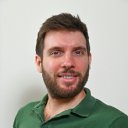
 Luca Cosmo
· 3 previous affiliations
- Ca' Foscari University of VeniceSince 2021
- Assistant Professor · Since 2021
- Postdoc · 2016–2019
- Sapienza University of Rome2020–2021
- Postdoc · 2020–2021
- Università della Svizzera italiana2019–2020
- Postdoc · 2019–2020
Research Overview
Luca Cosmo focuses on spectral geometry, graph neural networks, and generative modeling for structured data. His early research explored 3D shape analysis and manifold learning before expanding into differentiable graph structure optimization. Most recently, his work addresses scalable graph generation and the evaluation of coherence in neural audio synthesis.
Research Trajectory
His early research began in the area of multi-view geometry for non-central imaging systems, where he addressed camera calibration by bridging parametric and non-parametric models in Parameter-Free Lens Distortion Calibration of Central Cameras (2017). Following this, his focus shifted significantly toward spectral geometry and 3D shape analysis. He explored the area of Geometric Recovery from Laplacian Spectral Signatures by introducing a numerical procedure to deform one shape so its Laplacian spectrum matches another in Isospectralization, or How to Hear Shape, Style, and Correspondence. This work also advanced the research direction of Spectral Geometry for Invariant Shape Matching and the broader field of Laplacian Regularization for Smooth 3D Surface Learning.
Continuing his work on non-rigid 3D shapes, he developed a novel spectral signature based on continuous-time quantum walks in The average mixing kernel signature. By decomposing the spectral contributions of the average mixing kernel, this approach successfully limited the influence of high-frequency noise. He later expanded upon this framework in a comprehensive journal analysis, 3D shape analysis through a quantum lens: the average mixing kernel signature, which detailed how finite time-evolution accounts for the mixing of Laplacian eigenspaces to improve noise robustness. Concurrently, he proposed generative models for deformable shapes in Limp: Learning latent shape representations with metric preservation priors, utilizing a variational autoencoder framework that makes geodesic distance calculations differentiable to enforce metric preservation during training.
Applying geometric principles to broader representation learning challenges, he investigated unsupervised disentanglement of independent factors of variation in Learning disentangled representations via product manifold projection. By modeling data as a product manifold where each factor lives on its own submanifold, this weakly supervised approach successfully isolated complex variables like 3D human pose. This interest in non-Euclidean data structures naturally led to significant contributions in graph neural networks. To address learning adaptive graph topologies, he designed Graph-in-Graph (GiG): Learning interpretable latent graphs in non-Euclidean domain for biological and healthcare applications, an architecture that classifies graphs by simultaneously analyzing their internal structure and their relationships to one another. Recognizing the limitations of assuming fixed graph topologies, he subsequently introduced the Differentiable Graph Module (DGM) for Graph Convolutional Networks. This plug-and-play layer allows models to learn optimal, sparse graph structures directly from data while solving downstream tasks.
His recent trajectory branches into highly expressive graph architectures and generative audio models. He presented GNN-LoFI: A novel graph neural network through localized feature-based histogram intersection, which replaces standard message passing with an analysis of local feature distributions compared against learned masks. Continuing to enhance the expressive power of graph networks, he introduced Graph Kernel Neural Networks, utilizing graph kernel convolutions to compare local subgraphs to learnable structural masks. Leading the development of scalable generative models, he directed research on Generating Graphs via Spectral Diffusion, which performs diffusion directly on the eigenvalues and eigenvectors of a graph's Laplacian matrix to bypass the quadratic bottleneck of traditional adjacency matrix methods.
In parallel, he has collaborated on generative models for music and audio. He participated in developing a unified framework for music generation and source separation in Multi-Source Diffusion Models for Simultaneous Music Generation and Separation, contributing to the area of Audio Source Separation with Generative Priors. Most recently, he co-developed COCOLA: Coherence-Oriented Contrastive Learning of Musical Audio Representations, a contrastive learning framework designed to evaluate the harmonic and rhythmic coherence of generated accompaniments, advancing the research direction The Perceptual Evaluation Gap in Generative Audio.
Current Directions
The most recent papers in the evidence point toward two primary research directions. First, he is advancing the scalability and expressivity of graph neural networks and graph generation. By leveraging spectral diffusion on Laplacian eigenpairs and integrating graph kernel convolutions, this work seeks to overcome traditional computational bottlenecks while preserving complex topological structures and improving model interpretability. Second, he is actively investigating neural audio synthesis, specifically focusing on objective evaluation metrics for musical coherence and the application of diffusion models to simultaneous music generation, source imputation, and source separation.
Profile updated
Loading new papers…
Other researchers whose papers cluster into the same research directions — a proxy for overlapping technical interests and shared intellectual neighborhoods.
See something wrong? Report a mistake