

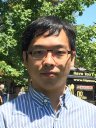
 Lu Zhang
· 3 previous affiliations
- Hong Kong Baptist UniversitySince 2019
- Associate Professor · Since 2023
- Assistant Professor · 2019–2023
- Stanford University2016–2019
- Postdoc · 2016–2019
- City University of Hong Kong2012–2016
- PhD student · 2012–2016
17 other authors named Lu Zhang: Lu Zhang (University of Arkansas at Fayetteville · 127 papers), Lu Zhang (Peking University · 83 papers), Lu Zhang (Dalian University of Technology · 31 papers), Lu Zhang (Chinese Academy of Sciences · 8 papers), Lu Zhang (6 papers), and 12 more
Research Overview
Lu Zhang focuses on computational genomics, bioinformatics, and the application of artificial intelligence to biological data. His trajectory spans from early tools for genetic variant prioritization and genome assembly benchmarking to the development of deep learning frameworks for single-cell multi-omics and metagenomics. Currently, his work emphasizes multi-modal foundation models and large language models for spatial transcriptomics, molecular optimization, and complex disease risk prediction.
Research Trajectory
Zhang’s early research addressed the computational challenges of processing next-generation sequencing data. In 2013, he developed PriVar: a toolkit for prioritizing SNVs and indels from next-generation sequencing data, a systematic pipeline designed to identify functionally important mutations for Mendelian diseases by weighing variant calling quality, predicted functional impact, and linkage analysis.
Building on this foundation in genomic analysis, his work later expanded into the prediction of complex human diseases using polygenic risk scores (PRS). Recognizing that genetic factors alone are often insufficient for accurate risk assessment, he introduced A machine learning model for disease risk prediction by integrating genetic and non-genetic factors, which combined phenotype-associated risk alleles with lifestyle and environmental data. He subsequently led a systematic evaluation of these methodologies in A comprehensive investigation of statistical and machine learning approaches for predicting complex human diseases on genomic variants, benchmarking various tools across different genetic effects and ancestries. This line of inquiry culminated in Med-PRSIMD: Enhanced Complex Disease Risk Prediction through Integrative Analysis of Multi-Type Data and Medical History Records, which further refined risk prediction by incorporating longitudinal medical histories.
Concurrently, Zhang extensively evaluated and advanced genome assembly techniques. He provided comprehensive guidance on sequencing platforms in Benchmarking multi-platform sequencing technologies for human genome assembly and extended this rigorous evaluation to microbial communities in Benchmarking genome assembly methods on metagenomic sequencing data. Moving beyond benchmarking, he addressed the critical challenge of contamination in metagenome-assembled genomes (MAGs). To tackle this, he developed Deepurify, a multi-modal deep language model introduced in Deepurify: a multi-modal deep language model to remove contamination from metagenome-assembled genomes and further detailed in A multi-modal deep language model for contaminant removal from metagenome-assembled genomes. By utilizing contrastive learning to match DNA sequences with taxonomic lineages, Deepurify accurately separates mixed genomic data. Methodologically, this approach to aligning distinct biological data modalities shares conceptual foundations with the broader research direction of Aligning Tissue Morphology with Molecular Signatures. His expertise in metagenomics was also applied to clinical cohorts, as demonstrated by his work identifying strain diversity and biomarkers in Integrated analysis of gut microbiome compositional and genomic alterations reveals strain diversity and actionable biomarkers across multiple colorectal cancer cohorts.
In parallel with his metagenomic research, Zhang has made significant contributions to single-cell and spatial transcriptomics. He addressed the pervasive issue of missing values in single-cell RNA sequencing with Accurate and interpretable gene expression imputation on scRNA-seq data using IGSimpute, which introduced an instance-wise gene selection layer to maintain biological interpretability during data recovery. More recently, he contributed to the area of Multimodal Integration of Histology and Spatial Transcriptomics through the development of Interpretable spatial multi-omics data integration and dimension reduction with SpaMV. This representation learning algorithm disentangles shared biological signals from modality-specific features, revealing the unique contributions of different omics layers to tissue architecture.
Another major arc in Zhang’s recent trajectory involves the design of advanced graph neural networks (GNNs) for molecular property prediction and medical imaging. He participated in the development of "Neural Atoms" to capture long-range interactions in molecular graphs, a concept first explored in Long-Range Neural Atom Learning for Molecular Graphs and formalized in Neural Atoms: Propagating Long-range Interaction in Molecular Graphs through Efficient Communication Channel. This architecture creates a high-speed communication channel between distant atoms, advancing several research areas including Near-Field and Far-Field Decomposition for Long-Range Interactions, Virtual Nodes for Efficient Global Information Routing, Efficient Global Information Propagation in Graphs, and Hierarchical Latent Space Decomposition. His work on graph-based models extends to computational pathology, as seen in ResGAT: A Residual Graph Attention Network for Cancer Subtype Classification in Whole Slide Images, which applies residual graph attention blocks to patch graphs for gigapixel slide classification. Finally, he has begun exploring the intersection of large language models and drug discovery, contributing to Reference-guided Policy Optimization for Molecular Optimization via LLM Reasoning.
Current Directions
The most recent papers in the evidence indicate a strong focus on integrating foundation models, large language models, and advanced graph architectures into complex biological workflows. A primary direction is the refinement of spatial multi-omics analysis, where recent work emphasizes representation learning algorithms that can explicitly disentangle shared and modality-specific biological signals to better understand tissue architecture.
Additionally, Zhang is actively investigating the application of AI to molecular optimization and computational pathology. This includes leveraging the reasoning capabilities of large language models to guide policy optimization in drug discovery, allowing for the targeted modification of molecular structures while preserving their core identities. In the domain of medical imaging, his recent efforts address the challenges of weakly supervised multiple instance learning, specifically focusing on residual graph attention frameworks to improve cancer subtype classification in gigapixel whole slide images.
Profile updated
Loading new papers…
Other researchers whose papers cluster into the same research directions — a proxy for overlapping technical interests and shared intellectual neighborhoods.
See something wrong? Report a mistake