

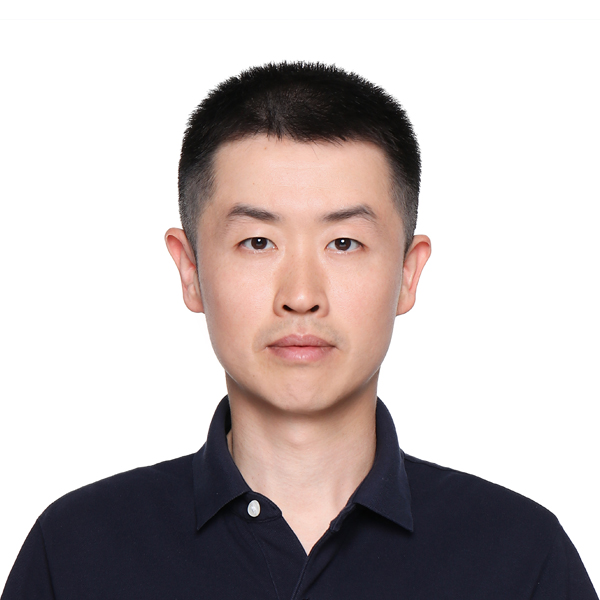
 Lu Sun
· 4 previous affiliations
- Tohoku UniversitySince 2026
- Associate Professor · Since 2026
- Current
- RIKEN2024–2026
- Researcher · 2024–2026
- ShanghaiTech University2019–2024
- Assistant Professor · 2019–2024
4 other authors named Lu Sun: Lu Sun (Dalian Maritime University · 4 papers), Lu Sun (4 papers), Lu Sun (1 paper), Lu Sun (Texas A&M University · 1 paper)
Research Overview
Lu Sun focuses on efficient machine learning, multi-view data fusion, and robust representation learning. His early work addressed structured dependencies in multi-label classification and spatial alignment for 3D point clouds under low-overlap conditions. More recently, his research investigates personalized learning frameworks, tensorized neural network compression, and resource-efficient sparsity techniques for large language models.
Research Trajectory
His early research addressed structured dependencies in complex classification tasks. In Polytree-Augmented Classifier Chains for Multi-Label Classification (2015), he participated in developing a method that uses a polytree structure combined with exact inference to model label dependencies, mitigating the error propagation often seen in standard classifier chains. Applying machine learning to clinical domains, he introduced a high-accuracy support vector machine classifier in Construction of a 26‑feature gene support vector machine classifier for smoking and non‑smoking lung adenocarcinoma sample classification (2017). By integrating meta-analysis with protein-protein interaction networks, this work identified key molecular drivers underpinning smoking-related cancer progression.
Around 2018, his focus expanded to 3D scene understanding and spatial alignment, particularly under challenging conditions. He introduced a point group approach in Sparse Group Match for Point Cloud Registration (2018), which achieved robust alignment in low-overlap scenarios by matching local groups via a statistical feature called Multiple Average Probability. This contributed to the broader research direction of Robust Point Cloud Registration Under Low Spatial Overlap. He advanced this spatial alignment work with Double Sparse Representation for Point Cloud Registration (2019), converting 3D point groups into 2D depth maps and applying sparse dictionary learning to repair corrupted data before matching. This approach aligned with developments in the area of Hybrid Architectures for Multi-Scale 3D Scene Understanding. Concurrently, he explored the vulnerabilities of machine learning systems in physical environments, surveying how physical objects can deceive models in A survey of practical adversarial example attacks (2018).
A significant portion of his trajectory involves handling heterogeneous and incomplete data across multiple views or tasks. He participated in developing the AGILE framework in Fast and Robust Multi-View Multi-Task Learning via Group Sparsity (2019), which filters out noisy features by decomposing model weights to handle datasets where multiple tasks draw from multiple sources. He later addressed incomplete features and noisy views in CEMENT: Incomplete Multi-View Weak-Label Learning with Long-Tailed Labels (2022), a method that jointly embeds incomplete views and weak labels. This work advanced the research areas of Learning from Incomplete Multi-View Data and Adaptive View Weighting for Multi-View Representation Learning. In parallel, he investigated personalized learning frameworks. Multi-Task Personalized Learning with Sparse Network Lasso (2022) bridged the gap between general multi-task learning and individual-level personalization by decomposing predictive models into global and local components, using a sparse network lasso to group similar individuals.
His recent research builds on these foundations, extending personalized learning and multi-view clustering while pioneering new methods for model compression. He expanded the network lasso approach in Multi-level sparse network lasso: Locally sparse learning with flexible sample clusters (2025) and Multi-level network Lasso for multi-task personalized learning (2025). The latter framework learns both sample-common and sample-specific models, sharing parameters across neighboring samples based on relevant feature subsets to prevent over-parameterization. He also continued his multi-view research with Robust multi-view subspace clustering with missing data by aligning nonlinear manifolds (2025).
Addressing the computational demands of modern deep learning, he introduced techniques for compressing large-scale models. In Learning Low-Rank Tensor Cores with Probabilistic ℓ0-Regularized Rank Selection for Model Compression (2024), he developed a method that automatically selects optimal ranks for tensor decompositions using Bernoulli gates, allowing models to learn weights and compression architectures simultaneously. This contributed to the area of Variance Preserving Initialization for Tensorized Neural Networks. Most recently, he developed HyperPrune in Learning Semi-Structured Sparsity for LLMs via Shared and Context-Aware Hypernetwork (2026), a resource-efficient framework that generates optimal n:m pruning masks for Large Language Models. This work aligns with the broader research direction of Integrating Orthogonal Model Compression Techniques.
Current Directions
The most recent papers in the evidence indicate a strong focus on resource-efficient machine learning, particularly the compression and optimization of large-scale models. This includes developing semi-structured sparsity techniques for Large Language Models (LLMs) and probabilistic rank selection for tensorized neural networks to achieve high compression ratios without sacrificing performance. Additionally, ongoing work investigates advanced personalized learning frameworks, utilizing multi-level network lassos to balance sample homogeneity and heterogeneity in multi-task scenarios, as well as robust subspace clustering techniques for incomplete multi-view data.
Profile updated
Loading new papers…
Other researchers whose papers cluster into the same research directions — a proxy for overlapping technical interests and shared intellectual neighborhoods.
See something wrong? Report a mistake