

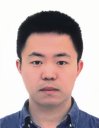
 Long Chen
· 3 previous affiliations
- Imperial College LondonSince 2023
- Postdoc · Since 2023
- University College London2022–2023
- Postdoc · 2022–2023
- University of Leicester2018–2022
- PhD student · 2018–2022
11 other authors named Long Chen: Long Chen (Hong Kong University of Science and Technology · 264 papers), Long Chen (University of California, Irvine · 74 papers), Long Chen (69 papers), Long Chen (Xiaomi (China) · 53 papers), Long Chen (Chinese Academy of Sciences · 43 papers), and 6 more
Research Overview
Long Chen focuses on underwater machine vision, medical image analysis, and the development of energy-efficient spiking neural networks. His trajectory spans from early work in surveillance and oceanographic feature extraction to advanced deep learning architectures for complex object detection in noisy environments. Recently, his research emphasizes brain-inspired computing and continual learning for neuromorphic hardware.
Research Trajectory
Chen’s early research applied computer vision and feature extraction to diverse observational domains. In 2016, he contributed to Human fall detection in surveillance video based on PCANet, developing an automatic feature learning framework to identify fall behaviors across continuous video frames for healthcare systems. That same year, he collaborated on Ocean internal waves features extraction by analysis of aerial oblique photography, mapping wave propagation directions from low-altitude aircraft imagery. By 2019, his focus shifted toward complex object recognition, introducing a cascaded deep convolutional neural network in Cascaded one-vs-rest detection network for fine-grained recognition without part annotations. This work bypassed the computationally expensive need for part annotations by training the network to detect whole objects while mitigating the dominance of background classes in feature learning.
In 2020, Chen began a sustained investigation into underwater machine vision, starting with Underwater object detection using Invert Multi-Class Adaboost with deep learning. During this period, his work intersected with several specialized research areas, including the broader area of Optimizing Model Committees via Diversity-Aware Pruning, as well as techniques for Multi-Scale Fusion for Preserving Fine Grained Spatial Details and the related area of Preserving Tiny Features Against Spatial Resolution Degradation. In 2021, he advanced the field of Physical Priors for Underwater Image Restoration with the publication of Perceptual Underwater Image Enhancement With Deep Learning and Physical Priors. This framework directly optimized image enhancement for downstream object detection performance, bridging a common gap in traditional pipelines. Recognizing the persistent challenge of class imbalance in underwater datasets, he also developed a class-wise style augmentation algorithm in Class balanced underwater object detection dataset generated by class-wise style augmentation. He continued to refine detection in degraded environments with SWIPENET: Object detection in noisy underwater scenes in 2022, contributing to the research direction of Deep Learning for Spatially Sparse Target Segmentation.
Parallel to his underwater vision research, Chen applied deep learning to clinical diagnostics. In 2021, he participated in the development of CANet: Context Aware Network for Brain Glioma Segmentation, an architecture that leveraged local convolutional features and global contextual information through a feature interaction graph to segment brain tumors. He also addressed cardiovascular care, introducing the Spatio-Temporal ECG Network for Detecting Cardiac Disorders from Multi-Lead ECGs. He expanded on this in 2024 with ECGVEDNET: A Variational Encoder-Decoder Network for ECG Delineation in Morphology Variant ECGs, which presented a novel deep delineation model alongside a large-scale 12-lead ECG dataset to handle morphological variations within individual patients.
Returning to underwater environments, Chen explored feature heterogeneity and redundancy in CWSCNet: Channel-Weighted Skip Connection Network for Underwater Object Detection (2024). He also provided theoretical and empirical analyses of dataset imbalance in Underwater object detection in noisy imbalanced datasets, proposing a factor-agnostic gradient re-weighting algorithm. His recent underwater research includes the degradation-aware diffusion model SeaDiff: Underwater Image Enhancement With Degradation-Aware Diffusion Model (2025) and a comprehensive survey of the field in Underwater Optical Object Detection in the Era of Artificial Intelligence: Current, Challenge, and Future (2026).
Simultaneously, Chen has made significant strides in the area of Closing the Neuromorphic Hardware Deployment Gap. In 2024, he co-authored Towards efficient deep spiking neural networks construction with spiking activity based pruning, introducing a biologically inspired method to dynamically prune and regenerate convolutional kernels, drastically reducing parameters for hardware-friendly deployment. In 2026, he contributed to BTSP-CAM: A Brain-Inspired Geometric Memory for Class-Incremental Learning, which replaced traditional backpropagation with stochastic bit-flips to map features to a binary synaptic matrix, enabling continual learning without storing old exemplars. He further optimized neuromorphic architectures in Efficient Transformer Attention for SNNs via Hadamard Simplification (2026), replacing heavy matrix multiplications with lightweight element-wise products to slash communication overhead while maintaining high accuracy.
Current Directions
The most recent papers in the evidence indicate a dual focus on advanced generative models for degraded environments and highly efficient, brain-inspired computing architectures. In the domain of underwater vision, recent work investigates degradation-aware diffusion models to enhance image quality and surveys the broader integration of artificial intelligence into optical object detection. Concurrently, Chen is actively addressing the computational bottlenecks of large-scale neural networks through neuromorphic engineering. This includes developing gradient-free memory modules for class-incremental learning and simplifying transformer attention mechanisms via Hadamard products, aiming to drastically reduce communication overhead and parameter counts for energy-efficient spiking neural networks.
Profile updated
| Paper | Venue | Year |
|---|---|---|
| CANet: Context Aware Network for Brain Glioma SegmentationGitHubZhihuaLiuEd/ | IEEE TMI | 2021 |
Loading new papers…
Other researchers whose papers cluster into the same research directions — a proxy for overlapping technical interests and shared intellectual neighborhoods.
See something wrong? Report a mistake