

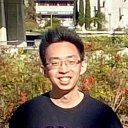
 Litian Liang
· 5 previous affiliations
- Ant Group (China)Since 2025
- Research Scientist · Since 2025
- Researcher · 2025–2026
- Sunday2024–2025
- Founding Engineer · 2024–2025
- Intern · 2024
- University of California San Diego2022–2024
- Graduate Student Researcher · 2022–2024
- MS student · 2022–2023
- University of California, Irvine2018–2022
- Undergraduate Student Researcher · 2020–2022
- Undergrad student · 2018–2022
Research Overview
Litian Liang focuses on reinforcement learning, value estimation stability, and multimodal policy optimization. His early work addressed overestimation bias and variance reduction in temporal-difference learning, particularly through ensemble methods and entropy scheduling. More recently, he investigates generative policy modeling and data augmentation techniques for robust visuomotor control in robotics.
Research Trajectory
Litian Liang's research trajectory begins with foundational improvements to value estimation and stability in reinforcement learning (RL). In 2021, he introduced techniques to mitigate overestimation bias in temporal-difference learning. In Temporal-Difference Value Estimation via Uncertainty-Guided Soft Updates, he developed a method utilizing uncertainty-guided soft updates to reduce the estimation bias that typically accumulates during the policy improvement step of Q-learning. Concurrently, he participated in research adapting continuous control algorithms for discrete action spaces, contributing to Target Entropy Annealing for Discrete Soft Actor-Critic, which proposed an annealing schedule for the target entropy parameter to improve the algorithm's empirical performance in discrete domains.
Building on this focus on variance and bias reduction, his work expanded into ensemble methods. He developed MeanQ, detailed in Reducing Variance in Temporal-Difference Value Estimation via Ensemble of Deep Networks. By using the mean of multiple Q-networks to stabilize value estimation, this approach effectively eliminated the need for standard, bias-inducing target networks. This contribution advanced several broader research areas, including the research direction Accelerating Reinforcement Learning without Target Networks and the area of The Mechanics of the Deadly Triad in Reinforcement Learning. The methodology also intersected with work in Diversifying Mini Batches to Reduce Gradient Variance and the broader area of Shared Experience Replay for Collective Reinforcement Learning.
By 2023, Liang's focus shifted toward the challenges of high-dimensional continuous action spaces and complex environments where standard unimodal Gaussian policies often fail. He co-developed novel frameworks treating RL policies as generative models over optimal trajectories. In Variational Reparametrized Policy Learning with Differentiable Physics, he helped introduce a diffusion-like strategy to model policies as multi-modality distributions, deriving a variational bound optimized via a novel Reparameterized Policy Gradient Theorem. This theoretical foundation was further applied in Reparameterized Policy Learning for Multimodal Trajectory Optimization, which conditioned trajectories on latent variables to explore multiple solutions simultaneously. This approach proved effective for sparse-reward manipulation tasks and contributed to the area of Policy Optimization in Learned Latent Imagination as well as the research direction Collaborative Training through Mutual Knowledge Distillation.
Most recently, his research has extended into robotic manipulation and visuomotor control. In One Demo is Worth a Thousand Trajectories: Action-View Augmentation for Visuomotor Policies, he collaborated on a data augmentation framework designed to generate diverse, realistic trajectories and visual observations from a single human demonstration, significantly improving policy robustness against unseen obstacles and varying initial configurations.
Current Directions
Recent work investigates the intersection of generative modeling, data augmentation, and robotics. The most recent papers in the evidence address the robustness of visuomotor policies for robotic manipulation, focusing on how synthetic trajectory generation and action-view augmentation can maximize the utility of limited human demonstrations. Alongside these applied robotics challenges, ongoing themes in his research include the use of multimodal generative models and latent variable conditioning to overcome the limitations of traditional unimodal policies in sparse-reward environments.
Profile updated
Loading new papers…
Other researchers whose papers cluster into the same research directions — a proxy for overlapping technical interests and shared intellectual neighborhoods.
See something wrong? Report a mistake