

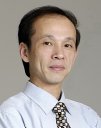
 Liqing Zhang
· 3 previous affiliations
- Shanghai Jiao Tong UniversitySince 2003
- Full Professor · Since 2003
- Current
- RIKEN1998–2002
- Researcher · 1998–2002
- South China University of Technology1996–1997
- Full Professor · 1996–1997
1 other author named Liqing Zhang: Liqing Zhang (12 papers)
Research Overview
Liqing Zhang focuses on tensor network decompositions, computer vision, and multimodal reasoning. His early work developed robust multilinear regression and Bayesian tensor factorization methods for complex data representation. More recently, his research investigates image harmonization, visual tracking defense mechanisms, and language-centric reasoning frameworks for video question-answering and synthetic media detection.
Research Trajectory
Zhang’s early research addressed signal processing and feature extraction. He developed adaptive algorithms for blind source separation in Self-adaptive blind source separation based on activation functions adaptation (2004) and explored visual attention mechanisms in Saliency Detection: A Spectral Residual Approach (2007). He also applied tensor-based methods to brain-computer interfaces, introducing a scheme for single-trial electroencephalogram (EEG) classification that operates without relying on prior neurophysiologic knowledge for noise removal in A Prior Neurophysiologic Knowledge Free Tensor-Based Scheme for Single Trial EEG Classification (2008).
Building on these multidimensional data techniques, Zhang’s focus shifted toward foundational tensor network decompositions in the 2010s. He contributed to the development of Higher Order Partial Least Squares (HOPLS): A Generalized Multilinear Regression Method., which improved predictive performance and noise robustness for multi-way data. This work aligned with broader efforts in the research direction of Multilinear Structure Preservation in Tensor Learning. He subsequently addressed the challenges of missing data and rank determination in Bayesian CP Factorization of Incomplete Tensors with Automatic Rank Determination, advancing the area of Automatic Rank Learning for Bayesian Tensor Decomposition. Continuing to explore how to maintain data structure—a theme central to the area of Learning Directly on Multidimensional Tensor Structures—he collaborated on Tensor Ring Decomposition, which introduced a circular multilinear product model to overcome the permutation dependencies of traditional tensor train decompositions.
Applying high-dimensional representation learning to new domains, Zhang investigated risk assessment in complex financial systems. In Risk Assessment for Networked-guarantee Loans Using High-order Graph Attention Representation (2019), his lab proposed a method to learn embeddings of directed guarantee networks to predict default risks among loan companies, contributing to the research direction of Cascading Risk Propagation in Interconnected Networks.
In the 2020s, Zhang’s research expanded significantly into computer vision, particularly image harmonization and generation. He led the creation of the iHarmony4 dataset and a domain verification approach in DoveNet: Deep Image Harmonization via Domain Verification. Around this time, he also contributed to the area of Overcoming Sensor Saturation and Dynamic Range Clipping. His work on harmonization continued with Painterly Image Harmonization by Learning from Painterly Objects, which mapped background styles to composite objects, intersecting with the broader area of Resolving the Neural Style Transfer Trilemma. He also addressed the robustness of visual tracking systems against adversarial attacks in Multi-Model UNet: An Adversarial Defense Mechanism for Robust Visual Tracking. Further advancing generative models, his lab developed DomainGallery: Few-shot Domain-driven Image Generation by Attribute-centric Finetuning, a framework that disentangles style from content to allow text-to-image models to learn specific visual domains from minimal examples.
Most recently, Zhang has focused on complex multimodal reasoning, simulation, and verifiable AI. He oversaw the development of a mixed-reality benchmark for human-vehicle interactions in Pedestrian Motion Reconstruction: A Large-scale Benchmark via Mixed Reality Rendering with Multiple Perspectives and Modalities. In the domain of video understanding, he introduced hierarchical reasoning frameworks for Multimodal Large Language Models (MLLMs), such as the bottom-up logical approach in Divide and Conquer: Exploring Language-centric Tree Reasoning for Video Question-Answering and the compositional graph method in Parse, Align and Aggregate: Graph-driven Compositional Reasoning for Video Question Answering. He also participated in creating interpretable forensics for synthetic media, contributing to FakeXplain: AI-Generated Image Detection via Human-Aligned Grounded Reasoning, which detects AI-generated images by pointing to specific artifacts and explaining its reasoning in natural language.
Current Directions
Zhang’s most recent work investigates the interpretability and reasoning capabilities of Multimodal Large Language Models (MLLMs), particularly in the context of Video Question-Answering (VideoQA). This research addresses the opacity of current models by developing compositional graphs and language-centric tree reasoning frameworks that break complex visual queries into verifiable, hierarchical steps.
Alongside multimodal reasoning, his current research addresses the safety and verification of AI systems. This includes developing human-aligned grounded reasoning techniques for synthetic media forensics—moving beyond binary detection to explainable artifact identification—as well as constructing large-scale, mixed-reality simulations to model complex pedestrian-vehicle interactions for autonomous navigation systems.
Profile updated
Loading new papers…
Other researchers whose papers cluster into the same research directions — a proxy for overlapping technical interests and shared intellectual neighborhoods.
See something wrong? Report a mistake