

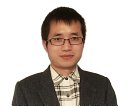
 Liping Liu
· 3 previous affiliations
- Tufts UniversitySince 2017
- Associate Professor · Since 2024
- Assistant Professor · 2017–2024
- Columbia University2016–2017
- Postdoc · 2016–2017
- Oregon State University2010–2016
- PhD student · 2010–2016
3 other authors named Liping Liu: Liping Liu (3 papers), Liping Liu (1 paper), Liping Liu (1 paper)
Research Overview
Liping Liu focuses on probabilistic modeling, graph generative models, and data-driven physical simulations. His research spans the development of scalable inference methods for complex structured data to the application of deep learning in bioinformatics and fluid dynamics. Recently, he has concentrated on scaling discrete diffusion and autoregressive transformer architectures for large-scale graph generation and molecular design.
Research Trajectory
His early research addressed complex labeling and representation learning challenges. In A Conditional Multinomial Mixture Model for Superset Label Learning, he tackled the superset label learning problem by maximizing the likelihood of candidate label sets. This approach utilized a logistic stick-breaking process that maps data points to mixture components before assigning labels. He later expanded representation techniques in Zero-Inflated Exponential Family Embeddings, adapting the principles of word embeddings to accommodate diverse data types governed by exponential family distributions.
Moving toward structured and spatial data, he explored scalable inference and structural alignment. With collaborators, he developed Amortized Variational Inference with Graph Convolutional Networks for Gaussian Processes, which utilizes graph convolutional networks to reduce the computational burden of Gaussian Process inference on large datasets with non-Gaussian likelihoods. He subsequently addressed the combinatorial challenge of finding node-to-node correspondences in noisy real-world data in Stochastic Iterative Graph Matching. Expanding on spatial modeling, he introduced Kriging Convolutional Networks, a framework that merges the mathematical rigor of classical geostatistics with the flexibility of graph neural networks. By constructing localized subgraphs around target locations, this method performs robust spatial interpolation without restrictive Gaussian assumptions.
A significant portion of his trajectory focuses on modeling complex physical dynamics. To address the research direction of Mitigating Compounding Errors in Autoregressive Physical Simulators, he developed Predicting Physics in Mesh-reduced Space with Temporal Attention. This work combines graph neural networks for spatial coarsening with temporal attention modules to prevent error drift in high-dimensional physical systems. He further advanced this domain with Unifying Predictions of Deterministic and Stochastic Physics in Mesh-reduced Space with Sequential Flow Generative Model, creating a framework that pairs a position-based graph autoencoder with a Transformer-conditioned normalizing flow to predict physical dynamics on unstructured meshes. Concurrently, he contributed to the broader area of Generalized Category Discovery for Long Tailed Distributions through his participation in NovelCraft: A Dataset for Novelty Detection and Discovery in Open Worlds, which evaluates novelty detection in complex, multimodal environments.
More recently, his work has heavily emphasized scalable generative models for graphs and sequences. He introduced EDGE, a discrete diffusion model detailed in Efficient and Degree-Guided Graph Generation via Discrete Diffusion Modeling, which scales graph generation by diffusing toward an empty graph rather than a random one. By explicitly modeling node degrees, the model reduces computational complexity from quadratic to linear with respect to the number of edges. This was subsequently refined in EDGE++: Improved Training and Sampling of EDGE, which optimizes the number of active nodes at each timestep via a degree-specific noise schedule. Investigating foundational architectures, he explored global information processing inefficiencies in On Separate Normalization in Self-supervised Transformers. This architectural focus culminated in Graph Generative Pre-trained Transformer, which advances the research direction of Canonical Graph Serialization for Sequential Architectures by encoding sparse graphs into token sequences for autoregressive generation, achieving strong performance in molecular design.
In parallel, he has applied machine learning to bioinformatics and constrained generation. He participated in the development of MassSpecGym: A benchmark for the discovery and identification of molecules, a resource aimed at decoding molecular structures from tandem mass spectrometry data—a notoriously difficult task that leaves many acquired spectra uninterpreted. He also contributed to Large Language Model is Secretly a Protein Sequence Optimizer, which integrates pre-trained language models into directed evolution frameworks to discover high-fitness protein variants without explicit fine-tuning. Most recently, he co-authored Constraint-Aware Flow Matching via Randomized Exploration, introducing methods to ensure generative models satisfy specified logical constraints using randomized exploration strategies.
Current Directions
The most recent papers in the evidence indicate a strong focus on applying advanced generative models to domain-specific scientific challenges, particularly in bioinformatics and constrained generation. Recent work investigates the use of foundation models for biological sequence design, demonstrating how large language models can be repurposed for protein optimization. Additionally, there is an ongoing effort to improve the reliability of generative models by enforcing logical and structural constraints, ensuring that synthetic outputs—whether molecular structures or generic graphs—adhere to strict domain rules. This intersects with his continued interest in establishing robust benchmarks for molecular discovery, bridging the gap between high-throughput chemical data and machine learning interpretation.
Profile updated
Loading new papers…
Other researchers whose papers cluster into the same research directions — a proxy for overlapping technical interests and shared intellectual neighborhoods.
See something wrong? Report a mistake