

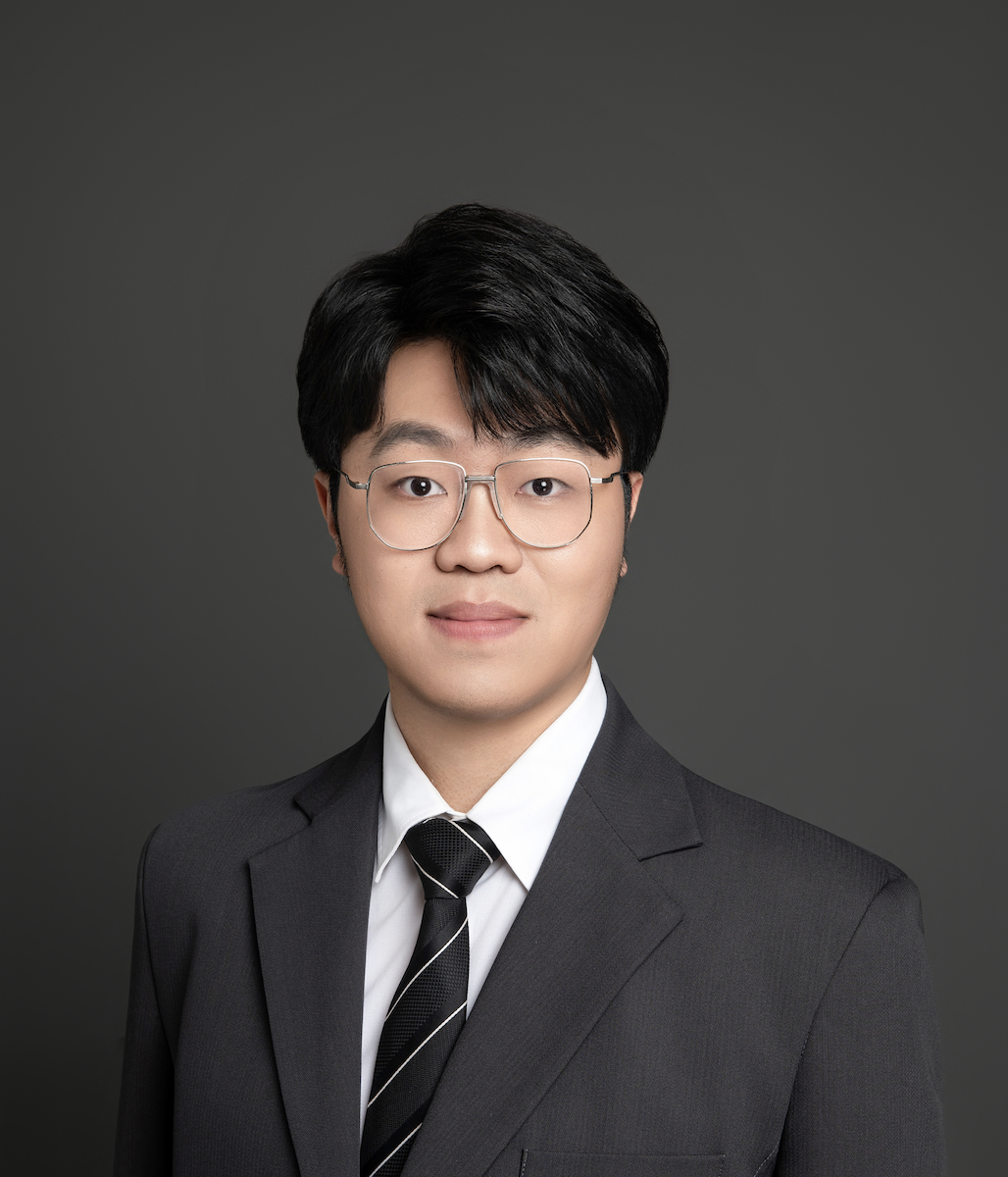
 Linyi Yang
· 4 previous affiliations
- Assistant Professor · Since 2025
- University College London2023–2025
- Researcher · 2023–2025
- Mayun University2021–2023
- Postdoc · 2021–2023
- University College Dublin2017–2021
- PhD student · 2017–2021
Research Overview
Linyi Yang focuses on the development of autonomous artificial intelligence systems for scientific discovery, out-of-distribution generalization in natural language processing, and the rigorous evaluation of large language models. His trajectory spans from foundational work in financial text classification to the design of automated, human-intervenable research agents. Currently, he investigates AI co-scientists, emphasizing causal reasoning, alignment, and the security of autonomous research frameworks.
Research Trajectory
Linyi Yang's research trajectory begins with foundational work in natural language processing, particularly focusing on financial text classification and model interpretability. In 2020, he developed HTML: Hierarchical Transformer-based Multi-task Learning for Volatility Prediction, which utilized hierarchical modeling to forecast financial risk from text. Alongside this, he explored interpretability in financial domains by Generating Plausible Counterfactual Explanations for Deep Transformers in Financial Text Classification.
Recognizing the limitations of standard evaluation paradigms, Yang's focus expanded to the robustness of natural language understanding systems. In 2023, he provided a comprehensive review of these challenges in Out-of-Distribution Generalization in Natural Language Processing: Past, Present, and Future. To address the gaps identified in the literature, he introduced GLUE-X: Evaluating Natural Language Understanding Models from an Out-of-Distribution Generalization Perspective, a large-scale dataset designed to rigorously test model generalization beyond initial training distributions.
By 2024, Yang began applying advanced machine learning techniques to domain-specific scientific problems while simultaneously investigating the underlying reasoning mechanisms of large language models (LLMs). He proposed XRDMatch: a semi-supervised learning framework to efficiently discover room temperature lithium superionic conductors, leveraging X-ray diffraction patterns to overcome data scarcity in materials science. Concurrently, he examined how models utilize provided information in Supervised Knowledge Makes Large Language Models Better In-context Learners. His collaborative work also critically analyzed the limitations of LLM reasoning in LLMs with Chain-of-Thought Are Non-Causal Reasoners. This study revealed that models often deviate from ideal causal chains, contributing to several broader research areas, including Faithfulness and Post-Hoc Rationalization in Chain-of-Thought Reasoning, Scaling Faithfulness in Large Language Model Explanations, and Structured Causal Reasoning in Large Language Models.
In 2025, Yang's research coalesced around the development and evaluation of autonomous AI agents for scientific discovery. He surveyed the emerging paradigm of automated research systems in How Far Are AI Scientists from Changing the World?, advancing the research direction of Bridging the Implementation Gap in Autonomous Research Agents. Moving from theory to implementation, he guided the development of CycleResearcher: Improving Automated Research via Automated Review. This framework automates the research lifecycle through an iterative feedback loop between agentic researchers and reviewers, a key contribution to the area of Closed-Loop Iterative Scientific Discovery with Language Models. To ensure these systems remain controllable, he also introduced ResearStudio: A Human-Intervenable Framework for Building Controllable Deep-Research Agents, which allows human researchers to edit plans and code during the automated research process.
Parallel to his work on AI scientists, Yang continued to address the evaluation, safety, and alignment of LLMs. He quantified the instability of LLM-as-a-judge paradigms in An Empirical Analysis of Uncertainty in Large Language Model Evaluations, introducing a confidence-aware evaluator designed for out-of-distribution data. He also developed MCEval: A Dynamic Framework for Fair Multilingual Cultural Evaluation of LLMs to measure cultural awareness and mitigate memorization biases across languages. In the domain of model safety, he participated in evaluating real-world vulnerabilities in Jailbreaking Attacks vs. Content Safety Filters: How Far Are We in the LLM Safety Arms Race?. To improve model alignment efficiently, his group proposed Constrain Alignment with Sparse Autoencoders. Furthermore, he contributed to optimizing reasoning efficiency in Causal Sufficiency and Necessity Improves Chain-of-Thought Reasoning, which prunes redundant generation steps and advances the research direction of Causal Intervention for Chain of Thought Faithfulness.
Most recently, in 2026, Yang's collaborative efforts have focused on agent security and training stability. He contributed to MemPot: Defend Against Memory Extraction Attack with Optimized Honeypots, a proactive defense mechanism that injects optimized traps to protect LLM agents from memory extraction. Additionally, he participated in the development of Anchored Supervised Fine-Tuning, a post-training method designed to combine the stability of supervised fine-tuning with the generalization capabilities of reinforcement learning. Expanding on autonomous agent systems, Yang guided the creation of AEP:Towards Trustworthy Agent Communication, Networking, and Collaboration, introducing an asset-centric protocol for policy-controlled, auditable collaboration across decentralized agent networks. In the domain of scientific agents and automated evaluation, Yang also directed work on Notes2Skills: From Lab Notebooks to Certainty-Aware Scientific Agent Skills to transform unstructured experimental notes into actionable agent competencies, as well as ReviewGuard: Aligning LLM-Assisted Peer Review with Long-Term Scientific Impact. To evaluate and advance higher-level model capabilities, Yang further oversaw CreativeBench: Benchmarking and Enhancing Machine Creativity via Self-Evolving Challenges (preprint), establishing an evolving benchmark for machine creativity.
Current Directions
The most recent papers in the evidence indicate a strong focus on the development, security, and evaluation of autonomous AI agents, particularly in the context of scientific discovery. Recent work investigates how to build controllable "AI scientists" that can iteratively generate, review, and refine research while allowing for human intervention. Alongside agentic frameworks, current directions address the fundamental reasoning capabilities of large language models, utilizing causal frameworks to prune redundant chain-of-thought processes and improve faithfulness. Additionally, ongoing research emphasizes model safety and alignment, exploring proactive defenses against memory extraction attacks, dynamic frameworks for multilingual cultural evaluation, and stable post-training methods that bridge supervised fine-tuning and reinforcement learning.
Profile updated
Loading new papers…
Other researchers whose papers cluster into the same research directions — a proxy for overlapping technical interests and shared intellectual neighborhoods.
See something wrong? Report a mistake