

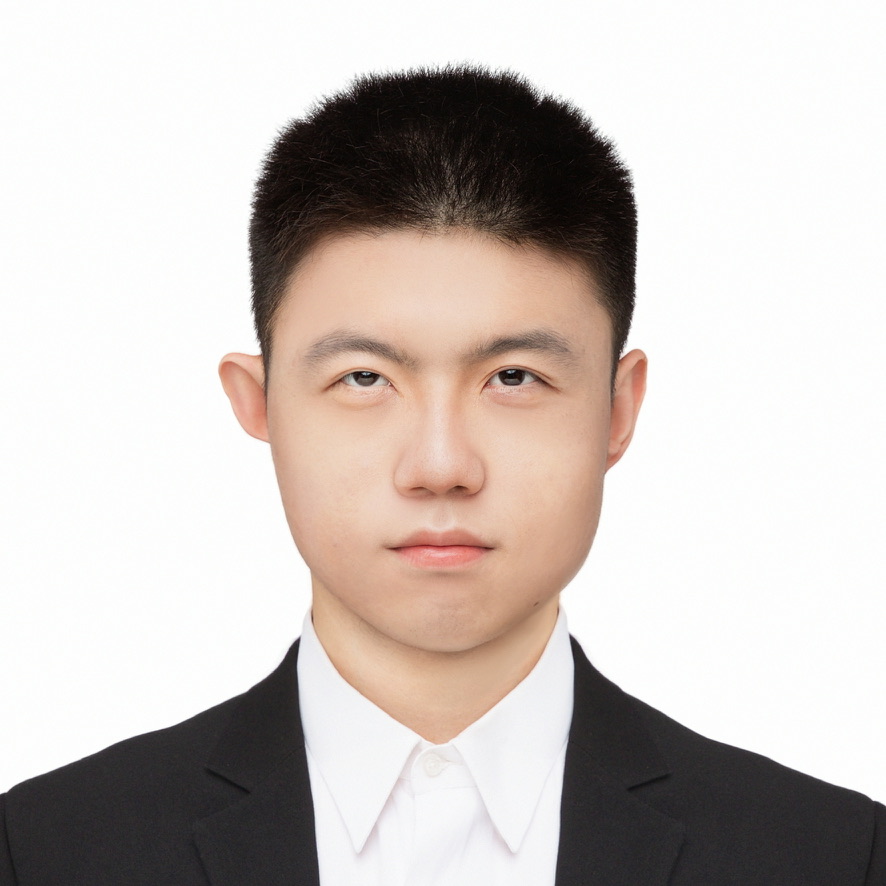
 Linkai Peng
· 3 previous affiliations
- Johnson & JohnsonSince 2026
- AI/ML Intern, Computer Vision · Since 2026
- Northwestern UniversityCurrent
- Current
- PhD student · 2023
- Undergrad student · 2019–2023
Research Overview
Linkai Peng focuses on medical image segmentation, synthetic data generation, and the generalization of deep learning models across diverse clinical environments. His trajectory centers on improving the accuracy and robustness of pancreatic imaging, particularly in handling cross-sequence variations in MRI and CT scans. His most recent work addresses the critical challenges of domain generalization and benchmarking for clinical applications.
Research Trajectory
Linkai Peng's research primarily addresses the computational challenges of analyzing pancreatic imaging, with a strong emphasis on deep learning applications for both CT and MRI modalities. His early collaborative work involved large-scale efforts to improve segmentation models. In 2024, he participated in the development of Large-Scale Multi-Center CT and MRI Segmentation of Pancreas with Deep Learning, which introduced PanSegNet. This project achieved high-performance segmentation across different imaging modalities and contributed a substantial multi-center MRI dataset to the community. This collaborative effort touched upon several broader research areas, including the research direction of Medical Image Segmentation with Limited Labels, the area of Overcoming Quadratic Complexity in Volumetric Attention, and the broader field of Validating Medical Artificial Intelligence in Live Clinical Workflows.
Building on these foundational segmentation challenges, Peng shifted focus toward the data scarcity issues that frequently bottleneck clinical decision-making. As the lead researcher on Optimizing Synthetic Data for Enhanced Pancreatic Tumor Segmentation (2024), he critically evaluated the limitations of existing generative AI frameworks used to augment training datasets. This study investigated how synthetic data generation could be optimized to meet the rigorous performance benchmarks required for real-world clinical use in pancreatic tumor detection.
Continuing his focus on clinical applicability, Peng's subsequent work has tackled the fragility of deep learning models when deployed across varying imaging protocols. In 2026, he introduced CrossPan: A Comprehensive Benchmark for Cross-Sequence Pancreas MRI Segmentation and Generalization. This research demonstrated that sequence differences—rather than model architecture or the specific data source—constitute the primary obstacle to robust segmentation. By establishing the CrossPan benchmark, this work highlighted the inadequacies of current domain generalization methods and contributed significantly to the research direction of Overcoming Cross-Institutional Domain Shift in Medical AI.
Current Directions
Based on his most recent publications, Peng's current research investigates the generalization of medical imaging models across heterogeneous clinical settings. The most recent papers in the evidence address the specific vulnerabilities of deep learning models when applied to different MRI sequences. His work emphasizes the need for rigorous benchmarking and robust domain generalization techniques to ensure that automated segmentation tools can perform reliably despite the inherent variability of real-world clinical imaging data.
Profile updated
Loading new papers…
Other researchers whose papers cluster into the same research directions — a proxy for overlapping technical interests and shared intellectual neighborhoods.
See something wrong? Report a mistake