

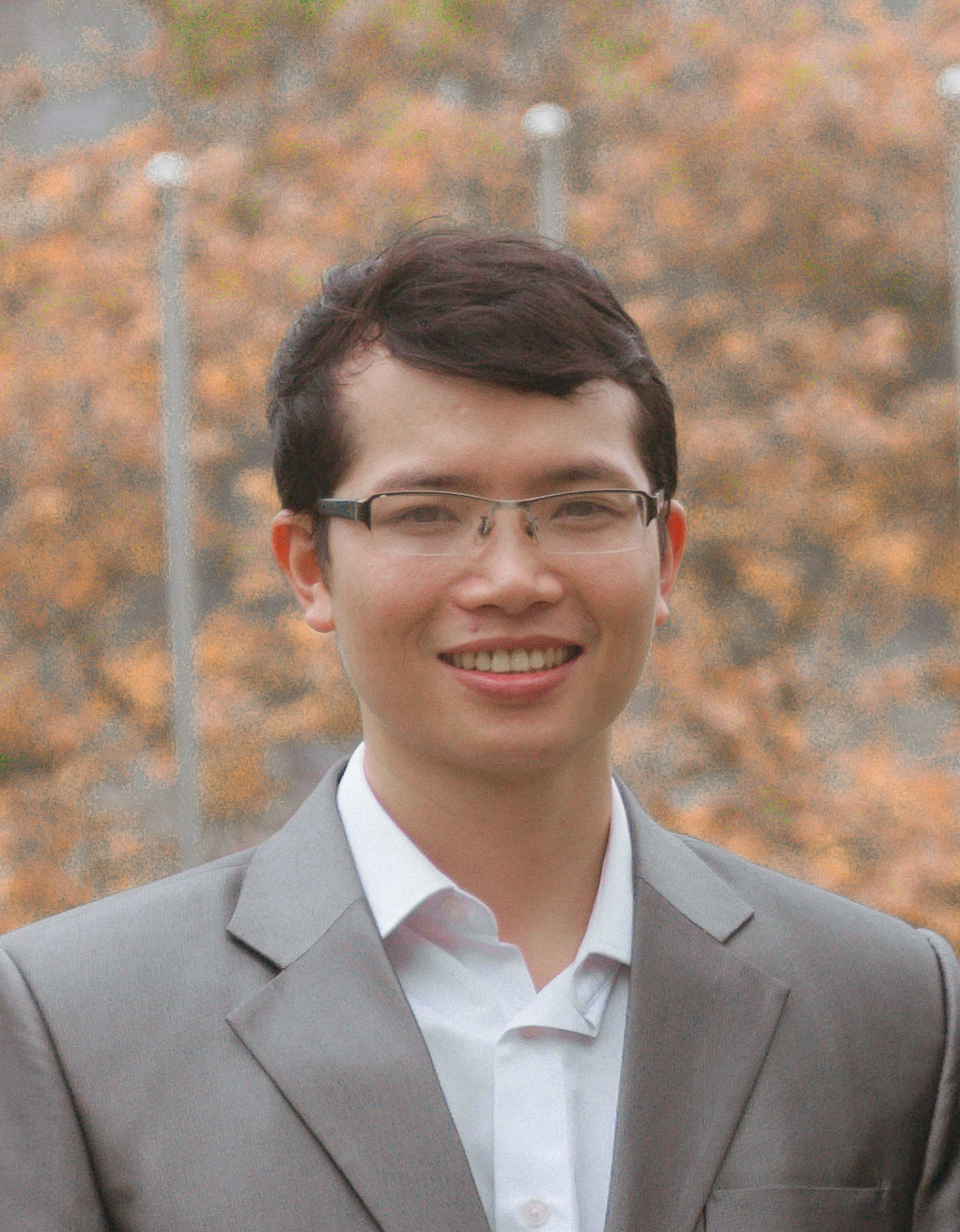
 Linh Ngo Van
· 1 previous affiliation
- Assistant Professor · Since 2023
Research Overview
Linh Ngo Van focuses on natural language processing, topic modeling, and continual learning, with an emphasis on handling sparse data and mitigating catastrophic forgetting. His trajectory spans early work in document classification and probabilistic topic models to recent advancements in lifelong event detection and neural network regularization. Currently, his research explores the alignment and optimization of large language models for complex reasoning and anomaly detection tasks.
Research Trajectory
His early research centered on improving document classification techniques, particularly for complex or unlabeled data. He introduced graph-based semi-supervised frameworks for categorizing web pages in Improving Vietnamese Web Page Classification by Combining Hybrid Feature Selection and Label Propagation with Link Information. Building on this foundation, he developed interpretable classification techniques using Dirichlet process mixture models of von Mises-Fisher distributions for directional data, detailed in Effective and Interpretable Document Classification Using Distinctly Labeled Dirichlet Process Mixture Models of von Mises-Fisher Distributions and subsequently expanded in An effective and interpretable method for document classification.
By 2019, his focus broadened to include probabilistic topic models and recommender systems. He contributed to research on mitigating overfitting in topic models applied to short texts in Eliminating overfitting of probabilistic topic models on short and noisy text: The role of dropout. In the research area of Mitigating the Cold Start Problem in Recommender Systems, he participated in modeling the sequential behavior of online users by integrating implicit and explicit feedback in From Implicit to Explicit Feedback: A deep neural network for modeling the sequential behavior of online users. Concurrently, he explored natural language semantics, introducing a method to identify implicit discourse relations using label embeddings in Employing the Correspondence of Relations and Connectives to Identify Implicit Discourse Relations via Label Embeddings.
Addressing the challenge of sparse data in recommender systems, he proposed Neural Poisson Factorization, a model combining deep learning with Poisson factorization to capture hidden semantics in short item descriptions. He also advanced the broader area of Overcoming Semantic Sparsity in Short Texts by developing models capable of handling concept drift in data streams. This work began with Graph Convolutional Topic Model for Data Streams and culminated in A graph convolutional topic model for short and noisy text streams, which leveraged knowledge graphs to balance prior knowledge with continuously arriving information.
A major theme in his subsequent trajectory is continual learning—specifically, preventing neural networks from catastrophically forgetting past tasks as they acquire new information. He introduced novel regularization strategies in Auxiliary Local Variables for Improving Regularization/Prior Approach in Continual Learning, which constrained weight updates to preserve previous knowledge. This approach was further refined in Continual variational dropout: a view of auxiliary local variables in continual learning, where task-specific local variables and learnable dropout rates were used to maintain stable parameter regions across tasks.
He applied these continual learning principles, alongside advanced representation techniques, to event detection. He developed a retrieval-augmented framework for cross-lingual contexts in Retrieving Relevant Context to Align Representations for Cross-lingual Event Detection. He also contributed to lifelong event detection frameworks, participating in work that utilized the research direction of Optimal Transport for Semantic Alignment and Representation Learning to align classification heads with pre-trained language models in Lifelong Event Detection via Optimal Transport. Additionally, he collaborated on SharpSeq: Empowering Continual Event Detection through Sharpness-Aware Sequential-task Learning, a framework that leveraged generative modeling and the area of Reducing the Dual Pass Cost of Sharpness Aware Optimization to find robust, flat minima in the loss landscape for sequential task learning. Returning to topic modeling, he contributed to NeuroMax: Enhancing Neural Topic Modeling via Maximizing Mutual Information and Group Topic Regularization, which maximized mutual information and used optimal transport to capture the semantic knowledge of large pre-trained language models efficiently.
Current Directions
The most recent papers in the evidence address the alignment and application of large language models (LLMs) for specialized reasoning tasks. Recent work investigates token-level preference optimization, proposing methods like Token-level Bregman Preference Optimization to align language models with human preferences more stably than sequence-level approaches (TokenRatio: Principled Token-Level Preference Optimization via Ratio Matching). Additionally, he is exploring the use of LLMs for complex tabular data analysis, participating in the development of self-play frameworks that minimize $f$-divergence to detect anomalies by generating and distinguishing synthetic pseudo-anomalies ($f$-Divergence Self-Play for Tabular Anomaly Detection via Large Language Models).
Profile updated
Loading new papers…
Other researchers whose papers cluster into the same research directions — a proxy for overlapping technical interests and shared intellectual neighborhoods.
See something wrong? Report a mistake