

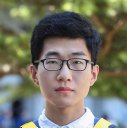
 Lingwei Meng
· 3 previous affiliations
- ByteDance (China)Since 2025
- Researcher · Since 2025
- Chinese University of Hong Kong2021–2025
- Doctor of Philosophy - PhD, Speech and Language Processing · 2021–2025
- Microsoft (United States)2023–2025
- Intern · 2023–2025
Research Overview
Lingwei Meng focuses on speech synthesis, multi-talker speech recognition, and the integration of audio processing with large language models. His early work addressed medical image analysis for disease prognosis before transitioning to foundational problems in speaker diarization and acoustic modeling. Currently, he investigates continuous-valued language modeling for generative audio and zero-shot text-to-speech systems.
Research Trajectory
Lingwei Meng’s early research applied deep learning to medical image analysis, contributing to the broader area of Continuous Disease Progression Modeling. In 2020, he developed A Deep Learning Prognosis Model Help Alert for COVID-19 Patients at High-Risk of Death: A Multi-Center Study, introducing a 3D convolutional neural network to predict mortality risk from initial CT scans. He subsequently led a comprehensive multi-center study, 2D and 3D CT Radiomic Features Performance Comparison in Characterization of Gastric Cancer: A Multi-Center Study (2021), which evaluated the representational capacity of different radiomic annotation strategies for predicting lymph node metastasis and tumor stages.
Transitioning his focus to audio and speech processing during his doctoral studies at The Chinese University of Hong Kong, Meng began addressing security and robustness in acoustic systems. In 2022, he presented Spoofing-Aware Speaker Verification by Multi-Level Fusion, advancing the research direction of Spoofing Aware Speaker Verification. This framework strategically combined embeddings from countermeasure models with scores from automatic speaker verification models to drastically reduce equal error rates in detecting synthetic or spoofed speech.
A major theme in Meng’s subsequent work is multi-talker speech recognition and speaker diarization. Recognizing the difficulty of processing overlapping speech, he introduced a cost-effective architectural intervention in A Sidecar Separator Can Convert A Single-Talker Speech Recognition System to A Multi-Talker One (2023). By mounting a "Sidecar" module between the acoustic and linguistic layers of a pre-trained single-talker model, he enabled the separation of mixed speech embeddings without retraining the foundational encoder. He expanded this framework in Unified Modeling of Multi-Talker Overlapped Speech Recognition and Diarization with a Sidecar Separator (2023), adding a dedicated diarization branch to simultaneously transcribe and attribute overlapping speech.
In 2024, Meng extended these multi-talker techniques to larger foundation models and explored new training objectives. He developed Empowering Whisper as a Joint Multi-Talker and Target-Talker Speech Recognition System, integrating the Sidecar separator and a target-talker identifier into the Whisper architecture to handle complex acoustic environments with minimal enrollment data. Concurrently, he investigated the implicit temporal alignment properties of neural encoders in Disentangling Speakers in Multi-Talker Speech Recognition with Speaker-Aware CTC, proposing a novel training objective that explicitly enforces the separation of different speakers into distinct temporal regions. He also explored the capacity of large language models to process complex audio environments, leading Large Language Model Can Transcribe Speech in Multi-Talker Scenarios with Versatile Instructions, which utilized LLMs to transcribe multi-talker speech based on specific attributes like sex, language, or occurrence order.
Parallel to his work in speech recognition, Meng has made significant contributions to speech synthesis and generative audio. He introduced MELLE in Autoregressive Speech Synthesis without Vector Quantization (2024), a novel approach that generates continuous mel-spectrogram frames directly from text conditions. By bypassing discrete vector quantization, this work preserves audio fidelity and advances the area of Generative Audio Modeling in Continuous Latent Spaces and the broader domain of The Discretization Bottleneck in Neural Audio Modeling. He also participated in the development of VALL-E R: Robust and Efficient Zero-Shot Text-to-Speech Synthesis via Monotonic Alignment (2024), which addressed robustness issues like omissions and repetitions in LLM-based zero-shot TTS systems.
Now a research scientist at ByteDance Seed, Meng’s most recent work spans secure audio generation, multimodal systems, and clinical applications. In 2025, he addressed the security implications of zero-shot TTS in Defending Unauthorized Voice Cloning with Watermark-Aware Codecs, designing neural audio codecs that output silence when prompted with copyrighted, watermarked audio. He also contributed to Zero-Shot Streaming Text to Speech Synthesis with Transducer and Auto-Regressive Modeling (SMLLE), a framework achieving near-zero latency in personalized speech generation, relevant to the research direction of Modeling Prosody Across Tonal and Non-Tonal Languages. Expanding into multimodal domains, he collaborated on C2/AV-TSE: Context and Confidence-aware Audio Visual Target Speaker Extraction (2025) to improve audio-visual separation using fine-grained confidence scoring, and ARLON: Boosting Diffusion Transformers with Autoregressive Models for Long Video Generation (2025), which combines autoregressive blueprints with diffusion models to enhance temporal consistency, contributing to the area of Discrete Visual Tokenization for Multimodal Sequence Modeling. Returning to clinical applications with modern tools, he participated in Agentic Cognitive Profiling: Realigning Automated Alzheimer’s Disease Detection with Clinical Construct Validity (2026), utilizing specialized LLM agents to perform structured, clinically valid cognitive assessments.
Current Directions
The most recent papers in the evidence indicate a dual focus on advancing the capabilities of generative audio models while ensuring their safe deployment, alongside explorations into multimodal and agentic AI systems. In speech synthesis, current work investigates streaming architectures that combine Transducers with autoregressive modeling to achieve zero-shot voice cloning with minimal latency. Simultaneously, there is a strong emphasis on intrinsic safety mechanisms, such as watermark-aware codecs that proactively prevent unauthorized voice replication by foundation models.
Beyond audio, recent collaborative efforts address complex temporal and reasoning tasks across modalities. This includes developing hybrid autoregressive and diffusion frameworks for coherent long-video generation, as well as designing multi-agent LLM pipelines that decompose clinical screening tasks to ensure automated disease detection aligns with established medical construct validity.
Profile updated
Loading new papers…
Other researchers whose papers cluster into the same research directions — a proxy for overlapping technical interests and shared intellectual neighborhoods.
See something wrong? Report a mistake