

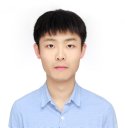
 Lingtong Kong
· 2 previous affiliations
- VivoSince 2023
- Researcher · Since 2023
- Shanghai Jiao Tong University2017–2023
- PhD student · 2017–2023
Research Overview
Lingtong Kong focuses on computer vision and image processing, with a primary emphasis on motion estimation, video synthesis, and the development of computationally efficient deep learning architectures. His work addresses the challenges of real-time optical flow estimation, video frame interpolation, and high dynamic range (HDR) imaging, particularly for deployment on resource-constrained devices. By integrating techniques such as Hybrid Supervision for Knowledge Distillation and multi-scale feature refinement, Kong’s research seeks to bridge the gap between high-performance neural models and the practical requirements of mobile and robotic vision systems.
Research Trajectory
Kong’s research trajectory began with a concentrated focus on lightweight optical flow estimation. Between 2019 and 2021, he developed several architectures designed to reduce the computational overhead of dense motion estimation without sacrificing accuracy. This period was characterized by the development of models like FDFlowNet and FastFlowNet, which utilized U-shaped networks and enhanced pooling pyramids to achieve real-time performance on standard benchmarks. During this phase, he also explored the utility of motion representations in broader video understanding tasks, participating in research on unsupervised motion enhancement for action recognition and dense correspondence for homography estimation.
In 2022, Kong transitioned toward video frame interpolation (VFI), applying his expertise in motion modeling to the synthesis of intermediate frames. This work addressed the inefficiencies of cascaded architectures that separately model flow and synthesis. By proposing joint refinement of motion fields and image context, he moved toward more integrated pipelines that reduced inference delay. His work in this area also began to account for non-linear motion, moving beyond the standard constant-velocity assumptions prevalent in the field.
By 2023, his focus expanded to include unsupervised learning and the optimization of training paradigms. He introduced mutual knowledge distillation frameworks to improve unsupervised optical flow learning, addressing the limitations of traditional brightness constancy assumptions. This period also saw an investigation into spatial redundancy within video synthesis, leading to the application of wavelet domain processing to compress computation in frame interpolation tasks.
Most recently, from 2024 to 2026, Kong has extended his research into complex scene reconstruction and high-fidelity imaging. This includes the development of selective alignment fusion for HDR imaging and the exploration of Neural Radiance Fields for Dynamic and Deformable Scenes. His recent contributions involve 4D Gaussian Splatting, specifically focusing on reconstructing high dynamic range scenes from monocular video, which represents a significant shift toward Neural Reconstruction from Unconstrained In-the-Wild Image Collections.
Representative Work
The following papers represent key developments in Kong's research regarding efficient motion estimation, video synthesis, and unsupervised learning.
Fdflownet: Fast Optical Flow Estimation Using A Deep Lightweight Network (2020) introduces a lightweight U-shape network designed for real-time optical flow estimation. The model addresses the high computational complexity of contemporary deep models by constructing multi-scale features that provide global context to upper levels of the network. This work demonstrated that it was possible to achieve competitive accuracy on the KITTI and Sintel benchmarks while significantly increasing inference speed relative to established models like PWC-Net.
FastFlowNet: A Lightweight Network for Fast Optical Flow Estimation (2021) builds upon the goal of efficiency by tailoring optical flow prediction for low-power devices. Kong introduced a Head Enhanced Pooling Pyramid (HEPP) feature extractor and a center-based predictor to streamline the coarse-to-fine estimation paradigm. This approach reduced the parameter count and computational cost, facilitating the application of dense motion estimation in mobile and robotic contexts.
IFRNet: Intermediate Feature Refine Network for Efficient Frame Interpolation (2022) addresses the latency issues inherent in video frame interpolation. Rather than using a cascaded structure, IFRNet employs an encoder-decoder architecture that refines bilateral intermediate flow fields and intermediate features simultaneously. This joint refinement allows the model to compensate for occlusion and capture complex motion more effectively than traditional decoupled methods, providing a faster solution for synthesizing intermediate frames.
Dynamic Frame Interpolation in Wavelet Domain (2023) explores the spatial redundancy present in video synthesis. Kong proposed a two-stage framework that operates in the wavelet domain to adaptively select the degree of computation compression based on the texture distribution and scene motion of the input frames. By focusing computational resources on regions with high temporal or spatial complexity, the method achieves a more favorable trade-off between visual quality and processing efficiency.
MDFlow: Unsupervised Optical Flow Learning by Reliable Mutual Knowledge Distillation (2023) introduces a framework for learning optical flow from unlabeled image pairs. To overcome the "mismatch" problem where augmentation regularization can amplify errors in unsupervised settings, Kong proposed a mutual distillation process. This allows a teacher and student network to transfer reliable knowledge back and forth, iteratively improving the estimation of difficult matching regions without the need for ground-truth labels.
Mono4DGS-HDR: High Dynamic Range 4D Gaussian Splatting from Alternating-exposure Monocular Videos (2026) represents a move into advanced 4D scene reconstruction. As a primary contributor to this system, Kong helped develop a method for reconstructing renderable HDR scenes from handheld, low-dynamic-range (LDR) videos with alternating exposures. The work utilizes a two-stage Gaussian Splatting optimization to simultaneously estimate camera poses and handle varying brightness levels, solving a critical problem in "in-the-wild" 4D reconstruction.
Current Directions
Kong’s current research is increasingly focused on The Sensitivity of Multi-Objective Loss Balancing, particularly where efficiency, robustness, and high-fidelity reconstruction intersect. A major current direction is the refinement of self-supervised monocular depth estimation. By integrating flow-based video frame interpolation as a form of temporal augmentation, he is working to synthesize virtual camera views that provide stronger guidance for depth models, especially in scenarios involving dynamic objects.
Additionally, he is continuing to advance the state of HDR imaging through selective alignment and fusion techniques. His recent work on SAFNet focuses on jointly refining valuable area masks and cross-exposure motion in selected regions, aiming to produce high-quality HDR images on resource-limited devices. This trajectory suggests a long-term interest in moving beyond 2D image processing toward comprehensive 4D spatial-temporal understanding and reconstruction.
Profile updated
Loading new papers…
Other researchers whose papers cluster into the same research directions — a proxy for overlapping technical interests and shared intellectual neighborhoods.
See something wrong? Report a mistake