

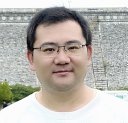
 Lingfei Wu
· 5 previous affiliations
- Pinterest (United States)Since 2022
- Engineering Leader · Since 2022
- Anytime AISince 2023
- CEO · Since 2023
- Jingdong (China)2021–2022
- Principal Scientist · 2021–2022
- Research Staff Member · 2016–2021
- William & Mary2010–2016
- PhD student · 2010–2016
Research Overview
Lingfei Wu focuses on graph-based machine learning, natural language processing, and the development of scalable algorithms for complex data structures. His work encompasses the design of graph-to-sequence architectures for semantic parsing, information-theoretic measures for graph complexity, and robust meta-learning techniques. His research trajectory has evolved from foundational work in kernel method scalability to the application of neural models in specialized domains such as software security and Neural Semantic Restoration for Binary Decompilation.
Research Trajectory
The early phase of Wu’s research was centered on the scalability of nonlinear learning methods. In 2016, he addressed the computational bottlenecks of kernel methods, which typically suffer from quadratic complexity relative to the number of samples. In Revisiting Random Binning Features: Fast Convergence and Strong Parallelizability, he investigated Random Binning (RB) features as an alternative to the more common Random Fourier features. This work established a framework for approximating kernel functions with high parallelizability and fast convergence, providing a scalable approach for large-scale nonlinear learning tasks.
By 2018, Wu’s focus shifted toward the integration of structural priors into deep learning models, particularly for natural language processing. He began exploring graph-to-sequence (Graph2Seq) architectures to overcome the limitations of sequential encoders like LSTMs, which often fail to capture complex syntactic dependencies. This direction led to the development of models that could encode rich syntactic information—such as dependency graphs and constituency trees—for tasks like semantic parsing and Reference Free Evaluation for Open Domain Dialogue. During this period, he also applied these structural models to structured query languages, demonstrating that representing SQL queries as directed graphs significantly improved the performance of SQL-to-text generation.
In 2019, Wu expanded his methodological toolkit to include information theory, specifically focusing on Scalable Graph Entropy Estimation via Quadratic Approximations. He contributed to the development of incremental algorithms for computing von Neumann graph entropy (VNGE), a measure used to quantify the complexity and disorder of graph-structured data. This work was critical for measuring information divergence in evolving graph sequences and was applied to various learning tasks where understanding structural change is paramount. Concurrently, he participated in research involving Deep Learning for Spatially Heterogeneous Environments, focusing on spatio-temporal event forecasting where local patterns vary significantly across different geographic locations.
Between 2020 and 2021, Wu’s work diversified into meta-learning, neural architecture search (NAS), and robust graph similarity learning. He addressed the problem of meta-overfitting in few-shot learning by proposing methods to alleviate sampling and label noise. In the domain of NAS, he explored differentiable graph optimization to find efficient neural architectures with fewer samples. He also advanced the field of graph similarity by developing multi-level matching networks that capture cross-level interactions between nodes and entire graphs, moving beyond simple global or local interaction models. During this time, he also investigated the conceptual framework of Quantifying Scientific Novelty through Recombinant Search, examining how the assembly of existing knowledge elements drives innovation.
Current Directions
Wu’s recent work, particularly from 2023 onward, emphasizes the refinement of heterogeneous graph representation and the application of graph models to specialized technical domains. He has taken a leadership role in developing relation-aware graph attention models that explicitly account for edge semantics in multi-relational graphs, which is essential for accurate relationship prediction.
A significant current focus is the application of these models to binary analysis and software security. Wu has developed techniques for binary code summarization that translate low-level assembly code into human-readable natural language by leveraging control flow graphs and pseudo-code. This work addresses the "lossy" nature of compilation, where semantic information like variable names and structured logic is discarded. Additionally, he has contributed to the theoretical understanding of neural network pruning, investigating how different pruning fractions affect a model's generalization performance. Emerging themes in his research also include the detection of synthetic content, specifically Identifying AI Generated Content via Rewriting Invariance, which utilizes the stylistic biases of large language models to distinguish machine-authored text.
Representative Work
Revisiting Random Binning Features: Fast Convergence and Strong Parallelizability This work revisits the Random Binning (RB) feature method for kernel approximation. Wu demonstrates that RB features can achieve faster convergence and better parallelizability than the widely used Random Fourier features, making them highly suitable for large-scale nonlinear learning.
Exploiting Rich Syntactic Information for Semantic Parsing with Graph-to-Sequence Model Wu proposes a Graph2Seq model that utilizes syntactic graphs to represent word order, dependency, and constituency features. The model encodes these graphs to decode logical forms, showing that incorporating explicit syntactic structure improves performance on benchmark semantic parsing datasets.
Fast Incremental von Neumann Graph Entropy Computation: Theory, Algorithm, and Applications This paper introduces an efficient method for computing von Neumann graph entropy. By developing a linear-time incremental algorithm, Wu enables the use of this information-theoretic measure for large-scale and dynamic graph sequences, where traditional quadratic or cubic complexity would be prohibitive.
Multi-level Graph Matching Networks for Deep and Robust Graph Similarity Learning Wu describes a Multi-level Graph Matching Network (MGMN) designed to compute similarity between graph-structured objects. The model is notable for its node-graph matching component, which captures cross-level interactions that are often ignored by models focusing solely on global or node-level features.
Relation-aware Graph Attention Model with Adaptive Self-adversarial Training As the senior author, Wu presents a solution for relationship prediction in heterogeneous, multi-relational graphs. The model addresses the critical need for edge semantics in message-passing networks and introduces an adaptive negative sampling strategy to improve the quality of learned representations.
Binary Code Summarization Guided by Control Flow Graph and Pseudo Code This research focuses on generating natural language summaries for stripped binary functions. Wu leverages both the structural information of control flow graphs and the semantic cues in pseudo-code to bridge the gap between low-level assembly and human-readable descriptions, facilitating reverse engineering and security analysis.
Profile updated
| Paper | Venue | Year |
|---|---|---|
| Compact Graph Structure Learning via Mutual Information CompressionGitHubliun-online/ | Unknown | 2023 |
Loading new papers…
Other researchers whose papers cluster into the same research directions — a proxy for overlapping technical interests and shared intellectual neighborhoods.
See something wrong? Report a mistake