

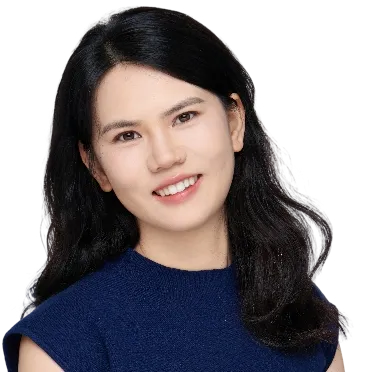
 Ling Huang
· 4 previous affiliations
- Imperial College LondonSince 2025
- Postdoc · Since 2025
- National University of Singapore2023–2025
- Postdoc · 2023–2025
- PhD student · 2019–2023
- PhD student · 2019–2023
2 other authors named Ling Huang: Ling Huang (6 papers), Ling Huang (1 paper)
Research Overview
Ling Huang focuses on uncertainty quantification, medical image analysis, and survival prediction. His early work explored unsupervised learning for image retrieval, which evolved into a sustained focus on evidential deep learning and time-to-event modeling. Most recently, he develops interpretable, uncertainty-aware methods for analyzing gigapixel whole slide images in oncology.
Research Trajectory
Ling Huang's research trajectory begins with foundational work in computer vision and evolves toward specialized applications in medical image analysis, with a strong emphasis on uncertainty quantification and survival prediction.
In 2022, he addressed the high label requirements and efficiency challenges of content-based image retrieval. He introduced Unsupervised adversarial image retrieval, a framework that pairs a generative model for selecting well-matched images with a discriminative model to evaluate similarity. By linking these components with an adversarial loss function, the framework bypasses the traditional limitations of training labels in retrieval tasks.
Following this early work, his focus shifted toward the critical need for reliability in clinical machine learning. In 2024, he published A review of uncertainty quantification in medical image analysis: Probabilistic and non-probabilistic methods, which systematically evaluated uncertainty criteria and their clinical applications. Building on these theoretical foundations, he developed practical methods for survival analysis, contributing to the research direction of Time to Event Modeling with Right Censored Data. This is exemplified by An Evidential Time-to-Event Prediction Model Based on Gaussian Random Fuzzy Numbers, where he proposed a novel approach to quantify uncertainty while making fewer assumptions about underlying data distributions. The model demonstrated strong calibration and accuracy on real-world datasets characterized by significant data censoring.
By 2026, his research expanded to tackle the immense scale and heterogeneity of digital pathology. Collaborating with a wider team, he contributed to DPsurv: Dual-Prototype Evidential Fusion for Uncertainty-Aware and Interpretable Whole Slide Image Survival Prediction. This work addresses the "black box" nature of deep learning in oncology by providing interpretable survival predictions that account for tissue heterogeneity. This research intersects with several advanced domains, including the area of Scaling Deep Learning to Gigapixel Whole Slide Images and the field of Deep Learning for Spatially Sparse Target Segmentation. Furthermore, the methodology leverages techniques from the broader area of Fusing Conflicting Evidence with Dempster Shafer Theory and aligns with ongoing efforts in the research direction of Interpretable Deep Learning via Concept Bottleneck Models and the area of Validating Medical Artificial Intelligence in Live Clinical Workflows.
Current Directions
The most recent papers in the evidence indicate a strong focus on interpretable and uncertainty-aware deep learning for clinical oncology. Specifically, Ling Huang is investigating methods to analyze gigapixel-scale digital biopsies—Whole Slide Images—without relying on opaque predictive models. This involves developing techniques that not only predict patient survival but also quantify the model's confidence and provide interpretable reasoning for its outputs. By integrating evidential fusion and prototype-based learning, this current work aims to handle the complex heterogeneity of human tissue while ensuring that predictive models are reliable and transparent enough for high-stakes medical decision-making.
Profile updated
Loading new papers…
Other researchers whose papers cluster into the same research directions — a proxy for overlapping technical interests and shared intellectual neighborhoods.
See something wrong? Report a mistake