

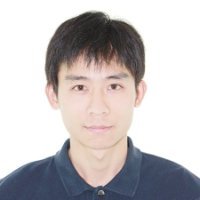
 Lin Chen
· 7 previous affiliations
- WyzeSince 2020
- Chief Scientist · Since 2023
- VP of AI · 2022–2023
- Sr. Principal Scientist · 2020–2021
- Wyze LabsSince 2023
- Chief Scientist · Since 2023
- Principal Scientist · 2018–2020
- Amazon (United States)2014–2018
- Senior Applied Scientist · 2018
- Applied Scientist II · 2017–2018
- Applied Scientist II · 2016–2017
- Applied Scientist I · 2015–2016
- Research Scientist · 2014–2015
- Research Scientist · 2014
- Nanyang Technological University2009–2013
- Doctor of Philosophy (PhD), Computer Vision, Machine Learning · 2009–2013
- Undergrad student · 2005–2009
12 other authors named Lin Chen: Lin CHEN (Macao Polytechnic University · 223 papers), Lin Chen (51 papers), Lin Chen (University of Science and Technology of China · 34 papers), Lin Chen (Apple (United States) · 13 papers), Lin CHEN (The Hong Kong University of Science and Technology (Guangzhou) · 11 papers), and 7 more
Research Overview
Lin Chen focuses on computer vision and machine learning, with a specific emphasis on domain adaptation, few-shot learning, and visual recognition across heterogeneous data sources. Chen’s work addresses the challenges of deploying robust models in environments where labeled data is scarce or where a significant distribution mismatch exists between training and testing data. This research trajectory has evolved from early efforts in web-based image retrieval and tag refinement toward sophisticated frameworks for cross-domain object detection and open-set recognition.
Research Trajectory
The early phase of Chen’s research, beginning around 2010, centered on the challenges of noisy metadata in social media and web-based image sharing platforms. This work sought to improve the reliability of visual retrieval systems by leveraging large-scale web data to refine user-provided tags. In Tag-based web photo retrieval improved by batch mode re-tagging, Chen proposed a framework for automatically refining noisy tags for groups of photos by utilizing a group-specific lexicon and external training images. This period established a foundational interest in utilizing "loosely labeled" or noisy web data to enhance supervised learning tasks.
By 2013, Chen’s focus shifted toward the problem of Statistical Alignment for Domain Invariant Representations, specifically in the context of video event recognition. Recognizing that labeled consumer video datasets were difficult to obtain, Chen investigated methods to transfer knowledge from heterogeneous web sources, such as YouTube videos and Google/Bing images. In Event Recognition in Videos by Learning from Heterogeneous Web Sources, Chen developed a multi-domain adaptation framework capable of handling different feature dimensions and types across source and target domains, a precursor to more generalized unsupervised domain adaptation (UDA) techniques.
In the late 2010s, Chen expanded these domain adaptation techniques to incorporate multi-modal data and specialized recognition tasks. This included work on leveraging depth information to improve standard RGB image recognition. In Visual Recognition in RGB Images and Videos by Learning from RGB-D Data, Chen contributed to a framework that maps samples from different domains into a common subspace to reduce distribution mismatch, effectively using depth data as a privileged source during training to enhance performance on target domains where only RGB data is available. During this period, Chen also addressed practical issues in large-scale biometrics, such as identity overlapping and dataset-specific biases when combining multiple face recognition datasets.
More recently, Chen’s work has moved toward the senior-led development of refined object detection and few-shot learning frameworks. As a senior author, Chen oversaw the development of sequential instance refinement techniques to address the limitations of global feature alignment in cross-domain object detection. This work, detailed in Sequential Instance Refinement for Cross-Domain Object Detection in Images, argues that traditional alignment methods often fail by incorrectly matching background regions or disparate object classes across domains. Instead, the proposed approach focuses on refining instance-level features to ensure more precise adaptation.
Since 2021, Chen has increasingly focused on the intersection of transfer learning and few-shot learning. This includes investigating how models can learn to detect objects in videos or classify images using only a handful of labeled examples. In TransMatch: A Transfer-Learning Scheme for Semi-Supervised Few-Shot Learning, Chen explored the use of auxiliary information from unlabeled novel-class data to bolster the performance of few-shot models, moving away from the standard episodic training strategies common in meta-learning. Additionally, Chen has addressed the problem of Open Set Domain Adaptation (OSDA), where the target domain may contain classes not present in the source domain. In Open Set Domain Adaptation with Soft Unknown-Class Rejection, Chen proposed methods for better identifying and rejecting "unknown" classes, a critical requirement for deploying machine learning models in unpredictable real-world environments.
Beyond these core areas, Chen has participated in collaborative research regarding Internet-of-Things (IoT) ecosystems and federated learning. This work involves developing privacy-preserving recommendation systems for smart home automation rules, utilizing graph neural networks within a federated framework to suggest device triggers without compromising user data.
Representative Work
The following papers represent key contributions to the fields of domain adaptation, object detection, and few-shot learning.
In Tag-based web photo retrieval improved by batch mode re-tagging, Chen introduced a method for batch-mode re-tagging that leverages the temporal and contextual consistency of user-uploaded photo sets. By constructing group-specific lexicons, the method significantly reduced the noise inherent in social media metadata, improving the accuracy of image retrieval systems.
In Event Recognition in Videos by Learning from Heterogeneous Web Sources, Chen addressed the challenge of training video classifiers without labeled target data. The research formulated a multi-domain adaptation problem that integrated heterogeneous features (such as SIFT from images and space-time features from videos), allowing for the effective transfer of knowledge from diverse web sources to consumer video applications.
In Visual Recognition in RGB Images and Videos by Learning from RGB-D Data, Chen contributed to an unsupervised domain adaptation framework that utilizes depth information as an auxiliary feature in the source domain. The work proposed an optimal projection matrix to align source and target distributions in a common subspace, demonstrating that depth-informed training can improve recognition in standard RGB-only target environments.
In Sequential Instance Refinement for Cross-Domain Object Detection in Images, acting as senior author, Chen developed a method to overcome the pitfalls of "blind" feature alignment in object detection. By focusing on sequential refinement at the instance level, the approach ensures that the adaptation process prioritizes relevant object regions over background noise, leading to more robust detection performance across varying image domains.
In Open Set Domain Adaptation with Soft Unknown-Class Rejection, Chen explored the practical scenario where the target domain contains categories unknown to the source domain. The paper proposed a soft rejection mechanism to better distinguish between shared classes and unknown entities, addressing a major bottleneck in the deployment of domain-adaptive models.
In TransMatch: A Transfer-Learning Scheme for Semi-Supervised Few-Shot Learning, Chen proposed a framework that combines transfer learning with semi-supervised techniques. By utilizing both labeled base-class data and unlabeled novel-class data, the TransMatch system provides a more data-efficient alternative to traditional meta-learning approaches for few-shot classification.
Profile updated
Loading new papers…
Other researchers whose papers cluster into the same research directions — a proxy for overlapping technical interests and shared intellectual neighborhoods.
See something wrong? Report a mistake