

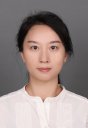
 Lili Wang
1 previous affiliation
- Beihang University1995–2025
- Full Professor · 2014–2025
- Associate Professor · 2007–2014
- Assistant Professor · 2005–2007
- PhD student · 1999–2005
- Undergrad student · 1995–1999
2 other authors named Lili Wang: Lili Wang (Nanjing University of Chinese Medicine · Dartmouth College · 3 papers), Lili Wang (1 paper)
Research Overview
Lili Wang focuses on computer graphics, visual computing, and applied machine learning. Early work addressed adaptive data collection in sensor networks before shifting toward real-time physical simulation and volume rendering. More recently, the research trajectory has expanded to include self-supervised learning for image analysis and advanced rendering techniques for translucent materials.
Research Trajectory
Wang’s research trajectory spans multiple domains, beginning with systems architecture for sensor networks before moving deeply into computer graphics, physical simulation, and eventually computer vision. Because the evidence encompasses distinct subfields over a fifteen-year period, the trajectory reflects a broad evolution in technical focus.
In early systems research, Wang investigated energy-aware infrastructure for distributed sensing. Leading this effort as first author, Wang developed AdaptSens: An Adaptive Data Collection and Storage Service for Solar-Powered Sensor Networks. This work introduced a layered architecture designed specifically for the unpredictable energy supply of solar-powered devices. The system utilized an incremental layer activation mechanism to balance sensory data collection, replication, and storage, thereby preventing data loss induced by either component failure or energy depletion.
By the early 2010s, Wang’s focus shifted toward computer graphics and visualization. As a second author, Wang contributed to Direct Extraction of Feature Curves from Volume Image for Illustration and Vectorization Based on 2D/3D Curve Mapping. This research proposed a parallel method for extracting semantic feature curves directly from 3D volume images. Rather than relying solely on object-space iso-surfaces, the approach leveraged the color and opacity present in 2D rendered images to better convey the internal structure of volume data for vectorization and illustration.
Continuing in the graphics domain, Wang participated in advancing real-time physical simulations. A representative middle-author contribution from this period is Coupling time-varying modal analysis and FEM for real-time cutting simulation of objects with multi-material sub-domains. This work addressed the limitations of global modal reduction techniques when handling topological changes, such as the cutting of heterogeneous materials. The proposed approach adaptively integrated finite element method (FEM) based fully-physical simulation with local modal reuse, enabling real-time performance even during drastic local deformations.
In the 2020s, Wang’s work expanded into applied computer vision and deep learning. Participating as a middle author, Wang contributed to Plant Disease Recognition: A Large-Scale Benchmark Dataset and a Visual Region and Loss Reweighting Approach, which addressed the challenges of randomly distributed lesions and complex backgrounds in agricultural image analysis.
More recently, Wang has taken a senior role in developing self-supervised learning methodologies for specialized visual domains. As the principal investigator and last author, Wang published Feature-Suppressed Contrast for Self-Supervised Food Pre-training. This research tackled a specific failure mode in contrastive learning: when applied to food images, standard data augmentations often produce views with excessively high mutual information, which impedes the learning process. The paper introduced a feature-suppressed contrast mechanism to mitigate this issue, allowing for effective pre-training on unlabelled datasets and reducing the reliance on expensive human annotations.
Current Directions
The most recent papers in the evidence indicate an ongoing focus on both advanced computer graphics and self-supervised visual learning. Recent work investigates the state of the art in efficient translucent material rendering, specifically utilizing Bidirectional Scattering Surface Reflectance Distribution Functions (BSSRDF) to model complex light transport. Concurrently, Wang continues to explore representation learning and contrastive frameworks in computer vision.
Beyond these specific visual computing applications, the broader evidence suggests engagement with foundational machine learning architectures and alignment. This includes contributions to the research direction of How Attention Heads Specialize into Algorithmic Circuits, which examines how specific attention mechanisms and feed-forward layers specialize within large models. Related work extends into the area of Modeling Subjective and Personalized Aesthetic Preferences, focusing on moving beyond aggregate human preferences to capture individual stylistic nuances in generative models. Finally, Wang's interests encompass core algorithmic improvements, such as the theme of Decoupling Distance Metrics from Learning Algorithms, which explores flexible optimization strategies independent of traditional Euclidean constraints.
Profile updated
Loading new papers…
Other researchers whose papers cluster into the same research directions — a proxy for overlapping technical interests and shared intellectual neighborhoods.
See something wrong? Report a mistake