

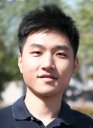
 Lihe Li
· 2 previous affiliations
- The University of Texas at AustinSince 2026
- PhD student · Since 2026
- Current
- Nanjing University2019–2026
- MS student · 2023–2026
- Undergrad student · 2019–2023
Research Overview
Lihe Li focuses on multi-agent reinforcement learning, zero-shot coordination, and continual learning in dynamic environments. His trajectory spans foundational work in robust multi-agent communication to recent advances in offline safe reinforcement learning and human-AI coordination. Currently, he investigates the integration of large language models and diffusion models to generate diverse training environments for adaptable, open-team coordination.
Research Trajectory
Lihe Li's early work systematically addresses the challenges of deploying cooperative multi-agent systems in unpredictable, open environments. He contributed to a comprehensive roadmap for the field in A Survey of Progress on Cooperative Multi-agent Reinforcement Learning in Open Environment, which synthesized progress in the area of Robust Zero Shot Coordination with Unseen Partners, the broader field of Dynamic Multi-Agent Coordination for Open Teams, and areas such as Value Decomposition for Cooperative Multi-Agent Reinforcement Learning. This foundational perspective informed his subsequent technical contributions aimed at the research direction of Stabilizing Multi-Agent Learning in Non-Stationary Environments. For instance, to handle scenarios where agents encounter unexpected partners, he developed methods to generate dissimilar teammates that fully cover the policy space in Learning to Coordinate with Anyone. When teammate policies shift abruptly within a single episode, he and his collaborators proposed the Fastap framework in Fast Teammate Adaptation in the Presence of Sudden Policy Change. This work formulated the problem as an open Dec-POMDP to control agents coordinating with uncontrolled, shifting teammates, advancing the research direction of Distilling Global Coordination into Local Swarm Policies.
Alongside coordination, Li investigated the robustness of multi-agent systems against noise and adversarial interference. He developed CroMAC, a multi-view message certification framework detailed in Robust Multi-agent Communication via Multi-view Message Certification, which uses a Multi-view Variational Autoencoder (MVAE) and formal bound propagation to ensure agents can identify optimal actions even when communication channels are compromised. In parallel, he participated in research modeling limited policy adversaries to improve team resilience against malicious attacks in Robust Multi-Agent Coordination via Evolutionary Generation of Auxiliary Adversarial Attackers.
In 2024, Li's research expanded to address the complexities of offline reinforcement learning, safety constraints, and continual learning. He introduced the CORE3 framework in Continual Multi-Objective Reinforcement Learning via Reward Model Rehearsal, enabling agents to balance multiple trade-offs and remember how to satisfy older preferences even as environment objectives change over time. To tackle the challenge of deploying policies learned in simulation to the real world, he contributed to Multi-Agent Domain Calibration with a Handful of Offline Data, which mitigates the sim-to-real gap caused by mismatched physical dynamics.
Safety in reinforcement learning also became a prominent theme during this period. With collaborators, he developed the COSTA framework in Cost-aware Offline Safe Meta Reinforcement Learning with Robust In-Distribution Online Task Adaptation, designed to learn generalized, safe policies from pre-collected datasets that can adapt to diverse and unknown safety constraints during testing. Additionally, Li explored the intersection of multi-agent systems and human interaction, participating in the development of preparatory language-based conventions to facilitate orderly human-AI teamwork in Efficient Human-AI Coordination via Preparatory Language-based Convention.
Li's work in 2025 focuses on generative modeling for offline coordination, state-evolvable environments, and the integration of large language models into multi-agent training. He contributed to novel data augmentation pipelines, such as the MADiTS framework in Efficient Multi-agent Offline Coordination via Diffusion-based Trajectory Stitching, which uses diffusion models to stitch together high-quality coordination segments from messy, imbalanced offline datasets by incorporating physics-based constraints and weakest-link identification. He also explored preference-conditioned diffusion models for offline multiobjective tasks in Generalizable Offline Multiobjective Reinforcement Learning via Preference-Conditioned Diffuser.
To handle environments where an agent's sensor inputs change during deployment, he co-developed the Lapse framework in Learning to Reuse Policies in State Evolvable Environments, combining robust feature reconstruction with adaptive offline learning. His work on safety continued with Adaptable Safe Policy Learning from Multi-task Data with Constraint Prioritized Decision Transformer, introducing a specialized prompt encoder to manage varying safety budgets across multi-task environments. Furthermore, he advanced continual multi-agent learning with MACPro, a framework that progressively contextualizes tasks and adaptively expands a multi-head policy architecture to prevent catastrophic forgetting, as detailed in Multiagent Continual Coordination via Progressive Task Contextualization. Finally, he developed SEMDIV, a novel framework presented in LLM-Assisted Semantically Diverse Teammate Generation for Efficient Multi-agent Coordination, which uses large language models to translate natural language coordination behaviors into executable reward functions, allowing agents to adapt to unseen partners through language-based reasoning.
Current Directions
The most recent papers in the evidence indicate a strong focus on leveraging generative AI and large language models to solve complex multi-agent coordination problems. Recent work investigates the use of LLMs to translate natural language behaviors into executable reward functions, enabling the generation of semantically diverse teammates for zero-shot coordination. Additionally, Li is exploring the application of diffusion models to offline reinforcement learning, utilizing trajectory stitching to optimize multi-agent policies without requiring new environment interactions. His ongoing research also addresses the adaptability of reinforcement learning agents in non-stationary settings, focusing on state-evolvable environments where sensor inputs change dynamically, and developing architectures that support continual, multi-task learning without catastrophic forgetting.
Profile updated
Loading new papers…
Other researchers whose papers cluster into the same research directions — a proxy for overlapping technical interests and shared intellectual neighborhoods.
See something wrong? Report a mistake