

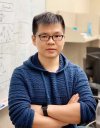
 Lifu Huang
· 6 previous affiliations
- Deloitte (United States)Since 2024
- Assistant Professor · Since 2024
- Current
- Virginia Tech2020–2024
- Assistant Professor · 2020–2024
- PhD student · 2019–2020
- Rensselaer Polytechnic Institute2014–2019
- PhD student · 2014–2019
- Peking University2011–2014
- MS student · 2011–2014
Research Overview
Lifu Huang focuses on natural language processing, information extraction, and the development of large-scale multimodal foundation models. His early work established foundational methods for event extraction and automated knowledge synthesis from text. More recently, his research investigates the reasoning capabilities, safety alignment, and training efficiency of large language and vision-language models.
Research Trajectory
Huang’s early research concentrated on extracting and structuring complex event information from unstructured text. In 2013, he developed Optimized Event Storyline Generation based on Mixture-Event-Aspect Model, which introduced a framework for producing concise, temporal event summaries by modeling the part-whole relationships between major events and their sub-events. He continued to advance information extraction methodologies with Liberal Event Extraction and Event Schema Induction in 2016, focusing on discovering event structures without relying on rigid, pre-defined schemas. To address the data scarcity challenges inherent in these tasks, he subsequently explored transfer learning techniques in Zero-Shot Transfer Learning for Event Extraction (2018). This work contributed to the broader research area of Zero-Shot Classification via Semantic Label Representations, demonstrating how linguistic structures can be leveraged to generalize extraction models to unseen event types.
Building on his expertise in knowledge extraction, Huang’s focus expanded toward automated scientific discovery and text generation. In 2019, he introduced PaperRobot: Incremental Draft Generation of Scientific Ideas, an autonomous system designed to synthesize background knowledge graphs from large collections of academic papers, predict novel links to generate new ideas, and incrementally draft key elements of scientific manuscripts.
As the field transitioned toward large language models (LLMs), Huang’s trajectory shifted to address the efficiency, reasoning, and safety of these foundation models. To improve the parameter efficiency of LLM fine-tuning, he developed LLM Braces: Straightening Out LLM Predictions with Relevant Sub-Updates (2025). This method dynamically adjusts internal feed-forward network updates based on context relevance, boosting factual accuracy and reasoning while drastically reducing trainable parameters. This approach aligns with his interest in the broader direction of Dynamic Input-Aware Prompting and Adaptation. He also participated in collaborative work on memory optimization, contributing to TokenSeek: Memory Efficient Fine Tuning via Instance-Aware Token Ditching (2026), a plugin that reduces memory footprints by selectively updating only the most salient tokens during training.
Alongside efficiency, Huang has rigorously investigated the behavioral alignment and reasoning capabilities of LLMs. In LLM Can be a Dangerous Persuader: Empirical Study of Persuasion Safety in Large Language Models (2025), his lab evaluated the vulnerabilities of LLMs in persuasive dialogues, revealing critical gaps in safety alignment when models are tasked with unethical persuasion. To enhance model reasoning without relying on expensive human annotations, he led the development of Unleashing Implicit Rewards: Prefix-Value Learning for Distribution-Level Optimization (2026). By reframing reward modeling as a prefix-value learning problem, this work advanced the field of Scaling Language Model Reasoning Beyond Verifiable Rewards, achieving significant gains in mathematical reasoning and error localization.
In parallel with his text-based LLM research, Huang has made extensive contributions to multimodal AI, particularly vision-language models (VLMs) and image generation. His work frequently addresses the challenge of integrating complex visual and spatial information with language. In SPARTUN3D: Situated Spatial Understanding of 3D World in Large Language Model (2025), he introduced a framework to transition 3D-LLMs from a bird's-eye perspective to an egocentric, situated view, improving spatial planning and navigation. He also applied robust visual object recognition to data interpretation in Advancing Chart Question Answering with Robust Chart Component Recognition (2025), which significantly improved accuracy on chart-based reasoning tasks. To handle complex, interleaved text-and-image sequences, his group developed Modality-Specialized Synergizers for Interleaved Vision-Language Generalists (2025). This architecture tackles the "jack of all trades" problem in generalist models, advancing the domain of Mitigating Task Interference in Unified Multimodal Transformers.
Huang’s recent multimodal research also heavily emphasizes the generation side of vision-language tasks. Recognizing that text-to-image models often struggle with logical constraints, he introduced R2I-Bench: Benchmarking Reasoning-Driven Text-to-Image Generation (2025) to rigorously evaluate how well models handle temporal decay, spatial relationships, and commonsense concepts. To improve generation fidelity, he explored retrieval-augmented techniques in AR-RAG: Autoregressive Retrieval Augmentation for Image Generation (2025), moving beyond one-shot reference images. Finally, he has pioneered highly efficient training and inference methods for generative models. In SuperFlow: Training Flow Matching Models with RL on the Fly (2025), he proposed a reinforcement learning framework that dynamically adjusts sampling efforts to fine-tune flow-matching models with a fraction of the standard training steps. He further accelerated image generation in LaTtE-Flow: Layerwise Timestep-Expert Flow-based Transformer (2026), utilizing a divide-and-conquer strategy that assigns specific transformer layers to different denoising stages, achieving massive inference speedups while maintaining high image quality.
Current Directions
Based on his most recent publications, Huang’s current research agenda is heavily focused on optimizing the reasoning, alignment, and efficiency of foundation models across both text and multimodal domains. A major theme in his recent work is the application of reinforcement learning and process reward models to improve complex reasoning in LLMs, bypassing the need for exhaustive step-by-step human annotation. He is also actively investigating the safety implications of LLMs, particularly their behavior in multi-turn, persuasive interactions.
In the multimodal space, his recent efforts concentrate on bridging the gap between generation quality and computational efficiency. This includes developing specialized architectures—such as layerwise timestep experts and modality-specialized synergizers—that prevent task interference in unified models and drastically accelerate inference for flow-matching and diffusion models. Furthermore, his work continues to push the boundaries of spatial and logical reasoning in vision-language models, ensuring that AI systems can accurately interpret situated 3D environments, parse complex visual data like charts, and generate images that adhere to strict commonsense and temporal constraints.
Profile updated
Loading new papers…
Other researchers whose papers cluster into the same research directions — a proxy for overlapping technical interests and shared intellectual neighborhoods.
See something wrong? Report a mistake