

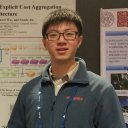
 Lidong Yu
· 8 previous affiliations
- NeolixSince 2025
- Principal Researcher · Since 2025
- Nvidia (United States)Current
- Current
- Researcher · 2024–2025
- Horizon Robotics (China)2023–2024
- Principal Researcher · 2023–2024
- DeepRoute.Ai2022–2023
- Researcher · 2022–2023
- Nio (China)2021–2022
- Principal Researcher · 2021–2022
- uisee2019–2020
- Principal Researcher · 2019–2020
- Beijing Institute of Technology2016–2019
- MS student · 2016–2019
- Ocean University of China2012–2016
- Undergrad student · 2012–2016
Research Overview
Lidong Yu focuses on computer vision, with a primary emphasis on stereo matching, depth estimation, and 3D perception for autonomous systems. His early work addressed network protocols before transitioning to deep learning architectures for cost aggregation in stereo vision. Recently, his research investigates the integration of monocular priors from vision foundation models to improve generalized stereo matching and robust trajectory tracking.
Research Trajectory
Lidong Yu’s research trajectory exhibits a distinct evolution from early work in computer networking to a sustained focus on low-level and high-level computer vision tasks. His earliest published work in 2011 addressed network traffic and protocol optimization. As the first author of Quantifying Downloading Performance of Locality-Aware BitTorrent Protocols, he proposed an analytical framework to evaluate the downloading performance of locality-aware BitTorrent protocols, aiming to mitigate cross-ISP traffic while maintaining native downloading performance.
Following this early networking research, Yu transitioned to computer vision, focusing heavily on stereo matching and monocular depth estimation during his graduate studies. By 2018, his work centered on improving the internal architectures of deep neural networks for stereo vision. In Deep Stereo Matching With Explicit Cost Aggregation Sub-Architecture, where he was first author, Yu addressed the often-overlooked step of cost aggregation. He reformulated this step as a learning process, introducing a two-stream network to generate and select cost aggregation proposals, which improved upon existing baselines in standard benchmarks.
He continued to refine cost aggregation techniques in subsequent years. As the senior author of the 2020 paper Content-Aware Inter-Scale Cost Aggregation for Stereo Matching, Yu guided the development of a method that adaptively aggregates and upsamples cost volumes from coarse to fine scales. This approach utilized dynamic filter weights based on the content of left and right views, enabling more reliable detail recovery during the upsampling process and preventing the loss of detail common in multi-scale processing.
By 2022, Yu’s research expanded to address stereo matching in challenging, non-ideal environments, aligning with his growing interest in autonomous navigation and tracking. As second author of FoggyStereo: Stereo Matching with Fog Volume Representation, he contributed to a novel approach that treated atmospheric fog not as noise to be discarded, but as a valuable depth hint. By reversing the atmospheric scattering process to render images at various depth ranges, the method introduced a fog volume representation that significantly improved stereo matching in foggy scenes.
In 2023, Yu’s work increasingly intersected with the requirements of autonomous driving systems, reflecting his affiliation with the UISEE AI Center. He was the second author of Sparse Point Guided 3D Lane Detection, which tackled the computational bottlenecks of building dense correspondences between front-view and bird's-eye-view spaces. The proposed coarse-to-fine method focused computation only on sparse points related to actual 3D lanes, reducing background redundancy and enabling high-resolution correspondence without prohibitive computational costs. During this period, he also contributed to research on deep reinforcement learning for trajectory tracking in motion-related modules for autonomous vehicles, further bridging his low-level vision expertise with high-level navigation tasks.
Current Directions
The most recent papers in the evidence, published in 2025, indicate a strong focus on "generalized" stereo matching and the integration of Vision Foundation Models (VFMs). Recent work investigates how to effectively fuse unbiased monocular depth priors from VFMs into traditional stereo pipelines to handle ill-posed regions like occlusions and non-Lambertian surfaces. A central problem addressed in this recent research is the misalignment between affine-invariant relative monocular depth and metric stereo depth. To solve this, Yu and his collaborators have explored representing depth through binary local ordering maps and formulating global alignment as a linear registration problem, an approach that has been shown to significantly reduce errors on challenging cross-domain datasets.
Additionally, recent collaborative work explores the robustness of machine vision systems when confronted with 3D optical illusions. This direction utilizes Vision-Language Models (VLMs) to intelligently fuse monocular and stereo depth cues, aiming to correct the depth estimation errors that occur when artificial systems are fooled by the same visual illusions that affect human perception.
Profile updated
Loading new papers…
Other researchers whose papers cluster into the same research directions — a proxy for overlapping technical interests and shared intellectual neighborhoods.
See something wrong? Report a mistake