

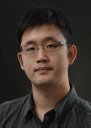
 Lichi Zhang
· 1 previous affiliation
- Shanghai Jiao Tong UniversitySince 2021
- Associate Professor · Since 2021
Research Overview
Lichi Zhang focuses on medical image analysis, cross-modal image synthesis, and semi-supervised learning for clinical diagnostics. His trajectory spans early work in multi-atlas segmentation and functional connectivity analysis to the development of deep learning frameworks for multimodal magnetic resonance imaging reconstruction. His current research emphasizes generative modeling, resource-efficient segmentation, and foundation models for digital pathology and brain network analysis.
Research Trajectory
Zhang’s early research explored computational imaging and physical material properties, including Shape and reflectance estimation from dielectric materials using statistical analysis and polarisation. Transitioning into medical image analysis, he focused on multi-atlas frameworks to parse complex anatomical structures. This is exemplified by Automatic Hippocampus Labeling Using the Hierarchy of Sub-region Random Forests, which introduced specialized random forests trained to isolate specific sub-regions of the hippocampus, coupled with a localized registration strategy to reduce shape variations.
By 2018, his work increasingly incorporated deep learning to address cross-modal tasks and anatomical alignment. He participated in developing a Deep embedding convolutional neural network for synthesizing CT image from T1-Weighted MR image, facilitating modality translation. He also addressed the challenges of deformable brain MRI registration in Deep morphological simplification network (MS-Net) for guided registration of brain magnetic resonance images, which simplified the alignment of highly complex inter-subject anatomical variations without requiring large population datasets. Around this time, he contributed to functional MRI analysis, utilizing multi-source domain adaptation and multi-view sparse representation for Multi-Class ASD Classification Based on Functional Connectivity and Functional Correlation Tensor via Multi-Source Domain Adaptation and Multi-View Sparse Representation, moving beyond binary classification to handle complex sub-categories of Autism Spectrum Disorder.
Moving into the 2020s, Zhang’s focus expanded to robust reconstruction and learning with limited annotations. In the research directions of Synthesis Based Multi Modal Image Registration and Multi-Modal Image Registration via Contrast-Invariant Representations, he co-developed a Multimodal MRI Reconstruction Assisted With Spatial Alignment Network. This work mitigated subtle patient movement artifacts between scans using a cross-modality synthesis loss, advancing the broader area of Physics Informed Deep Learning for Accelerated MRI Reconstruction. Concurrently, he addressed label scarcity in medical imaging. He guided the development of Automatic Grading Assessments for Knee MRI Cartilage Defects via Self-ensembling Semi-supervised Learning with Dual-Consistency and tackled one-shot segmentation in AdLER: Adversarial Training with Label Error Rectification for One-Shot Medical Image Segmentation. By combining anatomy-aligned registration with adversarial data augmentation, AdLER improved robustness against label errors, a key contribution to the area of Medical Image Segmentation with Limited Labels.
Zhang continued to refine segmentation architectures and semi-supervised paradigms. He introduced a parameter-free spatial shift operation in CSSNet: Cascaded spatial shift network for multi-organ segmentation to alleviate overfitting on small datasets. To combat pseudo-label noise and insufficient class separability in feature space, he developed RCPS: Rectified Contrastive Pseudo Supervision for Semi-Supervised Medical Image Segmentation. His work on synthesis and resolution enhancement culminated in Uni-COAL: A unified framework for cross-modality synthesis and super-resolution of MR images, which leveraged the Segment Anything Model for anatomical preservation, and REHRSeg: Unleashing the power of self-supervised super-resolution for resource-efficient 3D MRI segmentation, enabling high-resolution segmentation from low-resolution clinical scans. He also advanced generative approaches with the 3D Wavelet Latent Diffusion Model for Whole-Body MR-to-CT Modality Translation, combining wavelet-based feature extraction with structural disentanglement to achieve high-fidelity anatomical preservation.
Most recently, Zhang has applied these robust learning paradigms to complex diagnostic domains, particularly brain networks and digital pathology. In neuroimaging, he explored the fusion of functional and effective connectivity in Guiding fusion of dynamic functional and effective connectivity in spatio-temporal graph neural network for brain disorder classification. He further advanced this with a self-supervised framework in Brain Connectivity Network Structure Learning For Brain Disorder Diagnosis, which learns optimal network structures and representations simultaneously, contributing to the research direction of Learning from Limited Data in Specialized Medical Domains. In digital pathology, he addressed hardware-induced stain variation through feature-space augmentation in LSA: Latent Style Augmentation Towards Stain-Agnostic Cervical Cancer Screening and utilized graph attention networks to capture intrinsic cellular relationships in whole slide images in Whole slide cervical cancer classification via graph attention networks and contrastive learning. He also tackled out-of-focus scans with Pathology Image Restoration via Mixture of Prompts and integrated reasoning capabilities into segmentation models to identify rare tissue morphologies with PathChat-SegR1: Reasoning Segmentation in Pathology via SO-GRPO.
Current Directions
The most recent papers in the evidence indicate a strong focus on foundation models, generative AI, and robust representation learning for complex clinical diagnostics. In digital pathology, recent work investigates stain-agnostic screening, out-of-focus image restoration using prompt-based frameworks, and the integration of reasoning capabilities into segmentation models to identify rare tissue morphologies across varying staining protocols. Concurrently, research in neuroimaging addresses the self-supervised learning of brain connectivity network structures, fusing functional and effective connectivity to diagnose neurological disorders even when labeled data is scarce. Additionally, ongoing efforts in medical image synthesis leverage advanced diffusion models and self-supervised super-resolution to bridge the gap between low-resolution clinical acquisitions and high-fidelity diagnostic requirements.
Profile updated
Loading new papers…
Other researchers whose papers cluster into the same research directions — a proxy for overlapping technical interests and shared intellectual neighborhoods.
See something wrong? Report a mistake