

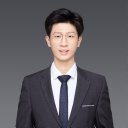
 Licheng Wen
· 2 previous affiliations
- Researcher · Since 2022
- Zhejiang University2019–2022
- MS student · 2019–2022
Research Overview
Licheng Wen focuses on autonomous driving, multi-agent systems, and the development of multimodal foundation models for embodied AI. His work explores how artificial agents can learn and adapt during run-time, transitioning from traditional kinematic planning to knowledge-driven, continuous learning frameworks. Recently, he investigates self-evolving language agents and closed-loop generative simulation platforms for complex, long-horizon tasks.
Research Trajectory
Wen’s early research involved multi-agent robotics and path planning, demonstrated through his participation in the Small Size League of RoboCup. He contributed to the RoboCup SSL 2018 Champion Team Paper, which detailed mechanical innovations and interception prediction algorithms for robotic soccer. Building on this foundation in constrained environments, he developed CL-MAPF: Multi-Agent Path Finding for Car-Like robots with kinematic and spatiotemporal constraints, addressing kinematically feasible planning for non-holonomic vehicles and configuration-aware safety.
By 2023, his focus expanded to complex multi-vehicle interactions and urban traffic simulation. He introduced frameworks for joint decision-making in mixed traffic environments, as seen in Bringing Diversity to Autonomous Vehicles: An Interpretable Multi-vehicle Decision-making and Planning Framework. This work contributed to the broader area of Hierarchical Reasoning for Real-Time Autonomous Driving. To support the evaluation of such systems, he developed LimSim: A Long-Term Interactive Multi-Scenario Traffic Simulator, providing continuous simulation capabilities for urban road networks. Concurrently, he explored generative traffic modeling in TrafficMCTS: A Closed-Loop Traffic Flow Generation Framework with Group-Based Monte Carlo Tree Search, combining Monte Carlo tree search with social value orientation to produce diverse driving styles. He also advanced the research direction of Shared Experience Replay for Collective Reinforcement Learning through his work on Decomposing shared networks for separate cooperation with multi-agent reinforcement learning.
In 2024, a major shift occurred toward integrating large language and vision-language models into autonomous vehicles, addressing the research direction of Reasoning Through the Long Tail of Autonomous Driving. He presented DiLu: A Knowledge-Driven Approach to Autonomous Driving with Large Language Models and evaluated state-of-the-art visual-language models in On the Road with GPT-4V(ision): Explorations of Utilizing Visual-Language Model as Autonomous Driving Agent. This work emphasized common-sense reasoning for scene understanding, advancing the field of Reasoning-Augmented Learning for Explainable Autonomous Driving. Collaborating on Drive Like a Human: Rethinking Autonomous Driving with Large Language Models, he further investigated how language models can interpret and memorize complex scenarios to overcome the limitations of modular systems.
To rigorously test these models, he co-developed DriveArena: A Closed-loop Generative Simulation Platform for Autonomous Driving, which aligns with the area of Modular Architectures for Multi-Agent Simulation. This platform utilizes diffusion models to render photorealistic sensor data in response to agent actions. Around the same time, he contributed to Continuously Learning, Adapting, and Improving: A Dual-Process Approach to Autonomous Driving. This research proposed a framework mimicking human cognition with fast heuristic and slow analytic processes, contributing to the broader area of Failure Driven Reflective Memory for Autonomous Agents.
Moving into 2025 and 2026, his trajectory bridges high-frequency robotic control and high-level agent reasoning. Returning to the RoboCup domain, he detailed a hierarchical CUDA-accelerated strategy module in the ZJUNlict Extended Team Description Paper 2025. Simultaneously, his work on language agents evolved to focus on continuous self-improvement. He participated in developing From Interactions to Principles: Experience-Driven Self-Distillation for Evolving LLM Agents, which addresses operational amnesia by allowing agents to distill interaction histories into strategic principles. This theme of continuous adaptation is also central to Learning on the Job: An Experience-Driven Self-Evolving Agent for Long-Horizon Tasks, where the MUSE framework enables language models to refine their capabilities through a continuous plan-execute-reflect-memorize loop.
Current Directions
The most recent papers in the evidence address the continuous evolution and self-improvement of autonomous agents. Recent work investigates how large language models can overcome "operational amnesia" by autonomously distilling interaction histories into reusable strategic principles. This involves closed-loop lifecycles where agents plan, execute, reflect, and memorize, allowing them to learn on the job and adapt to long-horizon tasks. Alongside these cognitive architectures, ongoing research continues to refine hierarchical control and high-frequency decision-making for agile, multi-agent robotic systems.
Profile updated
Loading new papers…
Other researchers whose papers cluster into the same research directions — a proxy for overlapping technical interests and shared intellectual neighborhoods.
See something wrong? Report a mistake