

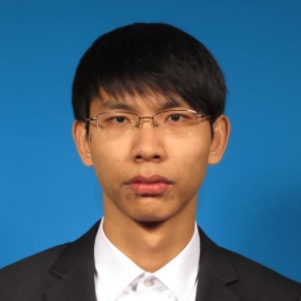
 Licai Sun
· 2 previous affiliations
- University of OuluSince 2024
- Postdoc · Since 2024
- Current
- Chinese Academy of Sciences2019–2024
- PhD student · 2019–2024
Research Overview
Licai Sun focuses on affective computing, multimodal learning, and self-supervised learning for facial and audio-visual emotion recognition. Early work investigated muscle synergies in motor control before shifting toward robust multimodal sentiment analysis and dynamic facial expression recognition. Currently, research centers on integrating large language models with multimodal architectures to enable open-vocabulary and explainable emotion understanding.
Research Trajectory
Early research began in the domain of motor control and neural engineering. In 2019, first-author work such as Modulation of muscle synergies with direction and distance during reaching movements investigated how the central nervous system constructs reaching movements by extracting muscle synergies from electromyographic signals across different directions and distances.
By 2022, the research focus shifted entirely toward affective computing and multimodal learning, specifically addressing the challenges of unaligned data and missing modalities in sentiment analysis. To tackle these issues, Sun proposed the Efficient Multimodal Transformer with Dual-Level Feature Restoration for Robust Multimodal Sentiment Analysis, a framework designed to maintain robust performance even when modality features are randomly dropped in realistic settings.
A major recurring theme in subsequent years has been overcoming the data scarcity bottleneck in video-based emotion recognition through self-supervised learning. In 2023, MAE-DFER: Efficient Masked Autoencoder for Self-supervised Dynamic Facial Expression Recognition introduced a method leveraging large-scale pre-training on unlabeled data to advance dynamic facial expression recognition, mitigating the high computational costs of standard vision transformers. This self-supervised paradigm was further refined and expanded in SVFAP: Self-Supervised Video Facial Affect Perceiver, which established a robust architecture for video facial affect analysis without relying on fully supervised, manually labeled datasets.
Most recently, the trajectory has expanded to incorporate large language models (LLMs) to achieve more nuanced, open-vocabulary emotion understanding. In 2024, collaborative work on AffectGPT: Dataset and Framework for Explainable Multimodal Emotion Recognition introduced a massive dataset and a two-stage training framework to generate explainable descriptions of complex human emotions using open-vocabulary clues. Building on this intersection of LLMs and affective computing, EmoPrefer: Can Large Language Models Understand Human Emotion Preferences? (2026) explored the capacity of multimodal large language models to act as automated evaluators for human emotion descriptions, shifting the evaluation paradigm from rigid classification to preference-based alignment.
Current Directions
The most recent papers in the evidence indicate a strong focus on the intersection of Multimodal Large Language Models (MLLMs) and affective computing. A primary objective of this current work is moving beyond traditional, closed-set emotion classification toward open-vocabulary and explainable emotion recognition. This involves developing new datasets, metrics, and benchmarks that capture the subtle and complex spectrum of human emotional experiences. Additionally, recent research investigates the alignment of MLLMs with human judgment, exploring how these models can be utilized as automated, preference-based evaluators for emotion descriptions rather than simple classifiers.
Profile updated
Loading new papers…
Other researchers whose papers cluster into the same research directions — a proxy for overlapping technical interests and shared intellectual neighborhoods.
See something wrong? Report a mistake