

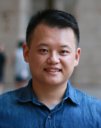
 Liang Wu
· 7 previous affiliations
- Nokia (Finland)Since 2026
- Head of Applied Research · Since 2026
- Nokia TechnologiesSince 2026
- Head of Applied Research · Since 2026
- Coupang (South Korea)2024–2025
- Machine Learning Engineer (L6-II) · 2024–2025
- LinkedIn (United States)2021–2024
- Applied Scientist · 2021–2024
- Airbnb (United States)2018–2021
- Machine Learning Data Scientist · 2019–2021
- Intern Data Scientist (Machine Learning) · 2018
- Arizona State University2014–2019
- Doctor of Philosophy (Ph.D.), Computer Sciences · 2014–2019
- CASOS Summer Institute 2016, CMU Network Analytics and Visualization Certification · 2016
7 other authors named Liang Wu: Liang Wu (Shanghai Jiao Tong University · 292 papers), Liang Wu (Southwestern University of Finance and Economics · 3 papers), Liang Wu (Alibaba Group (China) · 2 papers), Liang Wu (Tencent (China) · 2 papers), Liang Wu (Massachusetts Institute of Technology · Johns Hopkins University · 1 paper), and 2 more
Research Overview
Liang Wu focuses on recommender systems, information retrieval, and the application of large language models to personalized digital environments. His early work addressed social media dynamics, misinformation detection, and search optimization in e-commerce platforms. More recently, his research investigates generative recommendation frameworks, causal inference, and whole-page optimization techniques that balance real-time efficiency with complex user preferences.
Research Trajectory
Liang Wu’s early research centered on information retrieval and the analysis of social networks. In 2014, he addressed search engine refinement in Improving query suggestion through noise filtering and query length prediction. He subsequently expanded his focus to relational data and social dynamics, exploring how social hierarchies influence network structures in Relational Learning with Social Status Analysis (2016).
Between 2018 and 2019, his work heavily investigated the spread of information, sentiment, and misinformation across social media platforms. Recognizing the difficulty of parsing informal user-generated content, he developed SlangSD: building, expanding and using a sentiment dictionary of slang words for short-text sentiment classification to assist researchers in customer segmentation and market understanding. Concurrently, he tackled the growing challenge of digital misinformation. He characterized the propagation patterns of deceptive content in Tracing Fake-News Footprints: Characterizing Social Media Messages by How They Propagate, provided a comprehensive overview of the domain in Misinformation in Social Media: Definition, Manipulation, and Detection, and proposed methods for mitigating false narratives in Debunking Rumors in Social Networks: A Timely Approach.
Parallel to his work on social media, Wu began addressing core challenges in e-commerce and personalized recommendation. In 2018, he investigated the intrinsic differences between traditional web search and product search, optimizing ranking algorithms for online business metrics in Turning Clicks into Purchases: Revenue Optimization for Product Search in E-Commerce. He later applied recommendation techniques to specialized domains, such as two-sided travel marketplaces, in How Airbnb Tells You Will Enjoy Sunset Sailing in Barcelona? Recommendation in a Two-Sided Travel Marketplace (2020). Expanding beyond simple list-based rankings, he also explored spatial layout optimization in Toward User Engagement Optimization in 2D Presentation (2021).
In 2022, his methodological focus shifted toward graph neural networks (GNNs) to handle incomplete data in matching systems. He introduced a multi-channel GNN framework in Remote Work Optimization with Robust Multi-channel Graph Neural Networks, which accurately predicted remote work preferences in hiring marketplaces even when candidate profiles lacked critical industry or skill history. This work contributed significantly to the broader research direction of Mitigating the Cold Start Problem in Recommender Systems.
Most recently, Wu’s trajectory has focused on integrating Large Language Models (LLMs) into recommender systems. In 2024, he developed Collaborative Large Language Model for Recommender Systems (CLLM4Rec), a generative framework that bridges traditional ID-based collaborative filtering with the semantic reasoning capabilities of LLMs. By extending the LLM vocabulary with dedicated user and item tokens, the system achieved high accuracy while mitigating hallucination and efficiency bottlenecks. This research advanced the distinct areas of Efficient Inference for Generative Recommendation and Efficient LLM Integration for Real Time Recommendation.
He continued to refine LLM-based personalization in 2025. He explored the use of auxiliary graph data in LLM-Enhanced User-Item Interactions: Leveraging Edge Information for Optimized Recommendations. He also introduced PageLLM in Enhanced Whole Page Optimization via Mixed-Grained Reward Mechanism-Adapted Language Models, a framework that fine-tunes LLMs using Reinforcement Learning from Human Feedback (RLHF) to balance holistic page-level coherence with granular item-level relevance. Alongside his work in generative recommendation, he collaborated on fundamental methodological challenges in causal inference, investigating the risks of controlling for variables affected by treatment in Causal Effect Estimation with Mixed Latent Confounders and Post-treatment Variables.
Current Directions
Based on his most recent publications, Wu’s current research is heavily invested in the intersection of Large Language Models and complex recommender systems. A primary focus is Whole Page Optimization (WPO), where he uses mixed-grained reward mechanisms and RLHF to generate cohesive, multi-item layouts rather than isolated recommendations. He is actively addressing the architectural challenges of deploying generative models in real-time environments, ensuring that LLM-based recommenders can operate efficiently without sacrificing semantic reasoning or suffering from hallucination. Additionally, his recent collaborative work indicates an ongoing interest in robust causal inference, specifically developing methods to estimate causal effects accurately in the presence of latent confounders and complex post-treatment variables.
Profile updated
| Paper | Venue | Year |
|---|---|---|
| REFORM: Error-Aware Few-Shot Knowledge Graph CompletionGitHubSongW-SW/ | CIKM | 2021 |
Loading new papers…
Other researchers whose papers cluster into the same research directions — a proxy for overlapping technical interests and shared intellectual neighborhoods.
See something wrong? Report a mistake