

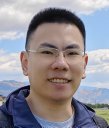
 Liang Wang
· 3 previous affiliations
- Microsoft (United States)Since 2022
- Researcher · Since 2022
- Yuanfudao Inc.2017–2021
- Researcher · 2017–2021
- Peking University2010–2017
- MS student · 2014–2017
- Undergrad student · 2010–2014
14 other authors named Liang Wang: Liang Wang (Chinese Academy of Sciences · 629 papers), Liang Wang (212 papers), Liang Wang (45 papers), Liang Wang (State Key Laboratory of Pattern Recognition · 31 papers), Liang Wang (Alibaba Group (China) · 10 papers), and 9 more
Research Overview
Liang Wang focuses on natural language processing, representation learning, and the optimization of large language models. His early work developed foundational pre-training methods for text generation and dense passage retrieval, including highly transferable text embeddings. Recently, his research addresses long-context reasoning, efficient inference, and iterative retrieval-augmented generation to improve the factual reliability of language models.
Research Trajectory
Liang Wang’s early research centered on improving sequence-to-sequence models and cross-lingual representations. In 2019, he introduced Denoising based Sequence-to-Sequence Pre-training for Text Generation, which explored pre-training objectives to accelerate downstream convergence and contributed to the research direction of Pointer Generator Mechanisms for Grounded Text Generation. Continuing his work on foundational representations, he developed Aligning Cross-lingual Sentence Representations with Dual Momentum Contrast in 2021, utilizing contrastive learning to bridge linguistic gaps in sentence embeddings.
In 2022, his focus expanded significantly into weakly-supervised contrastive pre-training for text embeddings and retrieval systems. He presented Text Embeddings by Weakly-Supervised Contrastive Pre-training, introducing the E5 model family. Trained on a curated large-scale text pair dataset, E5 provided a general-purpose embedding model that demonstrated strong zero-shot and fine-tuned performance across a wide range of retrieval, clustering, and classification tasks. Alongside this, he applied contrastive techniques to structured data in SimKGC: Simple Contrastive Knowledge Graph Completion with Pre-trained Language Models. He also proposed a bottleneck architecture for dense passage retrieval in SimLM: Pre-training with Representation Bottleneck for Dense Passage Retrieval, which utilized a replaced language modeling objective to compress passage information into dense vectors efficiently.
Moving into 2023, Wang explored the intersection of retrieval systems and large language models (LLMs). He developed Query2doc: Query Expansion with Large Language Models, a method that generates pseudo-documents via few-shot prompting to guide retrievers and improve both sparse and dense retrieval performance. In 2024, he collaborated on unifying generation and embedding tasks through Generative Representational Instruction Tuning (GRIT), training a single model to handle both modalities by distinguishing between them via instructions. During this period, he also contributed to methods for extending LLM context windows, co-developing PoSE: Efficient Context Window Extension of LLMs via Positional Skip-wise Training. This technique manipulated position indices to simulate long-range dependencies, allowing models to handle massive context windows while only being fine-tuned on smaller, fixed lengths.
In 2025, his work addressed the limitations of single-step retrieval in complex reasoning scenarios. He introduced Chain-of-Retrieval Augmented Generation, advancing the broader area of Iterative Retrieval Augmented Generation for Multi Hop Reasoning by developing systems that dynamically retrieve and connect disparate facts to reduce hallucination. He also participated in research on synthetic data generation for extended contexts in WildLong: Synthesizing Realistic Long-Context Instruction Data at Scale. This work extracted meta-information from real user queries to support multi-document reasoning, addressing challenges in the research direction of The Reasoning Gap in Long Context Language Models.
By 2026, Wang’s research included optimizing LLM inference and stabilizing training for extended tasks. He contributed to Learning To Draft: Adaptive Speculative Decoding with Reinforcement Learning, a framework that dynamically optimizes the draft-and-verify cycle to maximize wall-clock throughput. Finally, he collaborated on On Training Large Language Models for Long-Horizon Tasks: An Empirical Study of Horizon Length, which investigated the instability caused by long action sequences in interactive tasks and proposed horizon reduction techniques to improve generalization.
Current Directions
Recent work investigates the reliability, efficiency, and reasoning capabilities of large language models in complex, extended-context scenarios. The most recent papers in the evidence address iterative retrieval mechanisms designed to prevent hallucination in multi-hop reasoning tasks, as well as the synthesis of scalable, long-context instruction data to improve multi-document integration and comparison. Additionally, current research explores reinforcement learning techniques to accelerate speculative decoding during inference, alongside structural methods—such as macro actions and subgoals—to stabilize LLM training for long-horizon interactive tasks.
Profile updated
Loading new papers…
Other researchers whose papers cluster into the same research directions — a proxy for overlapping technical interests and shared intellectual neighborhoods.
See something wrong? Report a mistake