

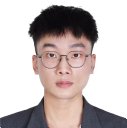
 Li Zhang
· 3 previous affiliations
- University of California San DiegoSince 2022
- PhD student · 2022–2027
- Zhejiang University2019–2022
- MS student · 2019–2022
- Zhejiang Sci-Tech University2015–2019
- Undergrad student · 2015–2019
27 other authors named Li Zhang: Li Zhang (Fudan University · 143 papers), Li Zhang (Google (United States) · 56 papers), Li zhang (ByteDance (China) · 51 papers), Li Zhang (45 papers), Li Zhang (Hong Kong Polytechnic University · 20 papers), and 22 more
Research Overview
Li Zhang focuses on bi-level optimization, automated machine learning, and the adaptation of foundation models for specialized domains. His trajectory spans neural architecture search, group-aware learning for fairness, and the integration of graph neural networks with large language models. Most recently, his work addresses generative data augmentation for medical image segmentation and multi-agent systems for automated model building.
Research Trajectory
Zhang’s early research explored optimization strategies for model design and training dynamics. In 2022, he and his collaborators developed Learning from Mistakes - a Framework for Neural Architecture Search. Inspired by human pedagogy, this three-stage optimization approach identified validation errors and re-weighted training data to focus on difficult examples. By integrating this error-driven sample weighting, the framework enabled differentiable neural architecture search algorithms to discover highly robust architectures.
In 2023, Zhang participated in applying large language models to specialized scientific domains. He contributed to DrugChat: Towards Enabling ChatGPT-Like Capabilities on Drug Molecule Graphs, a prototype system designed to bridge graph neural networks with language models. By translating molecular graphs into soft prompts, the system facilitated multi-turn natural language interactions regarding compound properties, mechanisms, and therapeutic potential. This work advanced the research direction of Knowledge Grounding for Scientific Large Language Models and the broader area of Structural Alignment of Graphs and Language Models.
Returning to optimization frameworks later that year, Zhang co-developed Fair and Accurate Decision Making through Group-Aware Learning. This framework automatically partitioned data into subgroups to train specialized expert models. Utilizing a novel three-level optimization strategy to learn group assignments on validation data, the approach mitigated the overfitting common in traditional Mixture-of-Experts models and addressed the persistent tradeoff between predictive performance and social fairness.
In 2024, Zhang’s focus on optimization deepened, particularly concerning the adaptation of foundation models in low-resource environments. He contributed to Generalizable and Stable Finetuning of Pretrained Language Models on Low-Resource Texts, which introduced Attention-Guided Weight Mixup. To prevent the catastrophic forgetting and extreme overfitting that often plague language model finetuning on tiny datasets, this method represented model weights as a learnable blend of pretrained and task-specific values. By moving away from noisy heuristic sub-network selection, the approach achieved significantly higher stability. This research aligns closely with the area of The Computational Bottleneck of Bilevel Optimization and the direction of Bi-Level Optimization for Meta-Learned Sample Weighting.
Extending these bi-level optimization techniques to computer vision, Zhang introduced BLO-SAM: Bi-level Optimization Based Finetuning of the Segment Anything Model for Overfitting-Preventing Semantic Segmentation. By treating learnable prompt embeddings as hyper-parameters optimized on a separate data subset from the model weights, this framework eliminated the need for manual prompts while effectively preventing overfitting in ultra-low data regimes. This work contributed significantly to the research direction of Automated Prompting for Foundation Segmentation Models.
In 2025, Zhang continued to explore low-data regimes, specifically in healthcare domains where annotated segmentation masks are scarce. He proposed Generative AI Enables Medical Image Segmentation in Ultra Low-Data Regimes, a generative deep learning framework that produces high-quality image-mask pairs as auxiliary training data. Unlike traditional models that separate data generation from training, this system utilized multi-level optimization for end-to-end data generation, allowing segmentation performance to directly guide the synthesis process. Concurrently, he formalized his earlier optimization concepts in Learning From Mistakes: A Multilevel Optimization Framework, further establishing his contributions to complex optimization strategies.
Most recently, in 2026, Zhang’s research expanded into automated multi-agent systems. He participated in the development of AIBuildAI: An AI Agent for Automatically Building AI Models, a hierarchical system designed to automate the entire AI model development lifecycle. By delegating specialized tasks to "Designer," "Coder," and "Tuner" agents overseen by a "Manager," the system demonstrated strong performance in automated strategy design and hyperparameter tuning, matching the capabilities of expert human engineers on benchmark tasks.
Current Directions
The most recent papers in the evidence address the automation of machine learning workflows and the synthesis of training data for data-scarce environments. Recent work investigates end-to-end generative frameworks that use multi-level optimization to produce tailored auxiliary data for specialized tasks like medical image segmentation. Additionally, Zhang is exploring hierarchical multi-agent systems capable of autonomously managing the entire model development lifecycle, from initial design to hyperparameter tuning. These directions reflect a continued emphasis on reducing human intervention in model training and adapting complex architectures to specialized, low-resource tasks through advanced optimization techniques.
Profile updated
Loading new papers…
Other researchers whose papers cluster into the same research directions — a proxy for overlapping technical interests and shared intellectual neighborhoods.
See something wrong? Report a mistake