

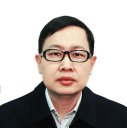
 Li Yang
· 1 previous affiliation
- Institute of SoftwareSince 2017
- Associate Professor · Since 2017
9 other authors named Li Yang: Li Yang (University of North Carolina at Charlotte · 66 papers), Li Yang (Institute of Automation · 39 papers), Li Yang (4 papers), Li Yang (2 papers), Li Yang (2 papers), and 4 more
Research Overview
Li Yang focuses on intelligent software development, the intersection of artificial intelligence and software engineering (AI4SE), and blockchain-based systems. His work emphasizes the integration of human intelligence into machine learning pipelines, the automation of software maintenance tasks through large language models (LLMs), and the security of decentralized software ecosystems. Currently, his research explores the application of parameter-efficient fine-tuning and reinforcement learning from human feedback to specialized domains, such as smart contract vulnerability detection and automated code review.
Research Trajectory
The evolution of Yang’s research reflects a transition from human-centric machine learning frameworks to the automated generation and validation of software artifacts using advanced neural architectures. In the early stages of this trajectory, around 2019, Yang investigated the challenges of deploying machine learning models in dynamic online environments. This work addressed the "poor online generalization" of offline-trained models by proposing systematic human-in-the-loop methods. These frameworks were designed to incorporate human experience into iterative feedback loops, reducing the cost of error correction and adaptation in production systems.
By 2021, Yang’s focus shifted toward the automation of software engineering documentation and maintenance. He participated in the development of language-agnostic approaches for generating release notes from pull requests, moving away from traditional, language-specific code extraction methods. This period also marked the beginning of his work in blockchain technology, where he explored the use of distributed ledgers to enhance software traceability and privacy in crowdsourced engineering environments. This research addressed the inherent untrustfulness of centralized platforms by leveraging blockchain to ensure the integrity of contributions from diverse participants.
Between 2023 and 2025, Yang’s work increasingly centered on the adaptation of Large Language Models for specialized software tasks. This shift aligns with the broader research theme that Small Specialized Models Surpass Large General Purpose Models in domain-specific contexts. He contributed to frameworks for automated method naming and code review, utilizing techniques such as context-aware prompt-tuning and parameter-efficient fine-tuning (PEFT). These efforts sought to overcome the resource-intensive nature of training domain-specific models from scratch by specializing pre-trained LLMs like LLaMA for the nuances of source code and repository-level context.
Most recently, Yang has extended these intelligent methods to the domain of blockchain security and graph representation learning. His recent collaborations involve the use of Direct Preference Optimization (DPO) to align LLMs for explainable vulnerability detection in smart contracts. Furthermore, he has participated in research regarding graph neural networks (GNNs), specifically focusing on graph anomaly detection and the development of restricted global-aware filters to bridge the gap between GNNs and Transformers. This work often touches upon the Automated Discovery of Specialized and Adaptive Architectures to handle the structural complexities of non-homophilous graphs.
Current Directions
Yang’s current research is characterized by three primary directions:
LLM Alignment for Software Engineering: Building on his work with LLaMA-Reviewer, Yang is investigating how to better align generative models with the specific requirements of software developers. This includes improving the accuracy of SQL comment generation and ensuring that automated code reviews focus on practical, defect-oriented feedback rather than simple text similarity. This direction frequently utilizes Robust Model Compression for Secure Edge AI principles to ensure that these specialized models remain computationally efficient.
Smart Contract Security: A significant portion of Yang’s recent work involves enhancing the security of blockchain ecosystems. He is involved in developing two-stage post-training regimes for LLMs to not only detect vulnerabilities in smart contracts but also provide high-quality, human-readable explanations for those vulnerabilities. This research addresses the critical lack of high-quality, annotated datasets in the blockchain domain.
Graph Anomaly Detection: Yang also participates in the development of novel graph learning paradigms. This includes exploring multi-band and multi-scale filtering to improve feature extraction in social and financial networks where traditional GNNs fail. His work in this area investigates new routing paradigms, such as binary message passing, to improve the generalizability of semi-supervised anomaly detection.
Representative Work
A Human-in-the-loop Method for Developing Machine Learning Applications As the lead author, Yang proposed a systematic architecture to integrate human intelligence into the machine learning lifecycle. The paper addresses the gap between offline training and online generalization by implementing three negative-feedback loops and one data loop. This method allows for iterative improvements to models in production, reducing the propagation of errors from training pipelines to live systems.
STPChain: a Crowdsourced Software Engineering Method for Software Traceability and Fine-grained Privacy Based on Blockchain In this work, Yang served as the second author, developing a blockchain-based framework for crowdsourced software engineering (CSE). The paper introduces a method to ensure software traceability and participant privacy, solving the problem of collusion and untrustworthiness in centralized CSE platforms. The system uses a decentralized architecture to maintain a verifiable record of software requirements and contributions.
DeepRelease: Language-agnostic Release Notes Generation from Pull Requests of Open-source Software Yang contributed to the development of DeepRelease, a tool designed to automate the time-consuming process of writing release notes. Unlike previous approaches that relied on language-specific code analysis, this method uses pull request data to generate summaries, making it applicable across different programming languages and project types.
Automating Method Naming with Context-Aware Prompt-Tuning This research addresses the problem of suboptimal method naming in software maintenance. Yang participated in designing a prompt-tuning framework that exploits the enclosing class context to better understand a method's abstract functionality. The approach improves upon previous models that were trained from scratch by aligning the objectives of name recommendation and consistency checking.
LLaMA-Reviewer: Advancing Code Review Automation with Large Language Models through Parameter-Efficient Fine-Tuning (Practical Experience Report) Yang participated in the creation of LLaMA-Reviewer, a framework that adapts the LLaMA model for automated code review. The study demonstrates that parameter-efficient fine-tuning can allow general-purpose LLMs to outperform domain-specific models that require significantly more resources to train. This work highlights the practical challenges of capturing repository-level context in automated review systems.
Smart-LLaMA-DPO: Reinforced Large Language Model for Explainable Smart Contract Vulnerability Detection In this recent collaborative effort, Yang contributed to a reinforced LLM framework for blockchain security. The paper introduces a dataset with comprehensive explanations for smart contract vulnerabilities and uses Direct Preference Optimization (DPO) to correct common model misinterpretations, such as the execution order of state changes. This work emphasizes the importance of explainability in automated security tools.
Profile updated
Loading new papers…
Other researchers whose papers cluster into the same research directions — a proxy for overlapping technical interests and shared intellectual neighborhoods.
See something wrong? Report a mistake